Hello!
Diversity, equity and inclusion (DEI) policies are falling down the list of priorities for companies, according to data from the Thomson Reuters Foundation, the independent charitable foundation of Thomson Reuters, which owns Reuters.
The report looked at publicly available information on the workforce policies of nearly 3,000 global companies. In addition, it contains longer-term analysis from more than 140 companies who have voluntarily disclosed data to the Workforce Disclosure Initiative (WDI) since 2020.
We’ll also take a look at a Reuters exclusive story on how the United States Equal Employment Opportunity Commission (EEOC) Chair Andrea Lucas allegedly violated professional conduct rules of the Virginia State Bar by refusing to enforce key provisions of federal civil rights laws, according to a complaint submitted to the bar and shared with Reuters.
But before we get into the report by the foundation, here are a few key movements in the artificial intelligence, social and governance space that have caught my eye:
|
|
|
|
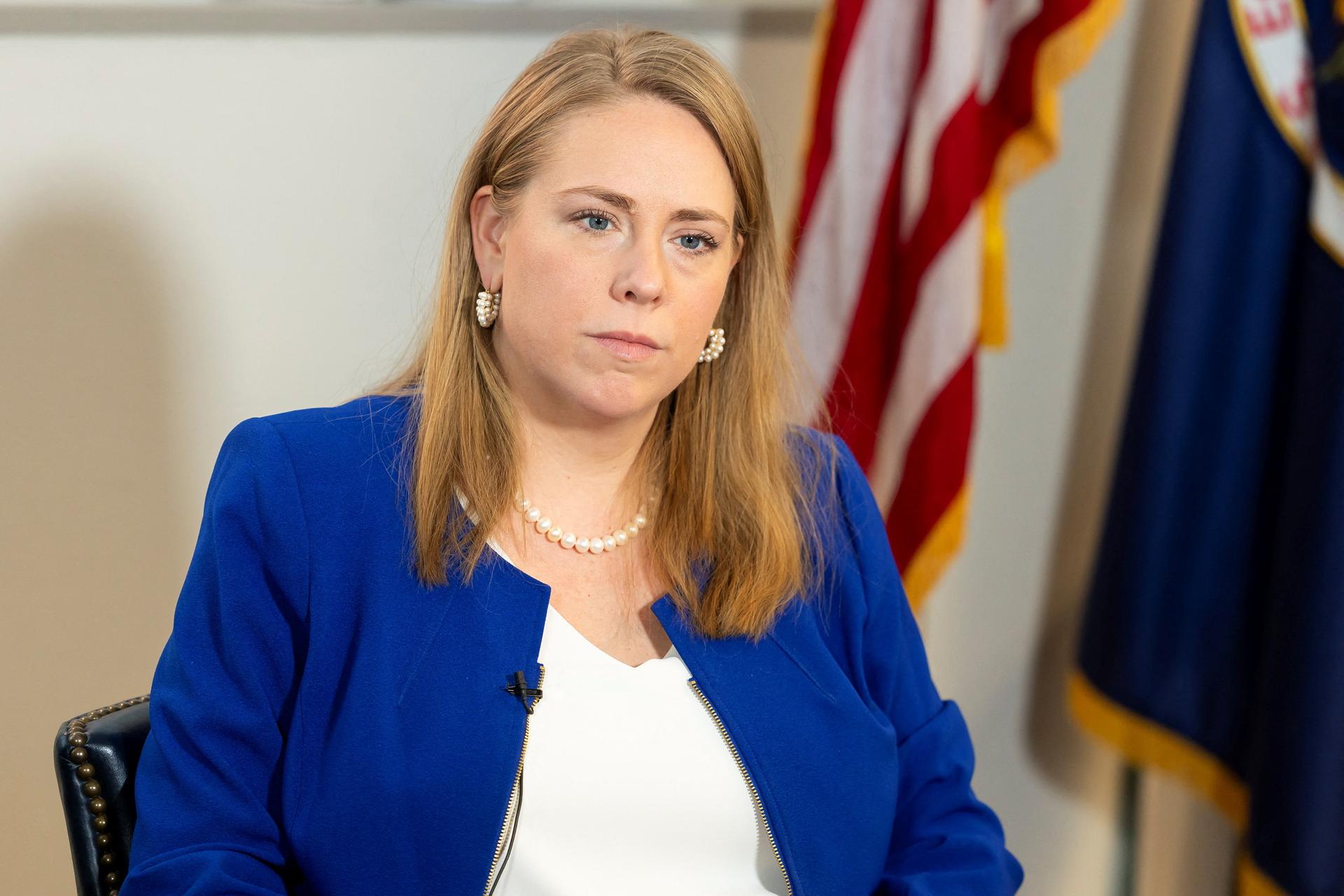
U.S. Equal Employment Opportunity Commission Chair Andrea Lucas sits for an interview to discuss the EEOC's initiatives for 2026 in Washington, D.C.,US. REUTERS/Kevin Mohatt
|
Hardly any ethnicity targets |
The Thomson Reuters Foundation report found that DEI targets were common for gender but were rare for ethnicity and disability as only 53% of companies in the dataset reported a public DEI target of some kind, mostly on gender.
Just 8% of companies said they set ethnicity targets and 5% set disability targets and fewer than half of all companies set time-bound DEI targets.
There’s also been a decline of companies that do report on ethnicity, as only 26% of companies report any workforce-level ethnicity breakdown, dropping to 16% who report ethnicity breakdown at board level from last year.
"Unlike gender reporting, we are still far from meaningful global benchmarking for disability nor ethnicity," said Katie Fowler, director of responsible business at the Thomson Reuters Foundation.
As for executive pay incentives, nearly half of the companies (47%) linked executive pay to at least one workforce key performance indicator (KPI) and only 21% had a KPI related to DEI.
However, that didn’t necessarily translate into better outcomes, as the financial industry – which was the sector with the strongest adoption of DEI incentives – reported the widest median gender pay gap of 11 economic sectors. Click here to read the full report.
|
|
|
|
EEOC ethics complaint on LGBT and DEI |
In keeping with the topic of diversity, U.S. EEOC head Andrea Lucas allegedly halted LGBTQ and discrimination cases, according to a complaint submitted to the bar, shared with Reuters.
The Legal Accountability Center, which files complaints against individuals and institutions accused of professional misconduct, asked the state agency to investigate Lucas.
It said she may have breached ethical obligations by telling EEOC investigators to stop processing some discrimination claims and by sending unauthorized information demands to 20 major law firms.
Those letters, sent on official EEOC letterhead in March 2025, sought extensive data on firms’ DEI practices, including demographic information related to race, sex, hiring, promotions and compensation, the complaint alleges.
"The EEOC does not have the unilateral authority to demand the information sought from these law firms because the EEOC had no pending investigation or charge against these firms," the complaint states.
"These letters are nothing more than an effort to intimidate and scare these employers into abandoning their DEI efforts, in violation of Title VII - the very federal law the EEOC is supposed to enforce."
Since returning to the White House in January 2025, Donald Trump's administration has cracked down on diversity efforts nationwide, targeting universities, major corporations and non-profits.
A federal judge last week expanded the reach of restrictions stopping the Trump administration from forcing universities to turn over sweeping amounts of data so it can examine the schools' use of race as an admissions factor.
|
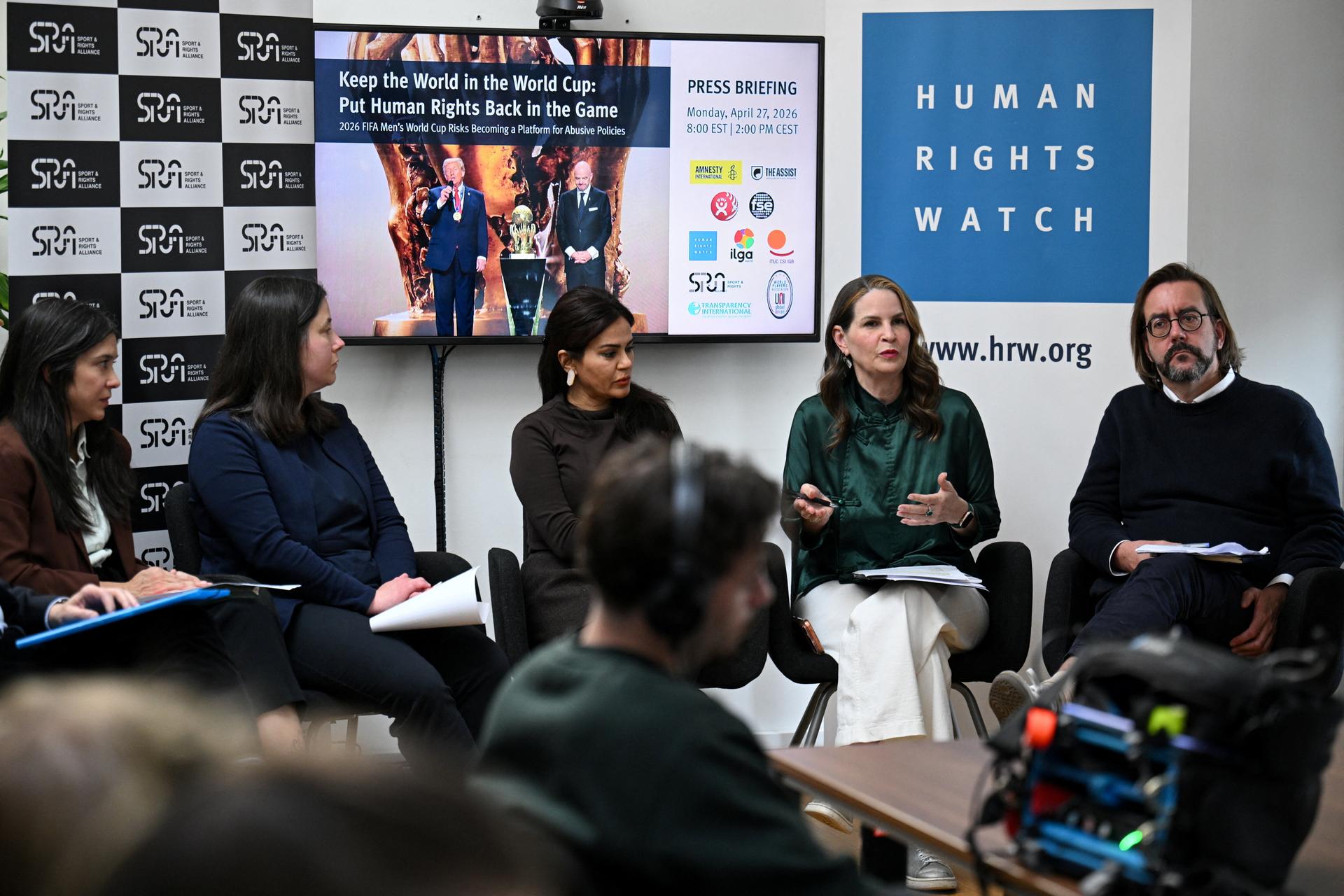
Human Rights Watch and others speak at an event to "put human rights back in the game" ahead of the 2026 FIFA Men’s World Cup. Berlin, Germany. REUTERS/Annegret Hilse
|
- Human rights in football: A report by the Human Rights Watch (HRW) said that FIFA should press the U.S. government to establish an "ICE Truce" for this year's World Cup, including a public guarantee from federal authorities to refrain from immigration enforcement operations at games and venues. Fans, players, journalists and other visitors may face racial profiling, searches of electronic devices, or risk of cruel or inhuman treatment if they end up in immigration detention facilities, according to the advisory.
- Food production risks: Farmers worldwide are facing a second fertilizer price shock in four years due to the U.S.-Israeli war with Iran. Grain prices are too low to cushion the blow from the deeper supply crunch, leading many farmers to rethink their planting plans, threatening global food output. Supplies of urea from Qatar’s largest plant have stopped, while sulfur and ammonia flows, key fertilizer inputs, have also been limited.
- Santa Marta fossil fuels conference: Around 60 governments, including Brazil, Germany, Canada and Nigeria, will hold the first international meeting in Santa Marta, Colombia, to discuss phasing out fossil fuels this week, as the Middle East conflict continues to upend global oil and gas markets. The conference will focus on practical steps to shift economies away from fossil fuels, rather than setting new global targets of the kind agreed at U.N. climate summits.
- US unsustainable stick: The Trump administration has reached a deal to end two more U.S. offshore wind leases managed by Ocean Winds, a joint venture between France's ENGIE and Portugal's EDP Renewables, in exchange for $885 million in pledged investments in domestic fossil fuels. The deal is similar to the agreement with French energy giant TotalEnergies to redirect $1 billion from offshore wind leases to U.S. oil and gas production last month.
- Albania’s sustainable switch: Click here for a story on how Albania is setting an example of how countries with higher renewables output have been protected from steep rises in electricity prices since the United States and Israel attacked Iran on February 28, according to price comparisons from across Europe.
|
|
|
|
SailLink sailing catamaran crosses the English Channel from Dover to Boulogne-sur-Mer to offer passengers a more climate-friendly mode of transport. Britain. REUTERS/Lucien Libert
|
Travellers in Britain and France may have a cool new sustainable means of travelling between the two countries.
A small British startup is offering passengers an alternative way to cross the English Channel: by sail.
SailLink operates a 17-metre (55 ft) catamaran carrying up to 12 passengers between Dover and Boulogne‑sur‑Mer, relying primarily on wind and tides rather than fossil fuels. The crossing takes between four and five hours, depending on weather conditions.
|
|
|
|
Sustainable Switch was edited by Emelia Sithole-Matarise.
|
|
|
|
|
|
| |
|
|
Sustainable Switch is sent three times a week. Think your friend or colleague should know about us? Forward this newsletter to them. They can also sign up here. Want to stop receiving this email? Unsubscribe here. To manage which newsletters you're signed up for, click here. This email includes limited tracking for Reuters to understand whether you’ve engaged with its contents. For more information on how we process your personal information and your rights, please see our Privacy Statement. Terms & Conditions |
|
| |
© 2026 Thomson Reuters. All rights reserved.
3 Times Square, New York, NY 10036 |
|
|
|
|
|







0 comentários:
Postar um comentário