|
|
 |
Apr 08, 2026 |
|
|
|
| Supported by |
 |
|
|
|
|
|
Happy Wednesday! Longtime Microsoft executive Eric Boyd is joining Anthropic. Intel says it will join Elon Musk's Terafab AI chip project with SpaceX and Tesla. Anthropic announces a cybersecurity project powered by its unreleased new model, Claude Mythos.
|
|
|
|
Longtime Microsoft executive Eric Boyd is joining Anthropic as the AI lab’s head of infrastructure, Boyd said on Tuesday. Boyd has spent more than 18 years at Microsoft, and for the past several years has led engineering of hardware and software needed to host OpenAI and Anthropic models on its Azure cloud platform. In that role, he helped plan Microsoft’s initial construction of massive computing clusters that were needed to train and run OpenAI’s models, as well as the computing infrastructure that Microsoft used to run its own AI-powered Copilot products. In his new role, Boyd will lead Anthropic’s infrastructure team at a time when the company is facing a computing crunch in the face of surging usage of its models. Anthropic has recently discussed leasing its own data centers and has been hiring a team of cloud veterans including former Google Cloud executives, The Information previously reported. Anthropic’s annualized revenue has surged to over $30 billion, the company said on Monday, up from $9 billion at the end of last year. But the company also said it was dealing with limited computing capacity this week when it started charging users more money to connect its Claude Code agent to services like OpenClaw, which drive heavy usage of its models. |
|
|
|
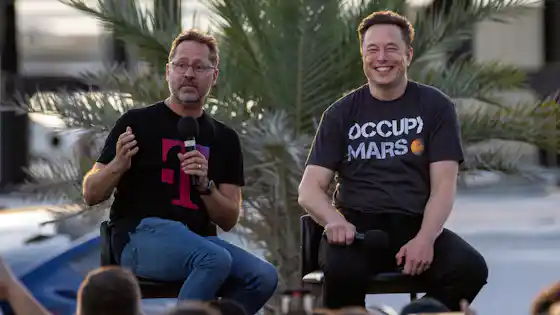
Intel says it’s now involved in a chip-making project led by Elon Musk’s companies SpaceX and Tesla, though neither company provided details on how they will work together or a timeline for the project. Musk announced plans for Terafab at an event in Texas last month, saying that it will eventually manufacture chips for Tesla’s vehicles and robots, as well as SpaceX satellites. He did not provide a timeline or estimated cost for the project. Tesla currently uses AI4 chips manufactured by Samsung in its vehicles, while SpaceX subsidiary xAI is a large Nvidia customer. In a Tuesday morning post on X, Intel shared an image of Musk and Intel CEO Lip-Bu Tan shaking hands and said it would “join” the project, known as Terafab. Intel said its ability to “design, fabricate, and package ultra-high-performance chips at scale” will “help accelerate” Terafab. Tesla and SpaceX did respond to requests for comment. Intel declined to comment beyond the X post. Intel shares were up 2% early Tuesday. |
|
|
|
Anthropic announced on Tuesday that it will be providing access to its unreleased Claude Mythos model to more than 40 organizations, including Apple, JPMorgan Chase and the Linux Foundation, so they can test their software for security vulnerabilities. Anthropic says that Claude Mythos is significantly better at identifying and exploiting vulnerabilities compared to prior models. Anthropic said in the blog post that in recent weeks, it was able to use the AI to identify “thousands of zero-day vulnerabilities” in “every major operating system and every major web browser” including Linux and OpenBSD. Anthropic said that it does not plan to make the version of Claude Mythos it’s sharing with these partners generally available, but it hopes to eventually “enable…users to safely deploy Mythos-class models at scale” once it develops the necessary safeguards. The company also said that it would donate $100 million worth of model usage credits to Project Glasswing, its name for the partnership with companies testing their software. Anthropic is also donating $4 million in cash to open-source security organizations. After those donations run out, Claude Mythos Preview will be available to partners at $25 per million input tokens and $125 per million output tokens—five times more expensive than its most advanced model today. |
|
|
|
Amazon has reduced the volume of packages it will ship through the US Postal Service to 80% of the current volume, under a new agreement the two sides struck. “We’re pleased to have reached a new agreement with USPS that furthers our longstanding partnership,” an Amazon spokesperson said. The company didn’t announce the 80% figure, which was first reported by Reuters. Amazon and the postal service have been at loggerheads for several months renegotiating the contract, which was due to expire in October. The USPS wanted to change the terms under which it delivers packages for retailers. Instead of signing long term contracts, it wanted to have the flexibility to let retailers bid for the USPS’ services on an auction basis. Amazon wasn’t in favor of the switch. Amazon makes up $6 billion of the postal service’s revenue, Reuters reported. Postmaster general David Steiner told Congress in March that the service is poised to run out of cash in less than 12 months. |
|
|
|
Amazon Web Services CEO Matt Garman on Tuesday played down the idea that Anthropic’s highly-praised Claude Code tool could undercut existing enterprise software companies. But Garman warned that if incumbent software firms try to “protect what they have and not lean in” to AI, “they’re in trouble.” Speaking during the HumanX conference in San Francisco, Garman said the idea that companies could use Claude Code to write software to handle customer relations management—a widely used enterprise software product sold by firms like Salesforce—was “overblown.” He acknowledged that AI could be “enormously disruptive” to software but it was also a “huge opportunity,” given they “know a lot about the areas they operate in [and] they have a large existing customer base” as well as a “huge trove of existing data.” “They know more about their area, the edges of their software…and so they are in a better position to build the next generation of AI enabled products,“ he said. Still, he said that everybody running an existing enterprise software firm “should really be questioning what are the things I should do differently.” Garman’s comments are noteworthy given that AWS’ parent Amazon is a shareholder in Anthropic and AWS is a major cloud provider of Anthropic models. AWS also offers businesses access to a wide range of enterprise software products sold by other firms. |
|
|
|
Elon Musk argued in a new legal filing that OpenAI CEO Sam Altman and President Greg Brockman should be removed as officers of OpenAI’s nonprofit wing if Musk wins his lawsuit alleging OpenAI violated its charitable mission. While much of the recent activity in the lawsuit has focused on the maximum amount of money that could be at stake if OpenAI loses the case, the new document filed Tuesday offers the most detailed look so far at the non-monetary remedies Musk is seeking. The filing also argued that Altman should be removed from the nonprofit board. Musk’s lawsuit argues that OpenAI wrongfully gained over $100 billion at the expense of its charity. His latest filing said that, if he prevails in his argument, that money should be returned to the nonprofit wing, not given to Musk, clarifying a post on X last month that the proceeds of any legal victory in the case “will be donated to charity.” That essentially rebuts OpenAI’s claim on Monday in a letter to two state attorneys general that Musk is seeking to drain the finances of the nonprofit. Musk also clarified that he is seeking to reverse the corporate restructuring that OpenAI completed in October, which turned its for-profit business into a public benefit corporation with traditional equity, replacing the capped-profit shares that investors previously held. OpenAI said in a statement that “The truth is that this case has always been about Elon generating more power and more money for what he wants.” This brief has been updated with OpenAI’s comment. |
|
|
|
Caylent, a consulting firm that helps Amazon Web Services customers adopt AI, has acquired Pronetx, another consulting firm that focuses on selling Amazon’s AI-powered contact center software, called Connect. The deal reflects the growing importance of Amazon Connect, which launched in 2017 and uses AI to automate customer service call centers for other companies. (The Information was first to report that Amazon was working on Connect prior to its official launch). Pronetx’s founder and CEO, Yasser El-Haggan, is a former AWS technical leader who helped build the Connect product while working at the cloud provider. Connect, which saw sales spike during the pandemic as companies moved their customer service operations online, has become one of Amazon’s highest-profile AI products. Amazon in November announced that Connect was on pace for $1 billion in annualized revenue, and last month launched a version of the product tailored for health care firms. |
|
|
|
|
Popular articles
By Anissa Gardizy and Amir Efrati
|
|
|
|
|
Opportunities Empower your teams to stay ahead of market trends with the most trusted tech journalism.
Learn more
Reach The Information's influential audience with your message. Connect with our team |
|
|
|
|
|












0 comentários:
Postar um comentário