Greetings from London!
This week is a big one for Stellantis CEO Antonio Filosa, who will pitch to investors at the company’s capital markets day in Auburn Hills, Michigan, that the world’s No. 4 automaker is worth a bet.
Big parts of Stellantis’ pitch are already known. The company aims to tackle its main weaknesses with new products for the U.S. market, start a major overhaul of its sprawling portfolio of 14 brands and rent out its excess capacity in Europe to Chinese automakers.
These are all ambitious plans, though it remains to be seen whether investors will buy it.
With Stellantis’ market cap only slightly higher than U.S. EV startup Rivian’s and only a third the size of Ferrari’s, they may take some persuading.
Which brings us to today’s Auto File…
|
|
|
|
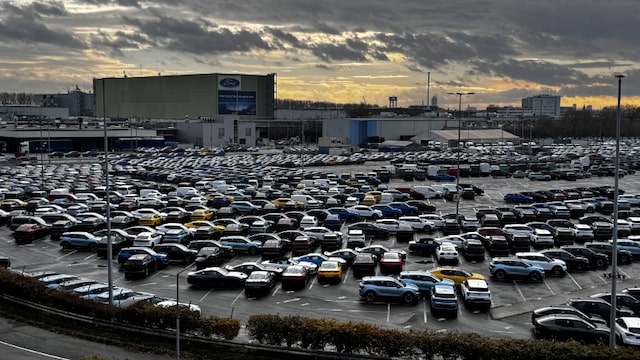
Ford needs to sell a lot more of these in Europe - REUTERS/Erol Dogrudogan.
|
Ford’s fresh European onslaught |
When you look at how far Ford’s sales in Europe have fallen, it really is quite breathtaking.
A decade ago, in 2016, Ford sold over 1 million cars. In 2025, it sold around 425,000.
To put that in perspective, that is the equivalent of two full car factories’ worth of annual production.
But Ford says it is coming back with a new selection of cars that will enable it to grow market share. You can read all about it here.
The automaker’s new cars include two small EVs that will be built in northern France at a Renault factory using the French automaker’s electronic technology.
Ford executives sound confident about regaining market share, but with a plethora of new Chinese arrivals, they will be fighting in a very crowded marketplace.
|
|
|
|
|
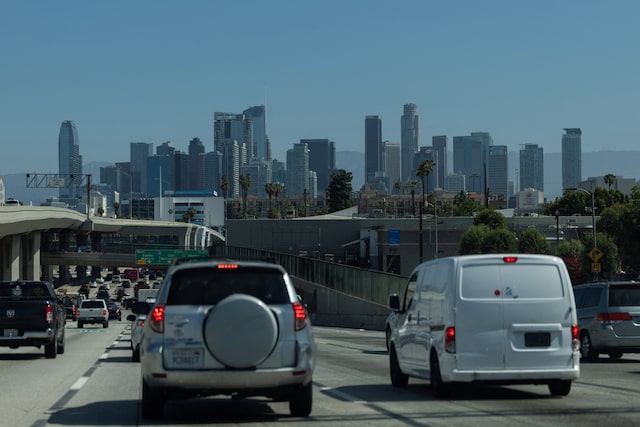
U.S. lawmakers want EVs to pay for road repairs - REUTERS/Mike Blake
|
U.S. lawmakers in the House of Representatives have proposed bipartisan legislation that would require EV owners to pay a $130 fee to fund road repairs annually and $35 for some plug-in hybrid models.
You can read more about it here.
On the face of it, this makes sense. Most revenue for federally funded road repairs is collected through diesel and gasoline taxes, which EVs do not pay. Fair enough.
And yet, out of fear of Chinese EVs, House lawmakers also recently proposed legislation to codify an already existing ban on China’s automakers entering the American market.
This also comes after the Trump administration killed off a $7,500 U.S. federal subsidy for EVs.
Taxing EVs while also fearing China’s electric cars so much that they need to be banned seems like a strange approach.
Finding a way to promote and support U.S.-made EVs instead might be a better way to compete.
|
|
|
|
|
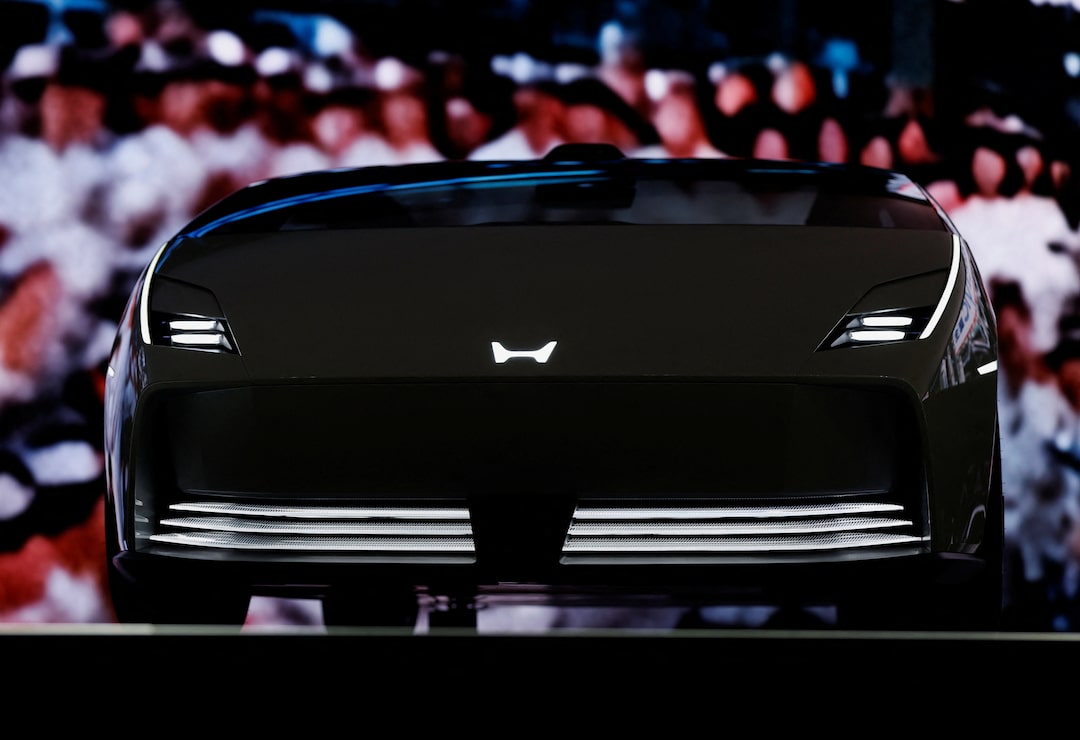
Selling EVs has not gone well for Honda - REUTERS/Manami Yamada .
|
Honda posted its first annual loss in nearly 70 years as a listed company because of more than $9 billion in costs to restructure its EV business.
The firm also scrapped its long-term EV sales target. You can read all about it here.
Honda’s worst financial report since it listed on the stock market in 1957 underscores how risky an aggressive bet on EVs can be for a legacy automaker when it slams into weaker-than-expected demand, coupled with rising Chinese competition.
Honda has scrapped its goal to have EVs make up a fifth of its new car sales in 2030, as well as reaching 100% electric or fuel-cell vehicle sales by 2040.
Honda will also indefinitely suspend its Canada EV project, an $11 billion investment plan to produce EVs and batteries in what would have been the Japanese firm's largest ever investment in the country.
|
|
|
|
Chinese gain in South Africa |
Chinese automakers expanded their share of the South African passenger car market to 16.8% in 2025 from 11.2% a year earlier, as competitively priced, technology-rich sport utility vehicles and long warranties reshaped competition.
You can read all about it here.
South Africa could serve as a cautionary tale for legacy automakers.
Over the last couple of years, I have heard from several car executives and experts that it would be hard for the Chinese to break into a market like South Africa, where legacy automakers do not merely sell cars but make them locally.
But most Chinese car brands have only launched in South Africa in the last couple of years and going from virtually zero in 2023 to nearly 17% of the market in 2025 shows that consumers find their combination of affordable cars and solid tech more compelling than any old-fashioned notion of brand loyalty.
Legacy automakers are working out ways to regain lost share, but clearly, they will need to fight for it.
|
|
|
|
Vietnamese EV maker VinFast will sell its Vietnam manufacturing facilities to a group that includes its founder and CEO Pham Nhat Vuong, with the loss-making electric vehicle maker aiming to restructure its local operations into a more "asset-light" model.
Toyota has sought approval to build a new vehicle assembly line at its existing manufacturing complex in Texas with about $2 billion in planned investment.
Chinese EV maker Xpeng has begun mass production of its first robotaxi at its Guangzhou headquarters, targeting fully driverless operations by early 2027.
Volkswagen's controlling family shareholders piled pressure on the automaker to overhaul its business model after the German company's ongoing problems led to a drop in first-quarter profit at their holding group.
BYD launched an upgraded version of its flagship SUV under the Denza brand at a 5% higher starting price as China's largest electric vehicle maker shifts away from its low-cost image and enhances profitability.
Ford’s energy unit has signed a five-year deal to supply up to 20 gigawatt-hours of storage capacity to renewable power developer EDF.
Think your friend or colleague should know about us? Forward this newsletter to them. They can also subscribe here.
|
|
|
|
|
|
| |
|
|
Auto File is sent weekly. Think your friend or colleague should know about us? Forward this newsletter to them. They can also sign up here. Want to stop receiving this email? Unsubscribe here. To manage which newsletters you're signed up for, click here. This email includes limited tracking for Reuters to understand whether you’ve engaged with its contents. For more information on how we process your personal information and your rights, please see our Privacy Statement. Terms & Conditions |
|
| |
© 2026 Thomson Reuters. All rights reserved.
3 Times Square, New York, NY 10036 |
|
|
|
|
|






0 comentários:
Postar um comentário