After three months of upheaval, the Iran conflict and near-total closure of the Strait of Hormuz have delivered a shock that has rewired global oil, fuel and LNG flows and caused historic disruption to energy product shipping in every region.
Despite an extended ceasefire and weeks of on-again, off-again talks, ship traffic via the Strait of Hormuz remains a fraction of its former levels.
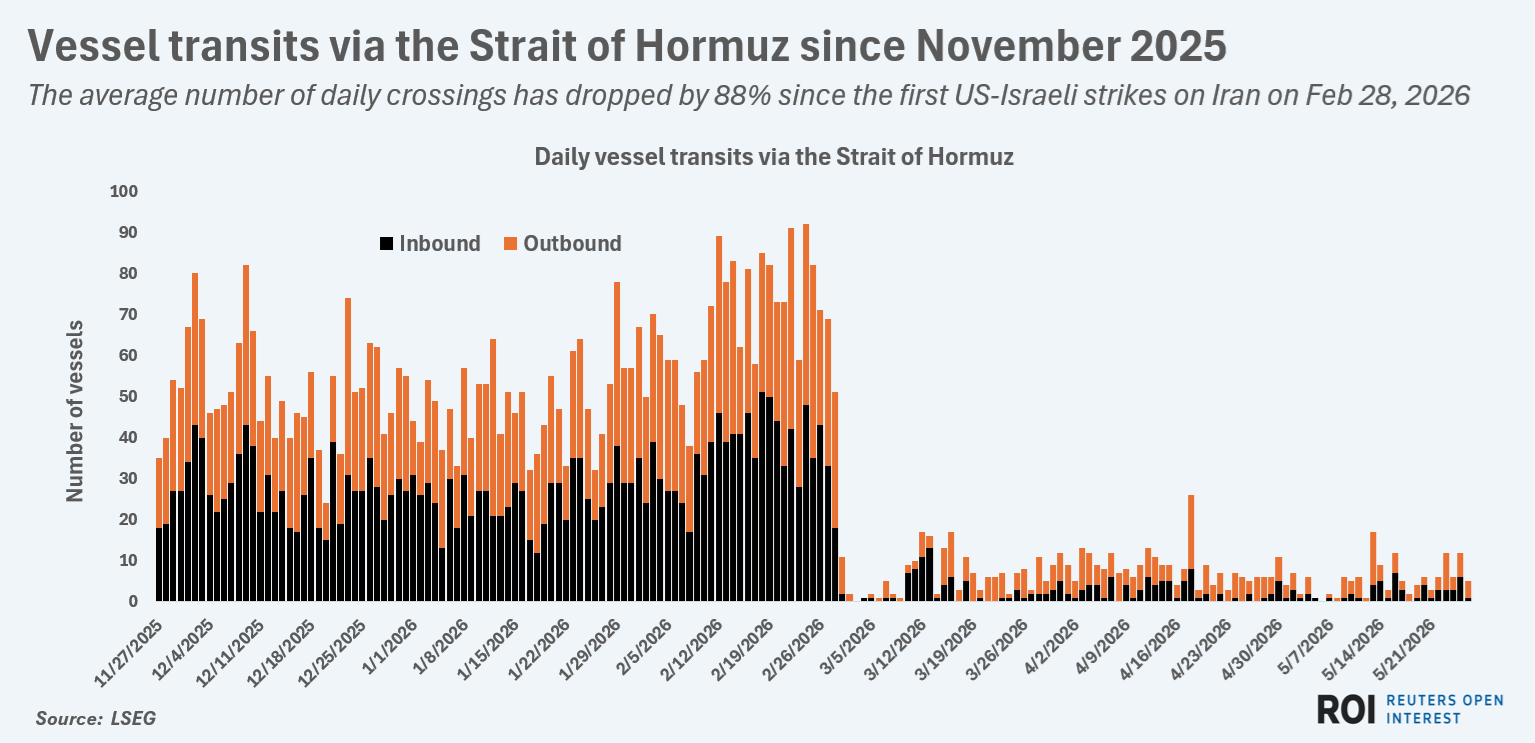
In the month before the U.S. and Israeli strikes on Iran at the end of February, roughly 70 vessels carrying crude oil, fuels, liquefied natural gas and other products transited Hormuz every day, according to LSEG data.
The cargoes on those ships accounted for around a fifth of global supplies of those commodities, particularly to Asian buyers that in some cases sourced well over half of their oil and fuel supplies from the Middle East.
Since March 1, however, average total daily transits through the Hormuz Strait have dropped to less than 7, and have averaged less than 6 vessels a day so far in May despite steady efforts to seal a peace deal and restore normal traffic from the region.
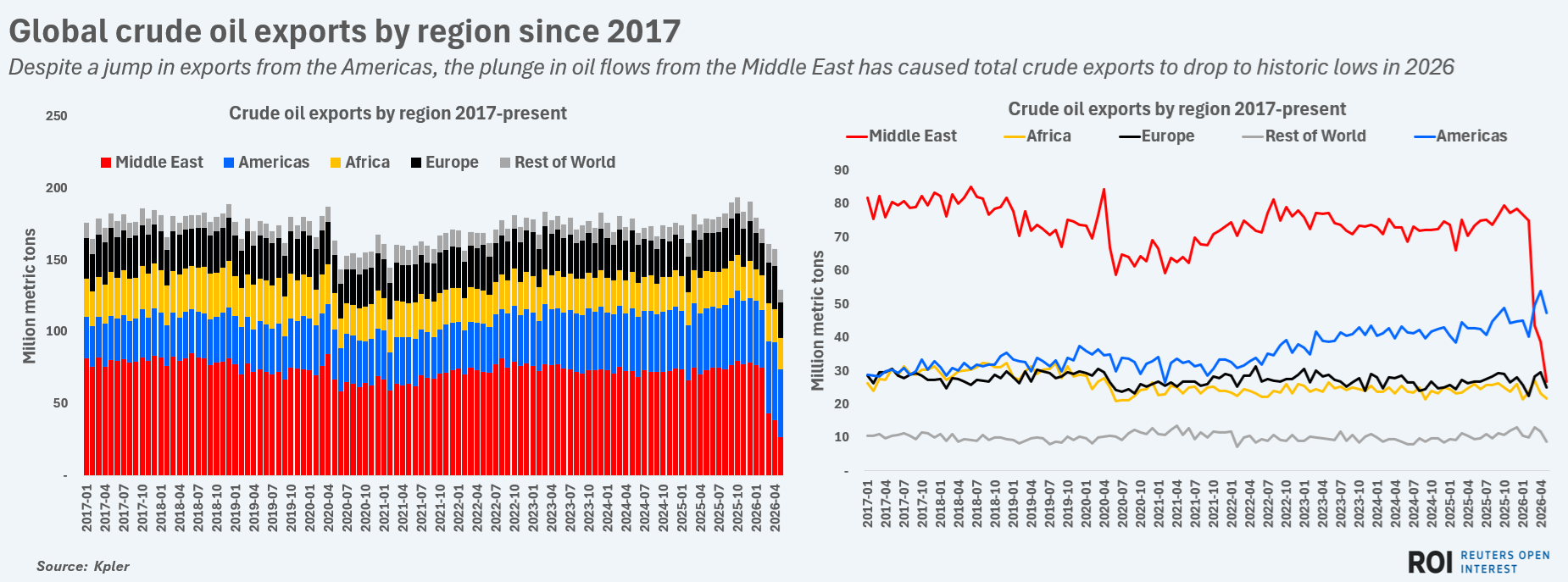
With ships denied passage through the Strait, export volumes of crude oil, refined products and LNG from the Middle East have collapsed to historic lows.
Read the full column below for six charts showing how global crude, fuel, LNG and shipping markets have all been changed by the Middle East turmoil.






0 comentários:
Postar um comentário