Hello Power Up readers,
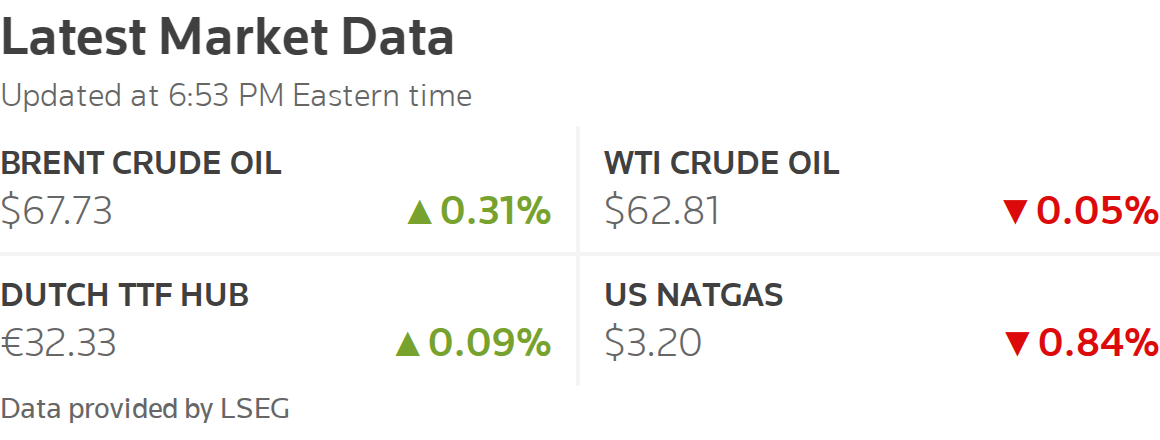
As the U.S.-Iran standoff persists, the biggest energy crisis in history continues to rage. Global oil prices jumped to a four-year high of more than $122 a barrel on Thursday after the White House indicated that the Strait of Hormuz, the vital conduit for Middle Eastern oil and gas, could remain blocked for months. It later reversed the gains in volatile trading.
Concerns over tightening global oil supplies rose following a report that President Donald Trump is slated to receive a briefing on plans for new military strikes on Iran. The surge in energy prices is bad news for the global economy, making basic every day materials from toys to toiletries and computers more expensive.
While over 13 million barrels per day of oil, around 13% of global supplies, and a fifth of the world’s LNG, remain trapped in the Gulf, the United States’ vast energy industry is roaring. The U.S. last week became a net exporter of crude for the first time since World War Two, shipping record volumes of oil and gas to customers in Asia and Europe.
Earlier this week, I wrote that the Iran conflict is cementing the U.S. as the world’s preeminent energy super power while OPEC is weakening – and shrinking.
The 65-year old producers group was dealt a massive blow on Tuesday when the United Arab Emirates, a key member since the 1960s, announced it was pulling out of the organization to pursue its ambitions to maximize production. The dramatic decision opens the door to an all-out price war, as Gulf producers will likely rush to regain market share after the Iran war ends.
Amid the gloom, major European oil companies reported bumper profits from oil trading in the first quarter as the Iran war upended global supply chains. It turns out he ability to nimbly shift barrels around the world can sometimes be even more profitable than pumping them out of the ground. More on this below.
Here are a few more headlines:






0 comentários:
Postar um comentário