The Weekend
 |
Jun 20, 2026 |
|
|
|
| Welcome, Weekenders! In this newsletter: |
| • The Big Read: The brains behind Bernie’s AI sovereign wealth fund? A Silicon Valley law professor |
| • The Takeaway: How I learned to love Mark Rober |
| • E-commerce: The fast-growing Thiel-backed startup defying a creator economy slowdown |
| • Plus, Recommendations—our weekly pop culture picks: “Foul Play,” “The Feather Wars” and “Portobello” |
|
|
| A couple days ago, I snagged a red-hot invite: David Holz, the Midjourney founder, was throwing a party—and promising to finally reveal his startup’s first hardware product after years of saying one was in the works. |
| He picked a snazzy venue, the members-only Vita Brevis Club in San Francisco’s SoMa neighborhood. As partygoers first shuffled in, they entered a darkened reception room where servers offered vegetarian caviar and an extremely potent, lavender-tinted margarita, dubbed The Midjourney. The majority of the people I found myself chatting with had met Midjourney founder and CEO Holz either through X or through the company’s Discord server. Many wore jeans and quarter-zips; one man milled around clad in a bathrobe. At one point, Figma co-founder and CEO Dylan Field showed up, as did longevity guru Bryan Johnson. The gossip in the crowd was that Johnson’s girlfriend initially couldn’t get past the door: Only 250 people were allowed in, and invites were strictly nontransferable. |
| Later, Holz, wearing his signature black beanie, made his grand reveal. It wasn’t what anyone expected: a full-body ultrasound scanner, which Holz plans to put in Midjourney-branded spas across the country. The body scanner relies on sound waves and water, and it appears to come in the form of a giant cylindrical water tank. It’ll be the first of four hardware products the company will release, Holz said. He tried to pitch some big tech companies on the scanner, but they passed on partnering with him. “They were like, ‘Sir, I make smartphones,’” Holz said. |
| In making that comment, Holz understated the expansiveness of the landscape around AI hardware. There’s a lot going on. OpenAI is working on a Jony Ive–designed smart speaker, which it expects to unveil later this year. Meta Platforms’ smartglasses from Ray-Ban and Oakley are equipped with its AI. Beyond eyewear, Meta is developing an AI-powered pendant, while Apple is focused on a wearable pin expected in 2027 or later. And there are plenty of smaller startups such as Midjourney that are working on AI products, like Opal, which is creating a mysterious AI audio gadget with backing from OpenAI, and Hark, the new startup from Figure AI founder Brett Adcock, which is working on some bespoke physical hardware. (Adcock hasn’t yet revealed exactly what.) |
| There are also numerous companies vying to make the perfect robot companion capable of washing dishes and folding laundry. That includes 1X Technologies, the Palo Alto, Calif.–based startup behind NEO, a slightly creepy humanoid, and Sunday, which has raised $200 million to create the cartoonishly cute Memo. 1X is taking orders for its $20,000 robot, while Sunday is looking for beta testers. |
| But no one has really gotten a breakthrough hit yet. Humane, a startup that raised more than $230 million to create a wearable AI pin, shut down in 2025 and sold its intellectual property to HP for about half that sum. Meanwhile, Friend, a San Francisco startup that created an AI necklace, became famous not for its product but for its widely mocked marketing campaigns. And a day before Midjourney’s big party, Evan Spiegel unveiled his long-awaited Specs, augmented reality glasses that come with an AI feature. They were met with almost as much derision as the Humane pin and the Friend device, and Snap shares ended the week down 13%. (The memes were great, though.) |
| Still, many investors are excited about what they see in all those devices and think someone will finally land on something people do like. “A thousand flowers will bloom in this area because it’s such a big prize and there are so many ways of attacking it,” said Aaref Hilaly, a partner at Bain Capital Ventures who led the firm’s investment in Sunday, the home robot startup. |
| It’s hard to predict whether Midjourney’s scanner will end up as a hardware hit. Holz, whom I profiled in a Big Read earlier this year, has an impressive history of creating beloved products—from Midjourney’s AI image generator, which still generates at least $200 million in annual revenue, to the gesture-tracking device sold by his first startup, Leap Motion. He’s long wanted to create another hardware product, and he described Midjourney as the cash cow that can fund his moon-shot projects. |
| Still, Holz’s ambitions are, well, ambitious. |
| Eventually, he hopes the devices will be widely available to doctors, and he boldly predicted they could eliminate around half of all medical costs by helping with early disease detection. But there will be a long path toward winning the FDA’s sign-off before that can happen, a fact he admitted at the party after an attendee asked him about the slog toward regulatory approval. |
| I felt impressed by the scale of Holz’s vision but a little skeptical. How transformative is this technology really? And is an AI lab the one to build it? But before Holz even finished his talk, about a quarter of the room had left to try demos of the technology, dunking their fists into tanks of water while lab coat–clad Midjourney staff watched. Even if he can’t convince everyone, Silicon Valley certainly seems ready for a spa day.—Jemima McEvoy (jemima@theinformation.com) |
|
|
|
| The Big Read |
 |
|
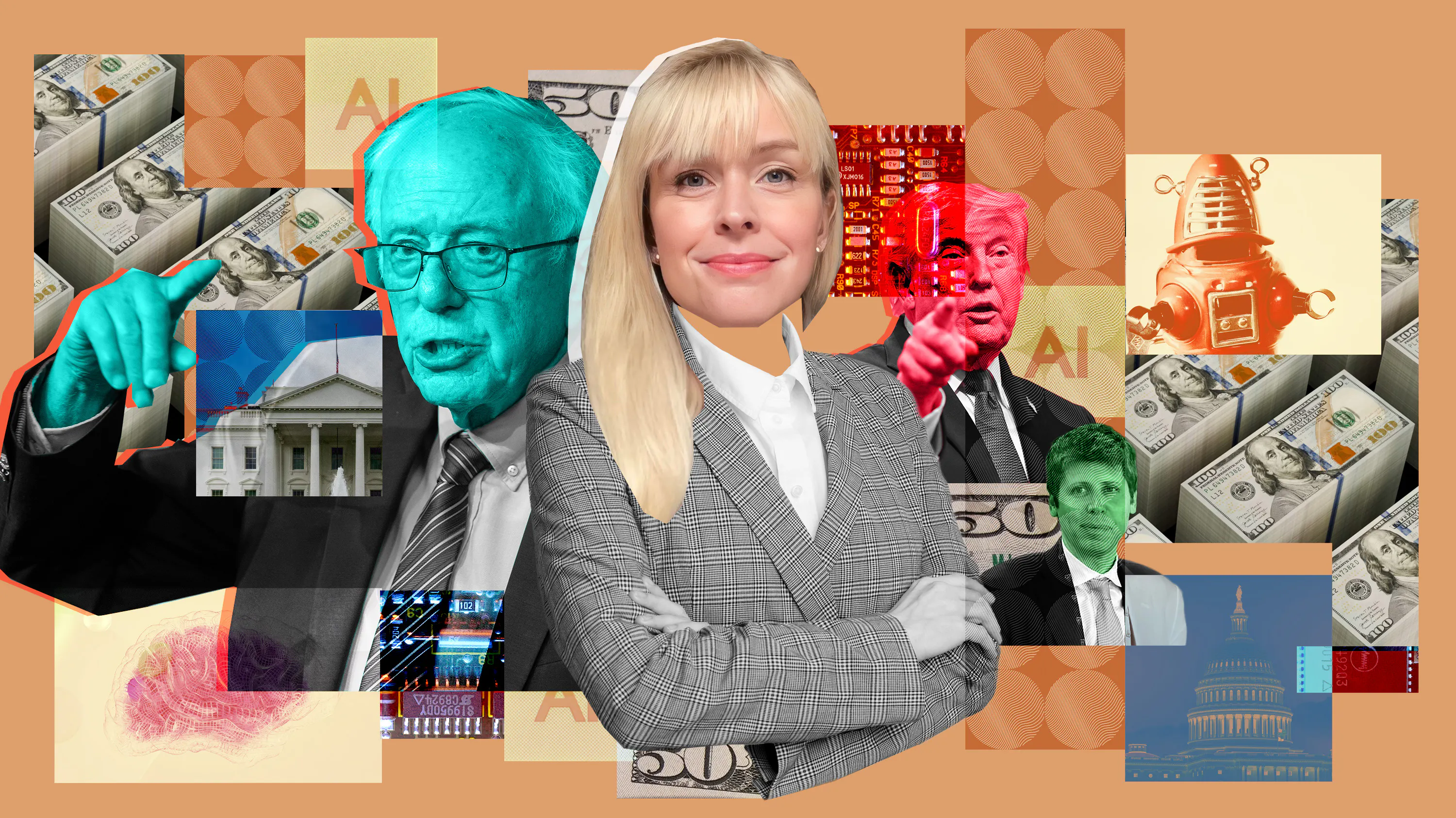
| Sarah Polcz, an IP expert and Silicon Valley denizen, would like to upend the AI boom all around her. |
| The Takeaway |
 |
|
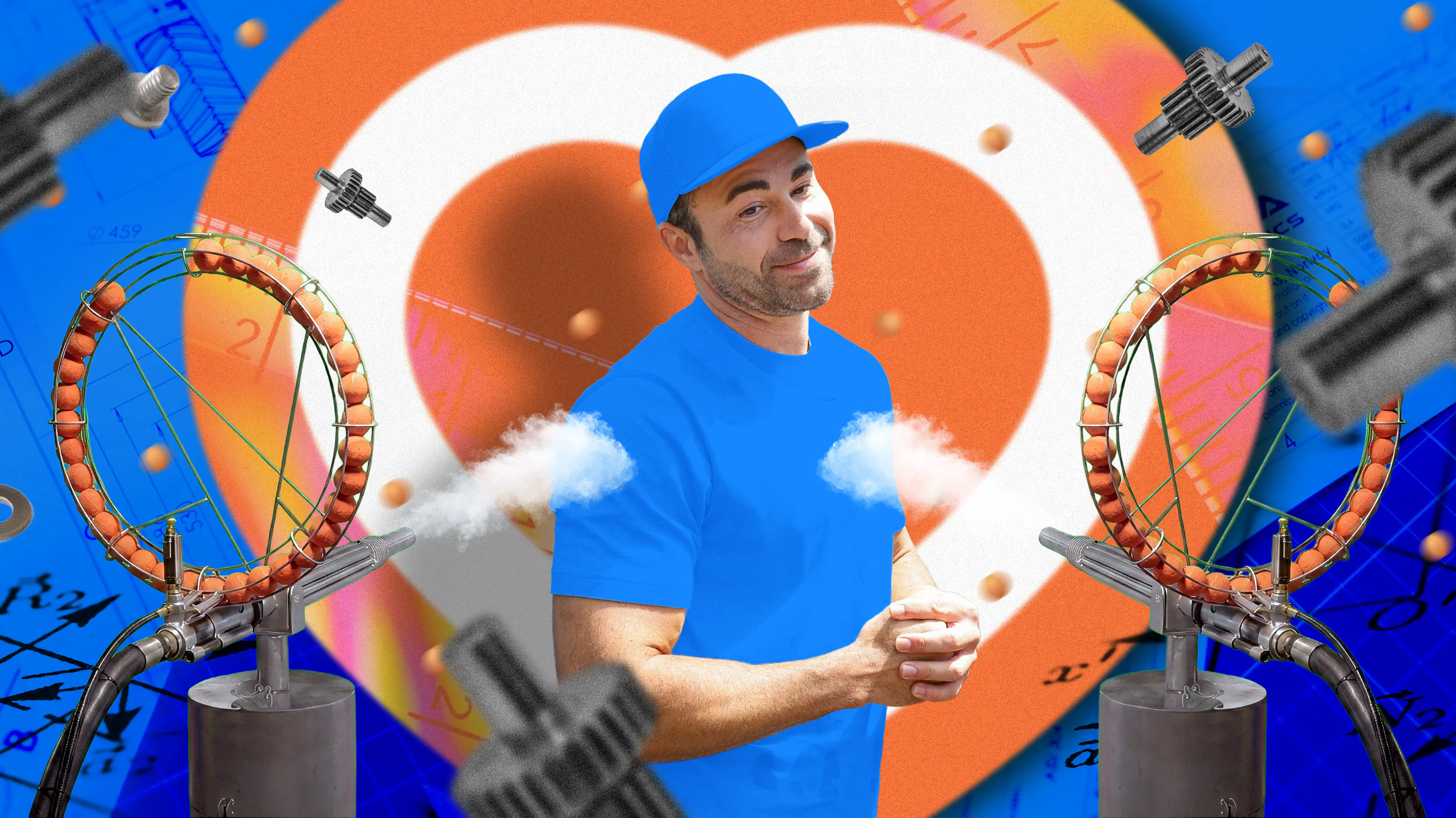
| Jessica Lessin, our editor in chief, was skeptical about the YouTube star’s new place in classrooms. So she decided to pay a visit to his secret lab with her sons in tow. |
| E-commerce |
 |
|
| Whop’s sales have quickly hit around $150 million, with grand plans for the future that surpass its very online birth. |
|
|
 |
| Listening: “Foul Play” |
| After a thrilling victory over Croatia on Wednesday, the English national soccer team look ever more like a possible champion in this year’s World Cup—even if it still trails behind those of France and Spain in the odds available on Polymarket and Kalshi. Should England prevail, it would, of course, only be the squad’s second World Cup victory: The other came a long time ago—in 1966. |
| The long drought has been maddening for the soccer-craved nation, and “Foul Play,” a new Audible podcast, thinks it has found the origin point of England’s World Cup woes: the illness that kept megastar goalie Gordon Banks out of a 1970 loss to West Germany, which led to England’s exit from the tournament and many subsequent years in the wilderness. The pod is engagingly co-hosted by Gabriel Gatehouse, a former BBC hand who previously had a popular podcast about U.S. government conspiracy theories, and Ed Banks, the legendary goalie’s grandson. Together they set off to unravel a conspiracy theory that Gordon fell ill not from simple food poisoning but from a CIA plot to poison him.—Abram Brown |
| Reading: “The Feather Wars” by James H. McCommons |
| On my regular commute via bicycle along the Manhattan waterfront, I’m confronted by a frequent feathered vexation: Canada geese. They are an ornery nuisance. They sometimes entirely halt traffic, refusing to move, and when they do budge, they tend to plod. They defecate everywhere. And while I generally take a dim view on America’s current stance on immigration, I’ve often thought they counted as a bunch of foreigners who do merit hasty deportation. |
| I daydream about a world where I can pedal in peace, free of geese, but such a planet would be a bleak place, according to “The Feather Wars,” an account of how the Industrial Age decimated the world’s bird population and the following century’s effort to save it, giving birth in large part to the modern conservation movement.An array of factors led to the near environmental disaster—from a boom of interest in hunting for sport to a Victorian-era obsession with feathered hats. (As it happens, even Canadian geese faced considerable peril: They made a good meal, and their feathers made for good pillows.) Restoring Earth’s birds took an equally varied collection of forces. Coco Chanel, for one, deserves a tad bit of credit. She helped popularize the slim, chic hats beloved by 1920s flappers, which made elaborate, plumed headgear passe. And Jay Norwood Darling, a Franklin Roosevelt aide, played a more substantial role. He pushed Roosevelt’s conservationist agenda, including the Duck Stamp Act, which finally overcame efforts to defeat a federal hunting license, with fees going to restore bird habitats. Later, Darling talked Roosevelt into putting on the highly attended North American Wild Life Conference in 1936, and its popularity led Roosevelt to establish the National Wildlife Federation. |
| Unlike, say, duck and quince jam, Darling and Roosevelt were an odd pairing. Darling, a humorist and political cartoonist who twice won the Pulitzer Prize, was a Republican, and he initially met Roosevelt’s ascension to power with staunch opposition. But they shared a mutual passion for conservation, and so keen was Darling’s interest in the subject that he agreed to join forces with Roosevelt to promulgate it. Darling’s legacy has been forever emblazoned publicly but subtly: In the creation of the Fish and Wildlife Service in 1971, the agency chose his drawing of a flying bird for its logo, which remains unchanged. Can you call it to mind? It’s the silhouette of a Canadian goose.—A.B. |
| Watching: “Portobello” |
| A foreign-language period piece about the life of Enzo Tortora, a folksy, beloved Italian TV host, might not sound like the makings of taut, blood-soaked television—even if it is from HBO. So let me frame it differently: Think of “Portobello” as an unofficial spin-off of one of the most beloved episodes of “The Sopranos,” the one in which Tony and his boys visit Naples to talk gabagool with their mafioso chums. It left fans like me craving to see more of the old country’s underworld, which “The Sopranos” left unsatiated, never again crossing the Atlantic Ocean. Decades later, “Portobello” offers a generous helping to slake that hunger. |
| “Portobello” takes its name from the Italian TV show that starred Tortora and ran from 1977 to 1983, drawing as many as 26 million people every Friday with sketches and games. In retelling his descent from fame into infamy, the HBO series focuses both on Tortora (Fabrizio Gifuni) and on the Nuova Camorra Orginazzata, a Neapolitan crime family. The mobsters devote much of their time to prison stabbings, plea deals and jailhouse interior decoration, but like the rest of Italy, they like to tune into Tortora, too. They’re mostly dumb, bloodthirsty thugs—but not the boss’s nebbish adjutant, Giovanni Pandico (Lino Musella), who develops a fascination with Tortora and his show. He writes to Tortora often, and when Tortora ignores him, he falsely implicates the host as a Camorra member when striking his own agreement with the authorities. I especially liked Musella, who conveys a thick-bodied, almost reptilian malevolence. He might’ve eaten up plenty of the North Caldwell crew.—A.B. |
|
|
|
|
|
|




 Gift Subscription


0 comentários:
Postar um comentário