For years, Elon Musk has promised investors that fully autonomous Teslas are just around the corner.
This week, Reuters colleagues Chris Kirkham and Rachael Levy spoke to the people who help train Tesla's Full Self-Driving (FSD) software, and what they described offers a rare glimpse into the gap between Musk’s public promises and the reality inside the company.
The story comes at a critical moment. Tesla's $1.6 trillion valuation increasingly rests on the belief that it will crack autonomous driving before rivals. Yet several of the workers tasked with improving the technology say they would not trust it to drive them.
Elsewhere, Washington and Mexico have opened talks that could reshape North America's automotive supply chain as they seek to reduce dependence on Asia. Meanwhile, India's investment restrictions are forcing China's SAIC to further dilute its ownership in one of its most important overseas ventures.
Which brings us to today's Auto File...
|
|
|
|
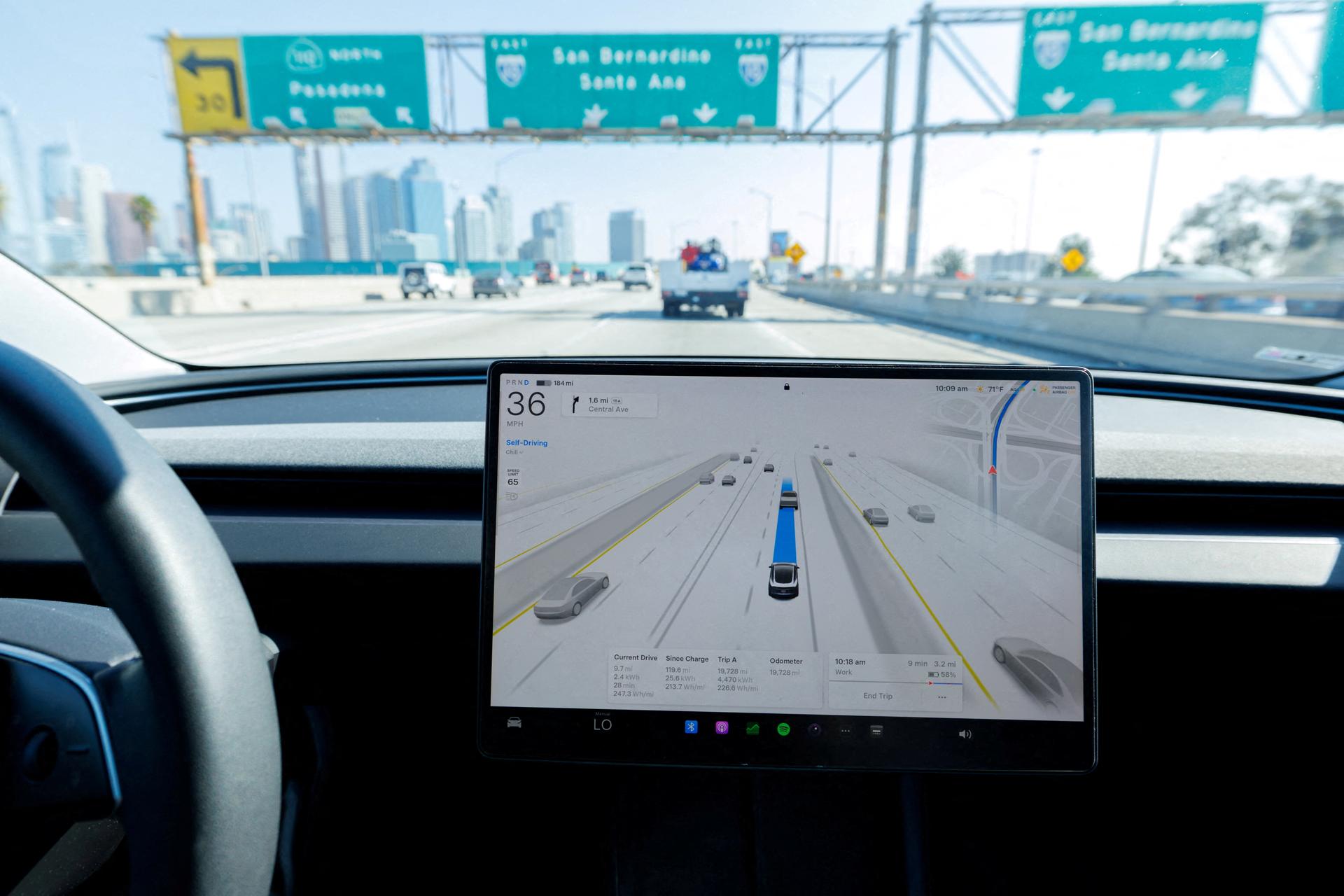
Tesla's FSD struggles with some basic driving situations. REUTERS/Mike Blake.
|
Inside Tesla's self-driving machine |
At a nondescript office in Utah, hundreds of Tesla employees spend their days watching videos of the company's cars hitting deer, cats and dogs, speeding through traffic, missing hazards and sometimes coming dangerously close to children playing in the street. Known as data labelers, these workers train Tesla's AI-powered FSD software by identifying good and bad driving behaviour.
The people doing that work have now delivered one of the clearest pictures yet of the challenges facing Tesla's autonomous-driving ambitions. Read the full story here.
In a deeply reported investigation by Reuters journalists Chris Kirkham and Rachael Levy, former Tesla employees described a system that still struggles with some basic driving situations, even as executives tout its safety and autonomous capabilities.
The reporting also reveals how employees worked long hours preparing routes and training software ahead of public demonstrations, raising questions about how representative some of Tesla's highest-profile showcases really were.
Reuters also examined Tesla's safety statistics.
For years, Musk and other executives have pointed to company data showing FSD is significantly safer than human drivers. Reuters reviewed Tesla's methodology and interviewed traffic-safety experts, many of whom said the comparisons were misleading and failed to meet the standards expected of rigorous safety analysis.
The findings matter because Tesla is no longer merely selling cars. Investors increasingly value the company as an artificial-intelligence and robotics business. And now they have been waiting to see whether the company can deliver the fully autonomous future that underpins much of its $1.6 trillion market value.
Tesla didn’t respond to detailed questions from Reuters for the report.
|
|
|
|
- The European Commission is debating new measures to shield industries from rising Chinese imports as concerns grow over supply-chain dependence and industrial competitiveness.
- China's BYD is stepping up efforts to get more customers to use its "God's Eye" assisted-driving technology as competition intensifies.
- Ferrari says its controversial electric Luce is receiving strong customer interest despite criticism following its launch.
|
|
|
|
|
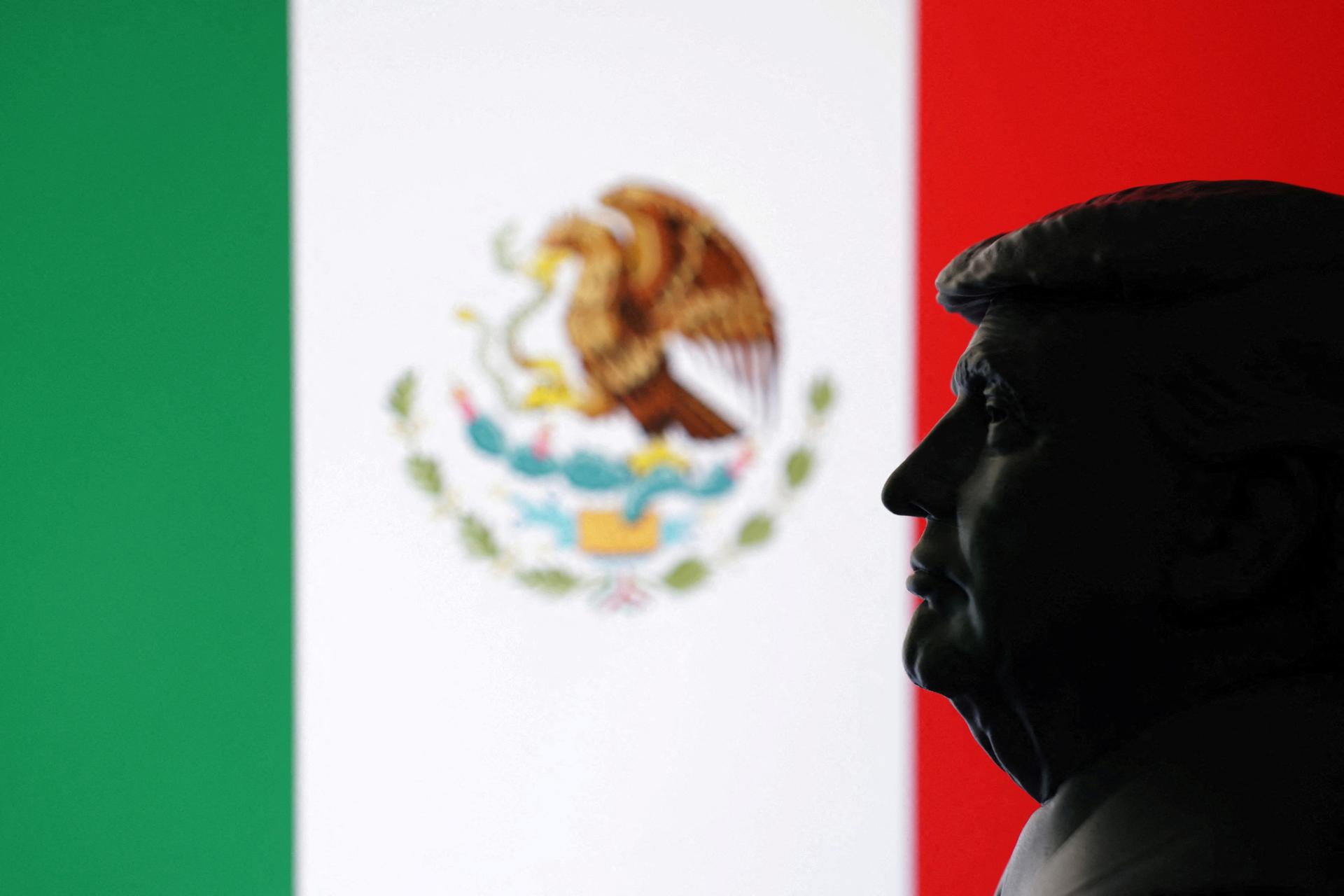
U.S. and Mexican negotiators have begun formal trade talks - REUTERS/Dado Ruvic/Illustration.
|
Trump wants to rewrite trade rules with Mexico |
Six years after the U.S.-Mexico-Canada Agreement took effect, Washington is seeking to tighten the rules that govern one of the world's most integrated automotive supply chains.
U.S. and Mexican negotiators have begun formal talks to revise the trade pact, with Washington pushing for stricter regional-content requirements and, crucially, a minimum level of specifically U.S.-made content in vehicles assembled in Mexico.
The proposals build on years of pressure from President Donald Trump, who has repeatedly argued that trade agreements encouraged manufacturing to move south of the border at the expense of American jobs.
The latest negotiations suggest that even after tariffs, threats and trade disputes, Washington is still searching for ways to bring more automotive production back home.
One particularly notable proposal would expand the list of components counted as "core parts" to include major electronics modules, a category currently dominated by Asian suppliers.
If adopted, the changes could accelerate efforts to localise electronics manufacturing in North America while creating fresh challenges for automakers that have spent decades optimising global supply chains.
For an industry already grappling with tariffs, geopolitical tensions and rising costs, the era of frictionless globalisation continues to fade. You can read it here.
|
|
|
|
|
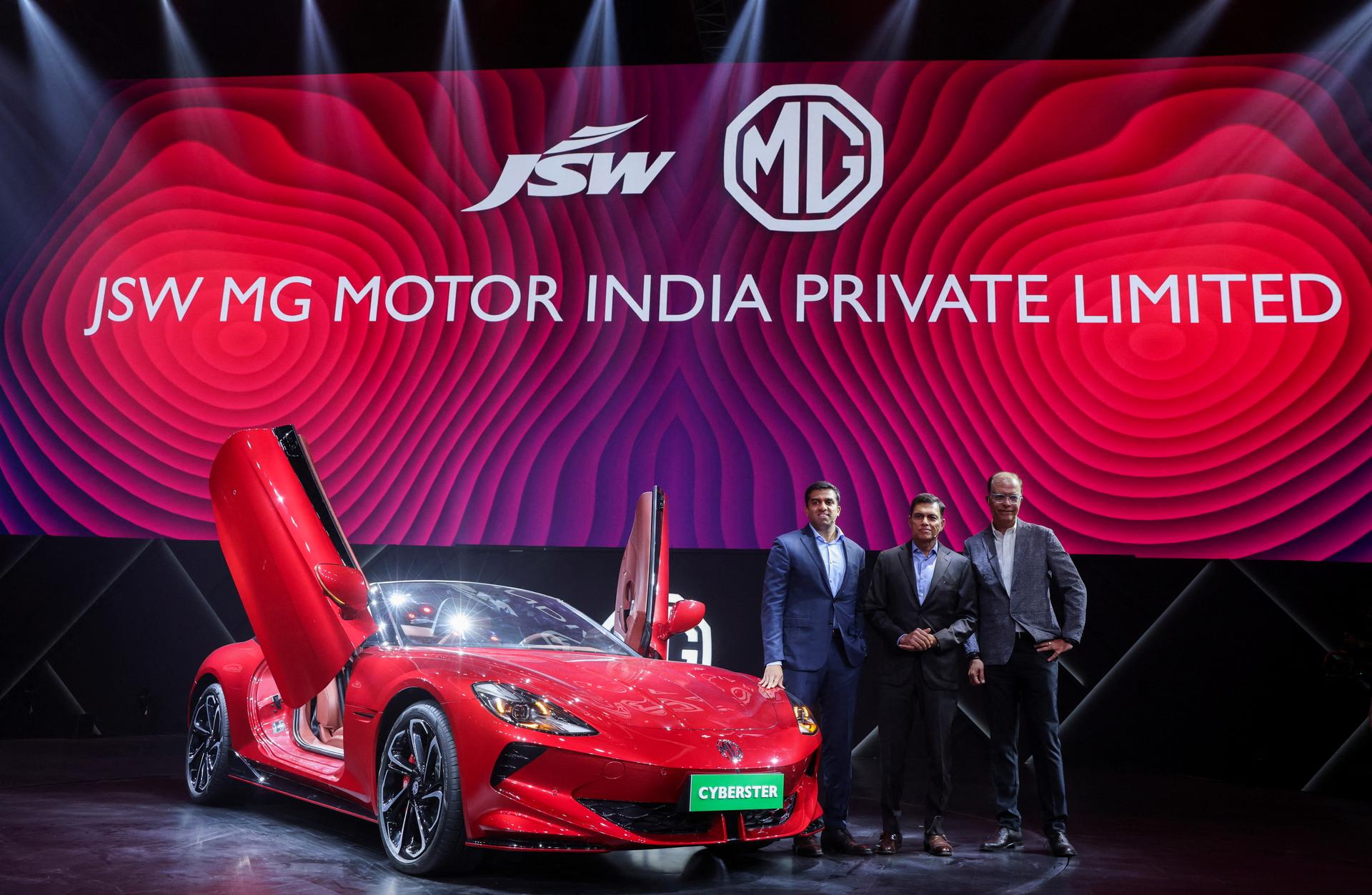
JSW will become the single largest shareholder of the unit after SAIC's stake sale - REUTERS/Francis Mascarenhas.
|
SAIC gets the short end of New Delhi’s investment curbs, again |
India's curbs on investments from neighbouring countries, aimed at China, are producing a new winner in the auto space: JSW Group.
China's SAIC Motor is set to sell another 10% stake in its local venture, JSW MG Motor, to partner JSW Group, according to sources, a move that would make the Indian automaking newbie the largest shareholder in the venture.
The deal highlights how New Delhi's investment restrictions continue to reshape the ambitions of Chinese carmakers in India. Full story here.
SAIC entered India with plans to invest more than $650 million and build a major presence in one of the world's fastest-growing car markets. But investment restrictions introduced in 2020 have made it difficult to bring additional capital into the country.
The result is a slow but steady localisation of ownership.
Relations between New Delhi and Beijing have thawed somewhat in recent months, and India has begun easing investment restrictions in areas such as electronics manufacturing. But, automobiles remain a different story.
BYD's long-pending $1 billion manufacturing proposal remains stuck, and policymakers continue to view the sector through a strategic lens.
For Chinese automakers hoping India will become their next major growth market, the message remains clear: access is possible, but it will be limited.
|
|
|
|
Stellantis will build three new Peugeot electric and hybrid models at its Mulhouse plant from 2029 as part of CEO Antonio Filosa's new product strategy.
A strike at a key supplier plant in Michigan could disrupt production of some of General Motors' most profitable pickup trucks.
BYD snapped its longest run of monthly sales declines in May, although intense competition continues to pressure profitability in China.
Indian automakers reported stronger May sales despite higher fuel prices linked to the Iran conflict, with demand for gas-based vehicles and EVs rising.
|
|
|
|
|
|
| |
|
|
Auto File is sent weekly. Think your friend or colleague should know about us? Forward this newsletter to them. They can also sign up here. Want to stop receiving this email? Unsubscribe here. To manage which newsletters you're signed up for, click here. This email includes limited tracking for Reuters to understand whether you’ve engaged with its contents. For more information on how we process your personal information and your rights, please see our Privacy Statement. Terms & Conditions |
|
| |
© 2026 Thomson Reuters. All rights reserved.
3 Times Square, New York, NY 10036 |
|
|
|
|
|






0 comentários:
Postar um comentário