Greetings from London!
Automakers across much of the globe have been unprepared for the rush of affordable cars from Chinese rivals, whose market share has grown far faster than expected.
Take Britain, where Chinese carmakers’ share has doubled this year to around 15%. Or the European Union, where BYD, Chery, SAIC and Leapmotor have almost doubled their share to 6.4%.
That’s before you get to eye-popping gains across small emerging markets that collectively mean more pain for traditional automakers. In Israel, for instance, Chinese automakers’ market share so far this year has passed 40%, up from 32% in 2025.
Chery’s Jaecoo, Omoda and Chery brands are Israel’s top sellers, cumulatively selling almost as many cars as Toyota, last year’s No.1 brand, did all year in 2025.
Traditional carmakers are under immense pressure.
And the cracks are beginning to show, as we saw in just the last few days with news that Volkswagen CEO Oliver Blume wants to push for historic job and factory cuts in Germany to bring down costs and fend off Chinese competition.
Which brings us to today’s Auto File…
|
|
|
|
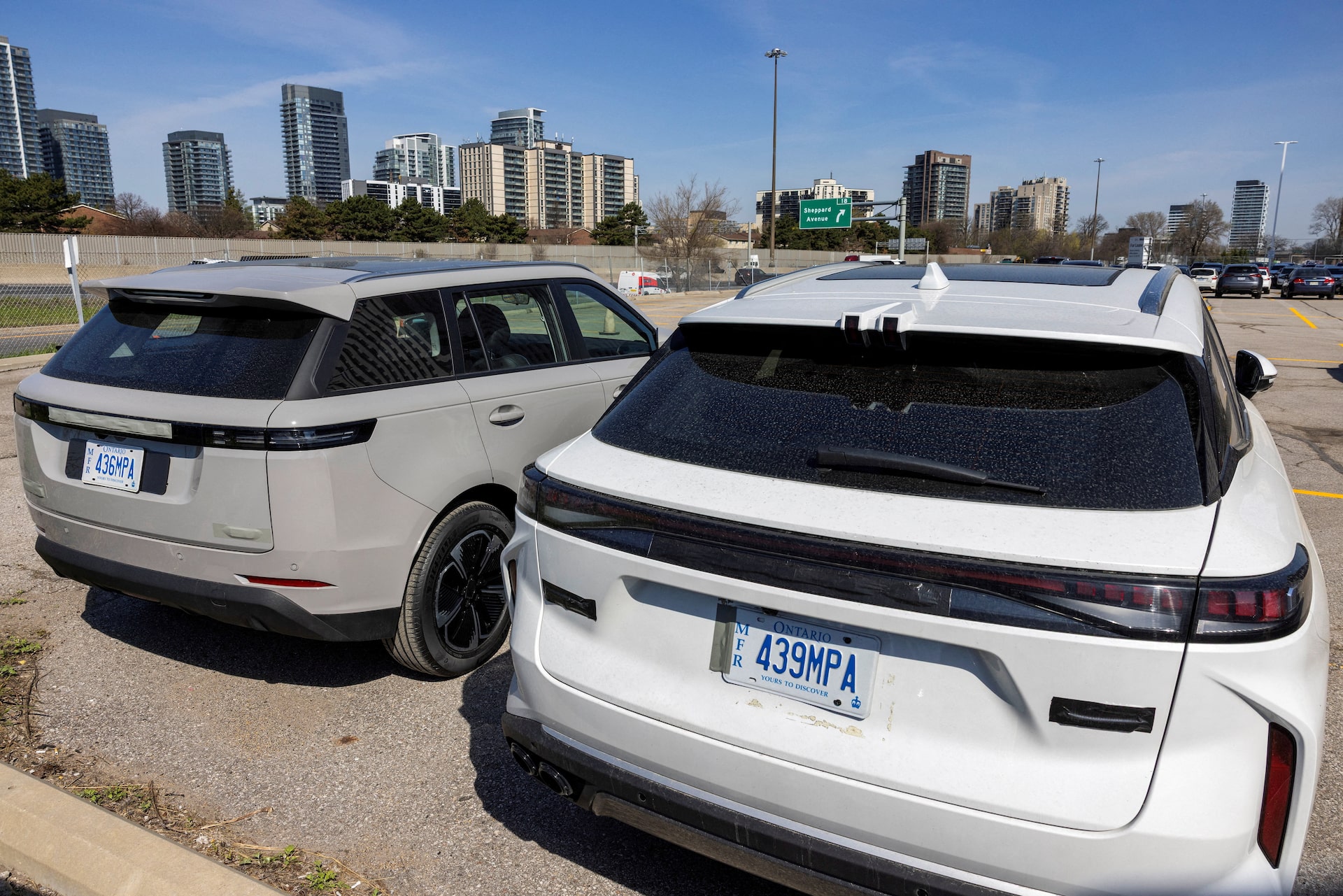
Chery cars in Toronto for a practive run - REUTERS/Carlos Osorio.
|
China’s Canadian preamble |
Part of Prime Minister Mark Carney’s push to reduce Canada’s dependence on the U.S. economy included a trade deal allowing Chinese automakers to import up to 49,000 EVs a year, rising to 70,000 over the next five.
Several Chinese automakers are rushing to set up sales in Canada, including Chery, BYD, Lotus and state-owned Changan, but industry experts say Canada is not the prize. The massive U.S. market next door is.
You can read all about it here.
Splitting 49,000 EVs between Tesla and Polestar leaves China’s carmakers with not very much. Going back to the example of Israel, Chinese carmakers sold almost 95,000 cars there in 2025 in a market less than a sixth the size of Canada’s.
Yes, the U.S. car market is currently closed to China and lawmakers are pushing to make it ever more so.
But few experts believe it can stay shut forever. And the Chinese take a long view of business that western rivals do not – for instance, China’s government has pushed dominance of the EV supply chain for a couple of decades now.
Chinese automakers make no secret of their desire to sell in the world’s second-largest and most lucrative car market.
And if you want practice for that, there’s no better place to start than Canada.
Canadians buy similar cars, using the same financing tools in dealers that are often part of cross-border groups.
Moving from Canada to the U.S. market would be like “flipping a switch”, one expert said.
|
|
|
|
|
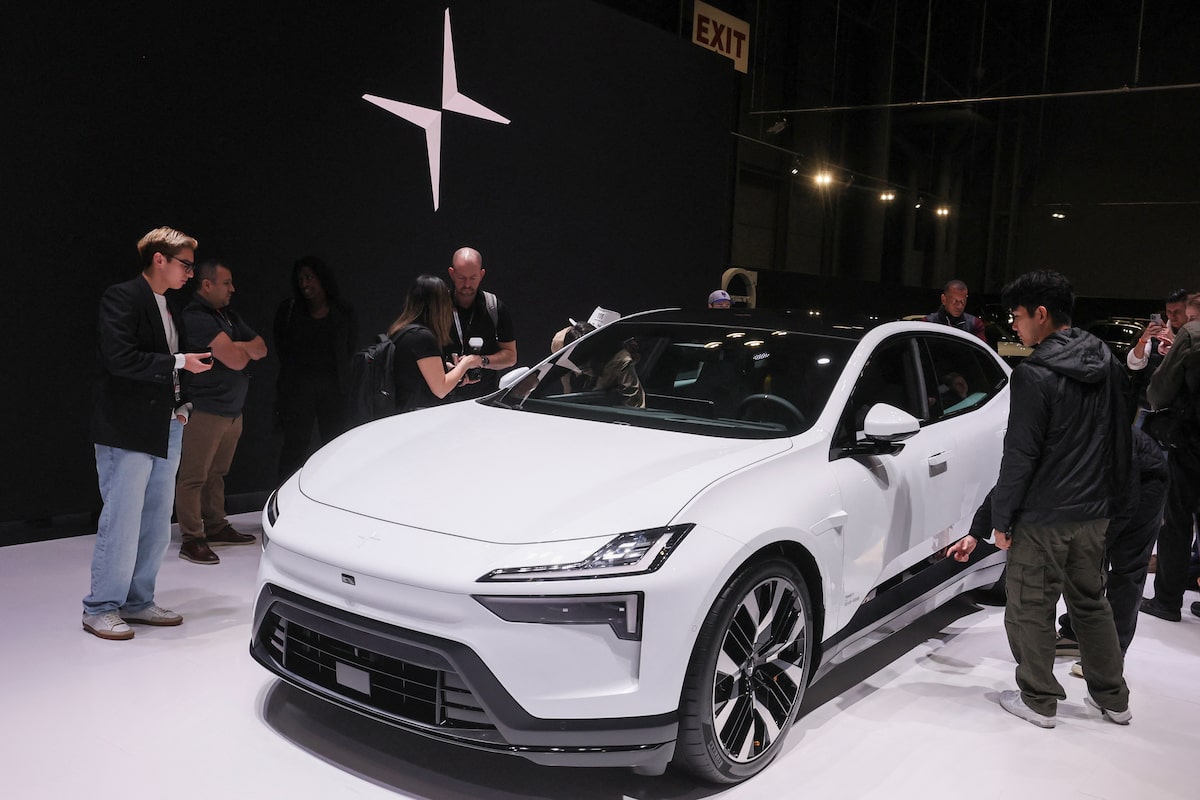
Polestar cannot sell new models in the U.S. - REUTERS/Brendan McDermid
|
Washington’s crackdown on Chinese EVs has cranked up a notch as Washington told Polestar it could no longer sell its electric cars in the U.S. market.
You can read all about it here.
Polestar’s cars are no longer made in China but contain Chinese software and hardware and it is majority-owned by China’s Geely. Sister company Volvo is 79% owned by Geely founder Li Shufu but has authorization to keep selling to U.S. buyers.
The ban has left U.S. owners of Polestar cars worried about who will service their vehicles and dealers wondering why Volvo got an authorization but Polestar did not.
|
|
|
|
|
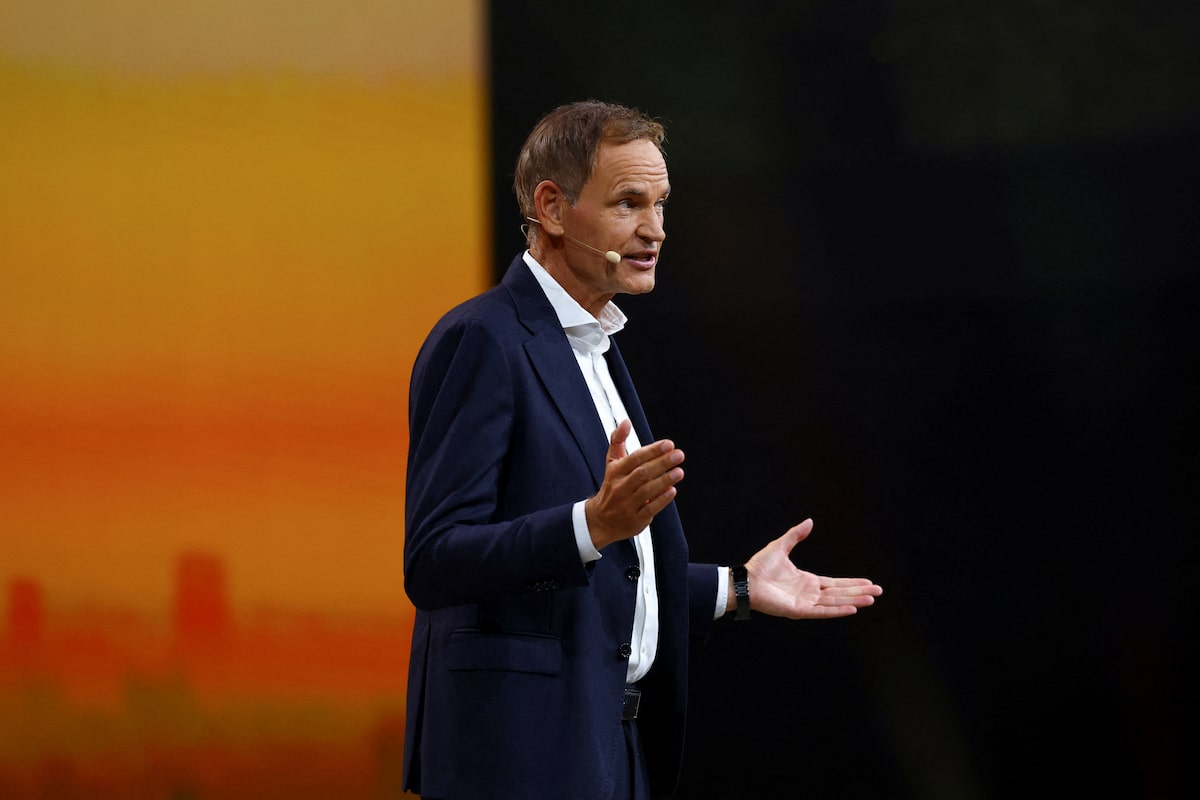
Oliver Blume's big moment has arrived - REUTERS/Kai Pfaffenbach.
|
Volkswagen has had a rough ride the last few years. The world’s No. 2 automaker lost its top spot in China in 2024 to BYD and was knocked into third place by Geely in 2025.
With Chinese automakers making inroads across most of the globe, including on Volkswagen’s home turf, CEO Oliver Blume is betting on massive job cuts and plant closures in Germany to bring down costs.
You can read about it here.
But Blume’s plan to slash 100,000 jobs and shutter four factories faces major hurdles.
First, there is the Volkswagen Law, which limits its ability to close plants, though spinning off some of those entities could help the automaker circumvent the law.
The problem is that would set up a showdown with Germany’s powerful unions and Lower Saxony, a major shareholder.
Volkswagen’s management is billing this as vital to the company’s future.
But this will be the biggest fight of Blume’s career.
|
|
|
|
India has gone to some length to keep Chinese EV makers out.
But as Reuters colleague Aditi Shah reports, that has not stopped cooperation flourishing between carmakers in both countries.
You can read more about it here.
Tata Motors will use Chinese firm Chery’s platform to make premium EVs in India.
The Tata-Chery deal shows that, despite its best efforts, India cannot keep China's EV industry out completely.
The world's most advanced EV industry is likely to continue to make inroads into India, a huge and still growing market.
That's bad news for Japanese automakers and others who are investing big in India, in part because they don't face major competition from Chinese rivals there now.
|
|
|
|
Ferrari's first-ever EV model, which has triggered a flurry of criticism since its unveiling last month, needs to be "digested" before it can be understood, the company's Chief Product Development Officer Gianmaria Fulgenzi said.
Honda CEO Toshihiro Mibe secured support for his reappointment to the board at its annual meeting after apologising to shareholders for the Japanese automaker's poor financial performance.
U.S. safety regulator the National Highway Traffic Safety Administration proposed ending a government requirement for manual brake pedals in self-driving vehicles, a move that would make it easier to deploy such vehicles on the country’s roads.
Former Nissan Chairman Carlos Ghosn said calls by some shareholders for his return reflected deep anger over years of failed turnaround plans, accusing the automaker's leadership of squandering value and losing direction since his 2018 ouster.
Chinese self-driving technology firm Momenta Global launched its Hong Kong initial public offering, seeking to raise up to HK$5.89 billion ($751 million), its prospectus shows.
Toyota’s global vehicle sales slipped for a fourth consecutive month in May, as decreases in China and the Middle East weighed on overall results.
Think your friend or colleague should know about us? Forward this newsletter to them. They can also subscribe here.
|
|
|
|
|
|
| |
|
|
Auto File is sent weekly. Think your friend or colleague should know about us? Forward this newsletter to them. They can also sign up here. Want to stop receiving this email? Unsubscribe here. To manage which newsletters you're signed up for, click here. This email includes limited tracking for Reuters to understand whether you’ve engaged with its contents. For more information on how we process your personal information and your rights, please see our Privacy Statement. Terms & Conditions |
|
| |
© 2026 Thomson Reuters. All rights reserved.
3 Times Square, New York, NY 10036 |
|
|
|
|
|






0 comentários:
Postar um comentário