The Weekend
 |
Jul 25, 2026 |
|
|
|
| Welcome, Weekenders! In this newsletter: |
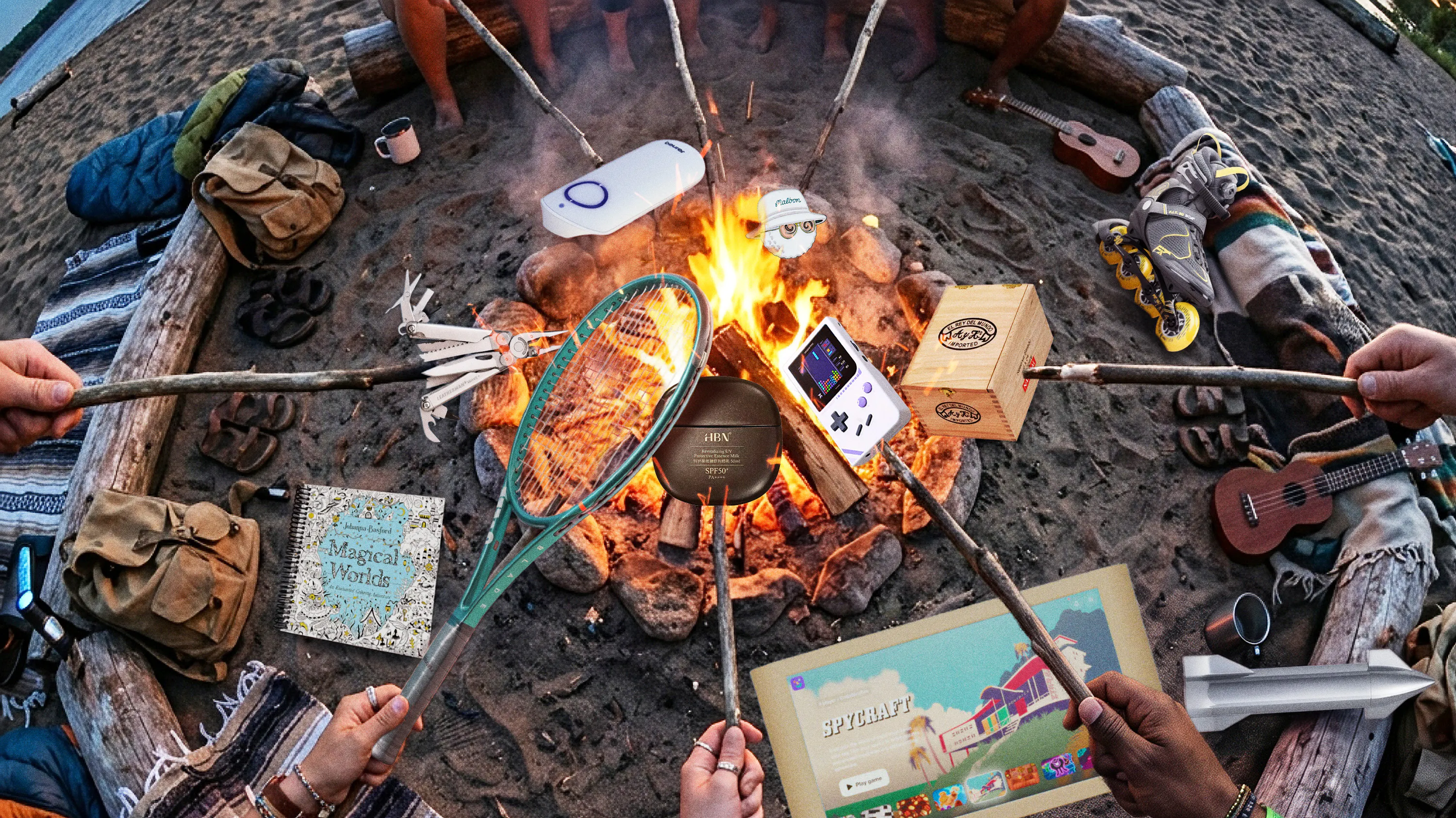
| • Shopping: Introducing the Summer Fun List—gear, gadgets and toys that all come highly recommended |
| • AI: Where is China ahead of America? In cracking down on AI romances |
| • Plus, Recommendations—our weekly pop culture picks: “The Last Twelve Weeks,” “The Nord Stream Conspiracy”and “The Dark Wizard” |
|
|
| Just after 3 in the afternoon last Wednesday, I walked into Corgi Cafe, a coffee shop in San Francisco’s Financial District operated by Corgi, an AI insurance startup, and found not a single empty seat. The ground-floor bistro sits directly beneath Corgi’s headquarters and operates 24/7, much like the relentless pace the startup has embraced as its valuation has skyrocketed in a matter of months to a reported $4 billion. |
| And if $4 billion for an AI startup devoted to insurance sounds nuts, just listen to Trevor Owens, a former crypto VC who now runs the expansion of Corgi’s cafe business, talk about his plans. I asked him how many Corgi Cafes he’d like to open in San Francisco. |
| “I would say ‘as many cafes as there are Starbucks’ is a good number,” said Owens. “That’s the benchmark we’re going against.” In addition to the Financial District outpost, Corgi hopes to have a second San Francisco venue later this summer—in the city’s Dogpatch neighborhood— and opened an Atlanta location earlier this month. By year’s end, Owens hopes to have about 100 Corgi Cafes operating across the U.S. and even abroad. Popular menu items at the Financial District cafe include beverages sponsored by other startups, like the Brexspresso (double espresso, tonic water, orange bitters) from Brex and the Secur-i-Tea (matcha, whole milk, lavender) from VioletX, a cybersecurity-focused AI startup. |
| Corgi Cafe—and Corgi’s hope to open so many more—underscore several broad truths about AI. In the rush to seize the moment around the nascent technology, Silicon Valley has thrown itself into overdrive: Conversations around work-life balance have faded, replaced by a go-go mentality that dovetails with Corgi’s own always-on ethos. Venture capitalists have thrown huge amounts of money to AI startups, allowing companies like Corgi to contemplate things like opening cafes. And with fierce, well-funded competition, those startups must find increasingly creative ways to get their names known and attract customers: In that sense, Corgi Cafe certainly qualifies as a unique form of brand embellishment. |
| “We could buy a billboard on the highway, and nobody’s going to hear about it, and that’s just money that’s thrown away,” said Owens. “Or we could just invest that in a physical location—in a business that, if we’re doing things right, should be able to pay for itself over time, and then we can actually be part of the community.” |
| Corgi Cafe is not a fancy place—sparsely appointed with a jumble of white tables and bright orange chairs. But it does make sure to offer Corgi merch, including hats and totes, and copies of The Corgi Times, a newspaper-style publication from the company featuring photos of the startup’s four company-owned corgis, Corgi-themed word puzzles and job postings from other AI companies. Corgi has further worked to make its cafe a hangout hot spot by operating a shuttle service via an old-fashioned school bus that runs between the cafe and Y Combinator’s Dogpatch office. It also has a frequent schedule of events at the cafe hosted by a small team within the startup who have become known on X as the “Corgi girls” for their prolific posting. Next week, for instance, Corgi Cafe is hosting a DIY coffee bar where founders can mix their own lattes. It’s also coordinating a laser tag evening and a kayaking day with Y Combinator’s summer class. |
| While the cafe has helped Corgi gain notoriety, it remains unclear how well its outlets will do outside San Francisco’s AI bubble. Owens declined to share details about the exact costs of running the Corgi Cafe but said the Financial District location recently became profitable and future locations will be built as inexpensively as possible. |
| Owens, Corgi Cafe’s head of expansion, previously built a cafe with his wife in San Juan, Puerto Rico, in 2025 after years of managing a $7 million bitcoin-focused fund. He learned about the job running Corgi Cafe through a former colleague who was working at the startup. Owens found Corgi’s obsessive work culture appealing. “I’ve always worked seven days a week,” he said. |
| Another motivator: The role also came with up to 0.01% equity in the startup, according to a job posting, worth about $400,000 at Corgi’s current valuation. |
| Though he hopes to eventually upgrade the cafes’ interiors to some degree, Owens thinks their main draw mostly lies in attracting the right type of clientele. “When you first walk into the Corgi Cafe, your first comment is not ‘Wow, they spent a lot of money on this space,’” said Owens. “It’s more like ‘Look at all the people here.’” |
| Often, Owens goes home around midnight. “And there’s still people working down there.”—Jemima McEvoy (jemima@theinformation.com) |
|
|
|
| The Big Read |
 |
|
| RecommendedA mind trick of a card game, a Bondesque gizmo for ocean play, a box of billionaire-approved cigars: We went around Silicon Valley asking for the finest seasonal delights. |
| Artificial Intelligence |
 |
|
| As ByteDance and others have eliminated AI companions, their passionate enthusiasts have been considering how to pressure the companies into restoring them. |
|
|
 |
| Listening: “The Last Twelve Weeks” |
| A quarter century after Charles Schulz’s final “Peanuts” strip, his characters enjoy a tremendous degree of cultural relevance—in no small part, of course, because Schulz established them as pint-size personifications of very universal, fairly grown-up emotions, like anxiety (Linus), rage (Lucy) and whimsy (Snoopy). It’s easy for people to look at them and see reflections of themselves, so they’re appropriated quite a bit in conversational shorthand. But I’ve never heard a “Peanuts” character get invoked in a discussion of capital punishment until “The Last Twelve Weeks,” a new podcast from Serial and The Marshall Project. In a dark, dark, dark but apt enough metaphor, attorney Greg Wiercioch, one of the series’ chief protagonists, likens his approach to defending death-row inmates to the resilience of Charlie Brown: Wiercioch is always trying to take every shot possible at exonerating his clients—always game for another try at that ol’ football. |
| “The Last Twelve Weeks” is a clever and engrossing entry in podcasting’s overstuffed true crime genre, with greater energy than much of what fills that category. As the title suggests, the series focuses on a mad-dash, last-ditch effort by Wiercioch and his team to stay the execution of David Wood, a man convicted decades ago for a string of grisly El Paso, Texas, murders. The host is Maurice Chammah, a native Texan and a journalist who specializes in capital punishment cases for The Marshall Project, which has won two Pulitzer Prizes for its criminal justice coverage. Chammah does end up retelling many of Wood’s alleged crimes—which have been revisited much in the past—but seldom before has any reporter had the same type of front-row seat to the legal maneuverings that go into defending someone like Wood. |
| Smartly, Chammah makes the alleged serial killer a supporting character: Wood is no rose and wouldn’t exactly make for a likable main subject on his own—having been convicted for multiple rapes long before his murder trial. Chammah is most fascinated by the lawyers trying to save Wood’s life, and he doesn’t shy away from acknowledging that attorneys like Wiercioch attract plenty of criticism for their tactics, which involve relying on loopholes and courtroom delays. As Chammah makes clear, they are Charlie Browns by way of Johnnie Cochran.—Abram Brown |
| Read: “The Nord Stream Conspiracy” by Bojan Pancevski |
| A good spy story often has its fair share of shadowy figures, and sometimes those people come with code names or mysterious epithets: There’s M from James Bond, as well as Control from the Le Carré novels. And the titular assassin from Frederick Forsyth’s “The Day of the Jackal.” It’s the rare nonfiction work that has credible reason to borrow the trope, but “The Nord Stream Conspiracy” does, with author Bojan Pancevski pseudonymizing many of the sources who helped him compile his remarkably detailed account of the 2022 Ukrainian mission to blow up the Nord Stream gas pipelines in the Baltic Sea. In picking the monikers, Pancevski chose some goodies, including the Ice Man, the Priest and the Grandpa, among many others. |
| Pancevski, The Wall Street Journal’s chief European political correspondent, has doggedly pursued the tale for years and adds great detail to it, much of it derived from conversations with the six-person crew that dove down in pairs to the pipelines carrying the mines. After they succeeded, the explosion became a matter of geopolitical tension: The pipelines carried crucial Russian natural gas to Germany—a Ukraine ally but nonetheless reliant on Russian energy. The German authorities began to investigate who dunnit. Russia blamed America. America denied any involvement, and so did Ukraine. A complex, multiyear investigation by German police ensued, a portion of it hampered by their counterparts in Poland, who aided Ukraine in protecting some of the people behind the bombing. According to Pancevski, the Germans have identified every Ukrainian involved but have only one man in custody. |
| Pancevski clearly has some doubt that he has unraveled the story in its entirety, and he includes an anecdote about his dinner with one of the Nord Stream saboteurs at a Warsaw steakhouse in which the spy insists Ukraine couldn’t have acted alone. He insists America puppet-mastered the entire thing. |
| “Ukraine doesn’t have the money or the resources,” said the saboteur. “All we had was a handful of patriotic idiots willing to go to the bottom of the sea. That’s our main resource: patriotic idiots.”—A.B. |
| Watching: “The Dark Wizard” |
| Picture Jacob Elordi, likely stoned but also possibly high on shrooms, scaling a Yosemite Valley cliffside—no ropes, just doing a fine job of resembling a real-life Peter Parker. |
| There, I’ve given you a reasonable image of Dean Potter, the disruptive, egotistical and tragic figure who transformed the sport of mountain climbing in the 1990s and into the 2000s before his 2015 death, a vertiginous fame reexamined in HBO’s “The Dark Wizard,” a four-episode documentary. Potter, a 6-foot, 6-inch giant of a fellow, accumulated climbing records like other men amass crates full of vinyl LPs: He and a partner reset the speed record on summiting The Nose at Yosemite not once, not twice—but three times. He also owned the record for soloing The Nose, reaching the top of the 3,000-foot wall in a sub–13-hour time that undercut an impressive mark set a few years earlier (14 hours, 10 minutes) and blew past the one established in the previous decade (21 hours, 22 minutes). Now consider another element: Potter and his friends, as I intimated, sometimes climbed under the influence of any number of substances. |
| As his feats mounted, Potter overcame a preference for aloof daredevildom and grew more comfortable in front of the camera, making himself available to journalists and becoming a Patagonia marketing star. (It would’ve been a pity not to commercialize his good looks.) So there was plenty of footage available for directors Peter Mortimer and Nick Rosen, a pair of climbing enthusiasts themselves. (Their well-received earlier documentary, “The Alpinist,” which followed Canadian climber Marc-André Leclerc over a year of exploits, garnered plenty of plaudits in 2021.) Mortimer and Rosen were friendly with Potter in the later years of his short life—in the period after his marriage to fellow climbing star Stephanie Davis had crumbled and his controversial climb of Utah’s Delicate Arch cost them both lucrative Patagonia deals. |
| For “The Dark Wizard,” Mortimer and Rosen had access to Potter’s private diaries, and his own words underscore the restless depression that dogged him. (Potter was also an avid doodler; Mortimer and Rosen bring many of those doodles to life with well-timed animation.) As he aged, his pursuits grew only more extreme. Once he’d lost some of his interest in solo climbing, which involves ascents without ropes or protective equipment, Potter essentially invented a new sport, freeBASEing, which combined solo climbing at greater heights with only the safety of a BASE parachute. Then he took up wingsuit flying, setting records there, too. (It’s also what killed him.) With Mortimer and Rosen presenting Potter as a self-destructive genius, watching “The Dark Wizard” is not dissimilar to gazing at a Blue Period Picasso or listening to a Kurt Cobain album, with the series conjuring a mix of wide-eyed appreciation and forebodeful dread.—A.B. |
|
|
|
|
|
|





 Gift Subscription


0 comentários:
Postar um comentário