Hi there,
Fed Chair Kevin Warsh’s tough talk on inflation isn’t helping his case on markets. The U.S. government's long-term borrowing costs have hit their highest since 2007 with investors growing increasingly worried that there is little urgency from Warsh to act, increasing the risk that inflation won’t be reined in.
The U.S. central bank left interest rates unchanged on Wednesday but the widely expected decision drew sharp dissent, with three members of the Fed’s rate-setting committee wanting a hike. The “hawkish hold”, as analysts characterised it, has left the bond market scratching its head. In keeping with his preference for a quieter Fed, Warsh declined to offer any clues about future rate action. Long-dated U.S. bond prices surged above 5.20% on Wednesday, the highest in two decades.
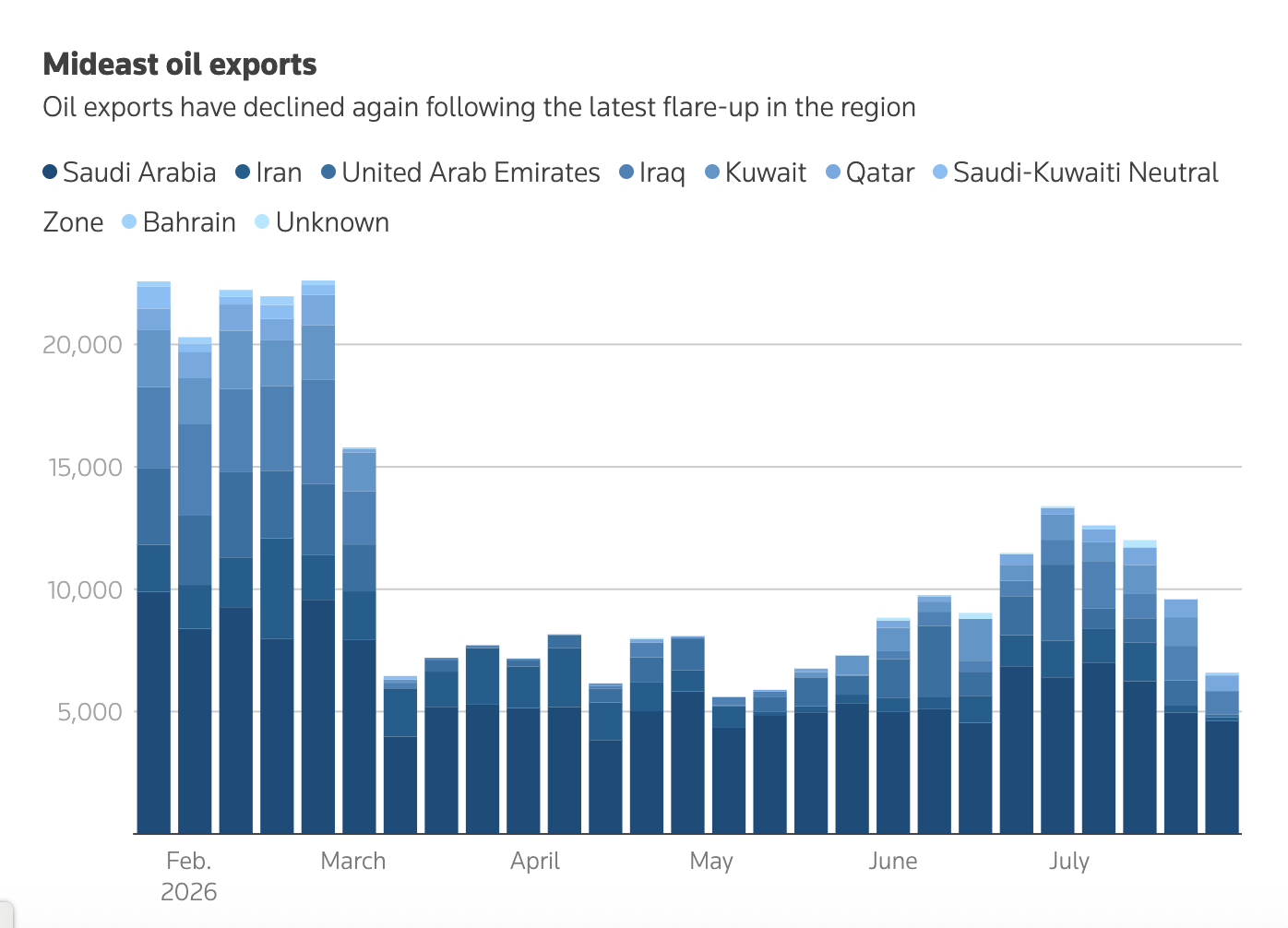
The conflict in the Middle East is widening. A drone attack on gas tankers at an Egyptian port on the Mediterranean is a worrying development for Gulf energy producers who have got ever more reliant on the Suez Canal to get their supplies out.
Suez is an expensive but critical alternative option after the U.S.-Iran war choked off the Strait of Hormuz, the world’s most important artery for shipping oil and gas, and the Iran-backed Houthis started targeting Saudi Arabian tankers in the Red Sea.
As my colleague Ron Bousso points out, it’s creating an alarming new norm for Gulf energy supplies, with worries about the reliability of supply becoming increasingly entrenched among buyers. India's state-owned Mangalore Refinery this week issued a crude purchase tender that, for the first time, explicitly asked suppliers to avoid using the Red Sea and the Strait of Hormuz. This suggests that, even if shipping resumes and a diplomatic agreement is reached, a big if, Gulf exporters may be forced to offer discounts to retain customers.
Western oil giants on the other hand are benefiting from price increases due to the Iran war. Shell's net profit more than doubled in the second quarter as the rewards from trading and refining outweigh the disruption to its Qatar operations. The conflict has helped solidify the United States’ position as the world’s largest LNG exporter. Qatar, one of the world’s biggest LNG exporters, had to buy supplies from the United States this year to reduce disruption to key customers in Asia.
Speaking of U.S. exports, check out this column from Gavin Maguire about how, despite all the bluster over tariffs and trade bans, the U.S. is simultaneously becoming an increasingly important supplier of the raw materials that keep China's industrial machine running. The emerging reality is that America and China are not decoupling so much as specializing and it raises an uncomfortable question: can the U.S. realistically restore manufacturing leadership while simultaneously becoming a key supplier of the raw materials needed by Chinese manufacturers?
Finally, a big thank you to European economics editor Mark John for stepping in to author this newsletter for the last couple of weeks. I was out sick so I don’t have an Econ World podcast to share. We’ll be back next week with the usual show.
As ever, I'd love to hear from you. Just drop me a line on LinkedIn.






0 comentários:
Postar um comentário