Hello Power Up readers,
It feels like we’ve been here before, doesn’t it? The U.S. military launched a fifth night of attacks on Wednesday after reimposing a naval blockade of Iran's ports, which Washington says is aimed at reopening the Strait of Hormuz, closed by Iran last Saturday after a fragile truce collapsed. Iran responded by targeting multiple U.S. military bases across the region, with Tehran's top negotiator Mohammad Baqer Qalibaf stating that Iran was "in an essential and existential war with America".
U.S. President Donald Trump on Tuesday threatened to hit Iranian power plants and bridges next week unless Tehran resumes negotiations, echoing a threat he made just before the two sides agreed on an interim ceasefire deal on June 17. For now, Iran insists it will retain control over the narrow waterway, branding it as an inviolable "red line," while the prospects of further escalation in the conflict are rising.
Unsurprisingly, the number of vessels travelling through the Strait of Hormuz has dropped sharply this week, reversing a modest recovery in the previous two weeks and reigniting concerns of a new global oil and gas supply crunch. The conflict and threat to oil supplies risk deepening after Iran signalled that its Houthi allies in Yemen could block the Bab el-Mandeb gateway to the Red Sea.
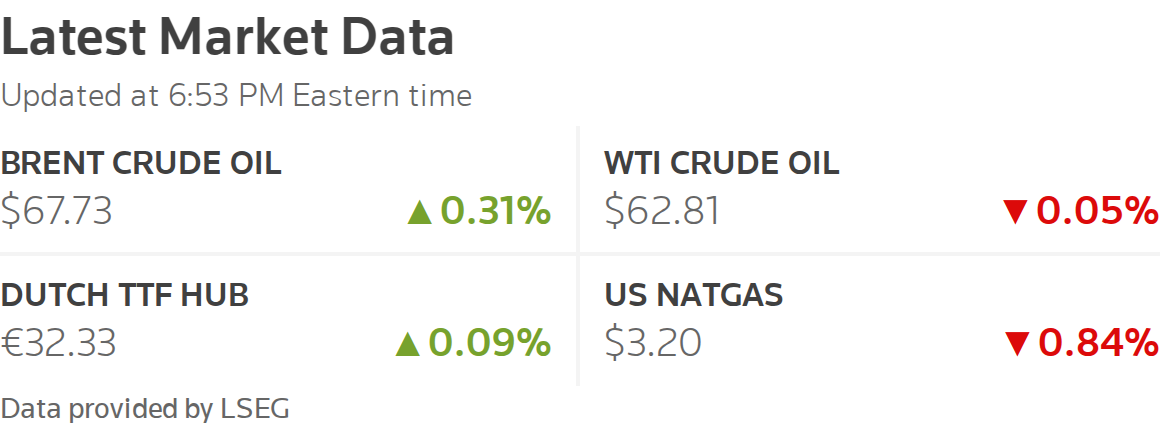
Oil prices, meanwhile, have steadied around $85 a barrel, indicating that markets remain rather sanguine. That may be a miscalculation, as I wrote on Tuesday.
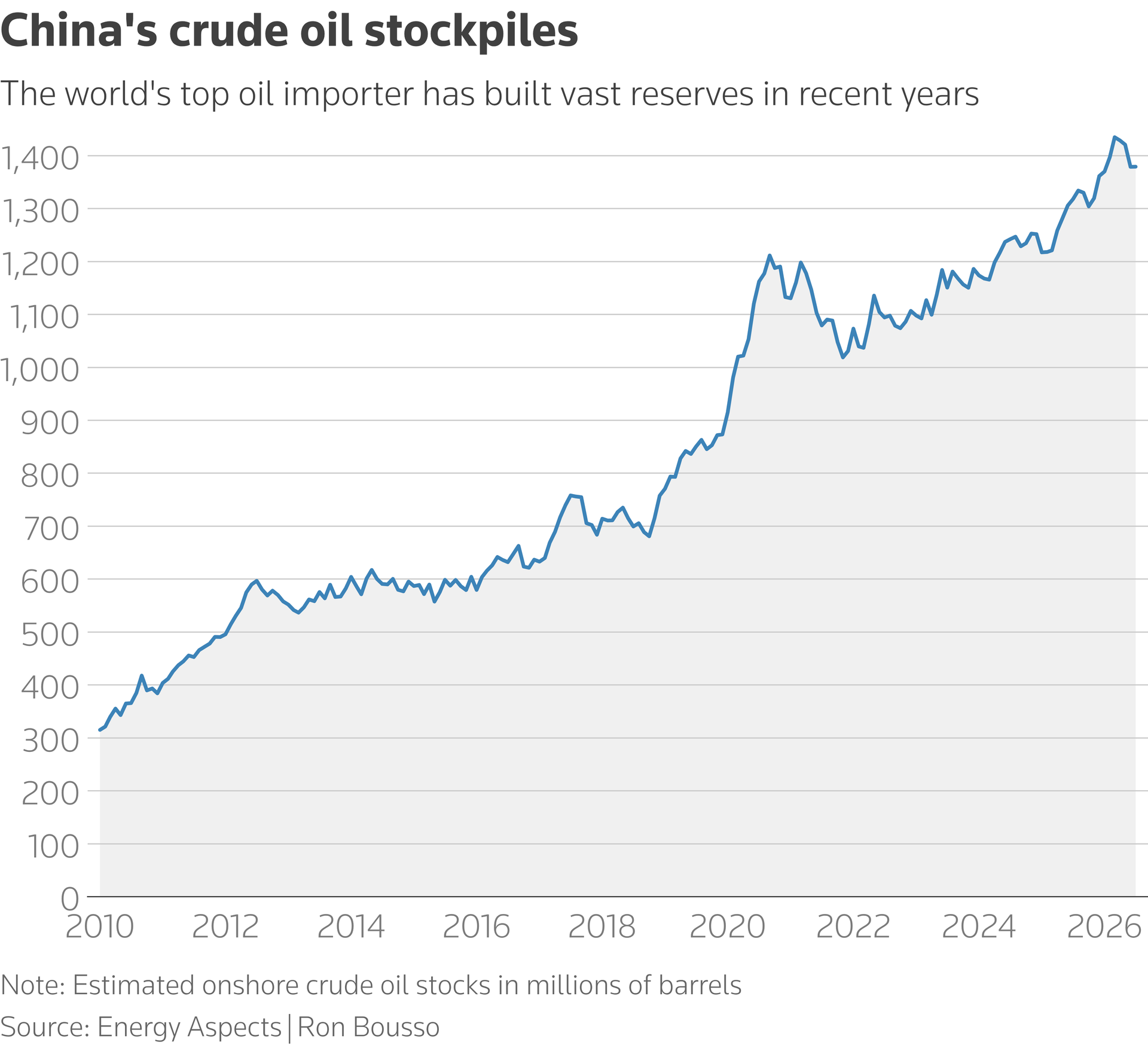
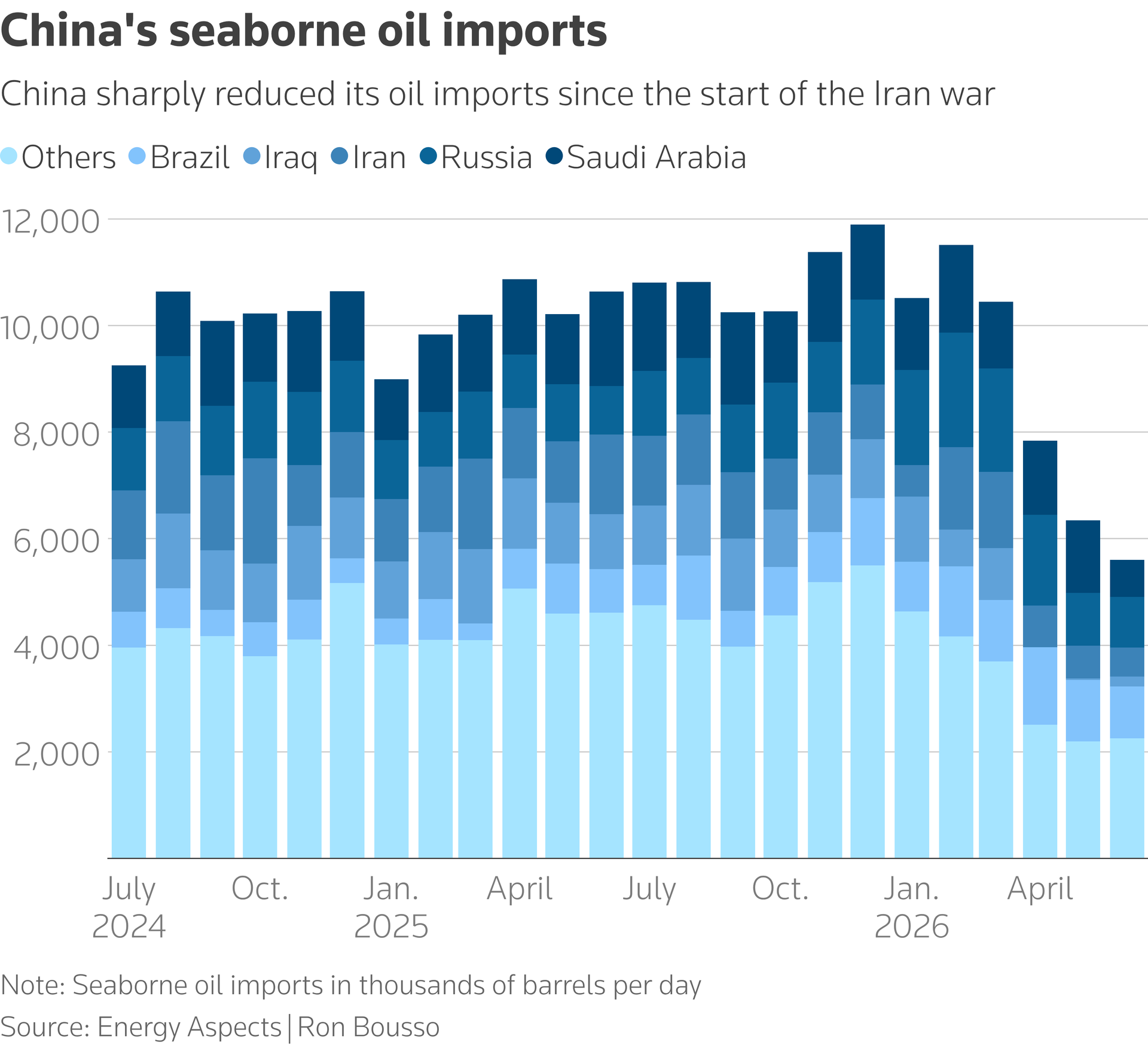
The global energy market has undergone some profound changes due to the Iran War, and while some may be temporary, others might prove lasting, especially those that were building before the conflict. The biggest may be China’s role in the global energy system. Beijing’s response to the crisis caught the industry by surprise, but China has now established itself as a new force in global energy markets – an independent, opaque, massive power. More on this below.
Here are some more headlines:






0 comentários:
Postar um comentário