Hello Power Up readers,
Energy markets are heating up again.
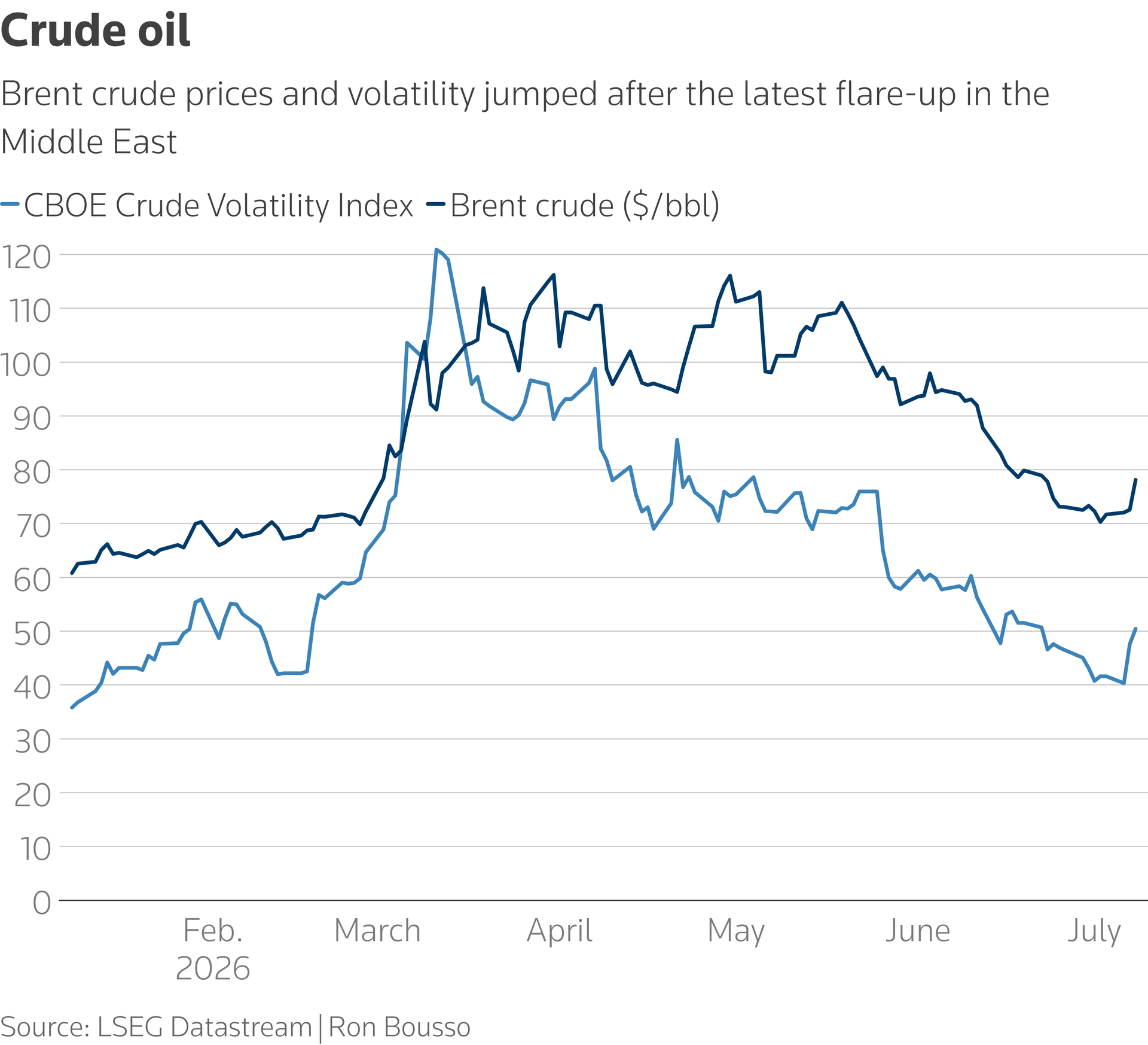
The U.S.-Iran interim peace deal signed on June 17 brought cautious optimism that oil and gas flows through the Strait of Hormuz would recover quickly, but things took a big step back this week.
On Tuesday, Iran struck two tankers trying to cross the Strait of Hormuz through shipping lanes on the Omani side. This included a Qatari liquefied natural gas (LNG) carrier that was badly damaged. The attacks were Tehran’s latest effort to assert its control over vessel traffic through Hormuz in the wake of the war, something Washington and regional powers vehemently oppose.
This was not the first incident since the deal, but by far the most serious one. Within hours, the U.S. military struck dozens of targets across southern Iran, prompting Iran to retaliate across the region.
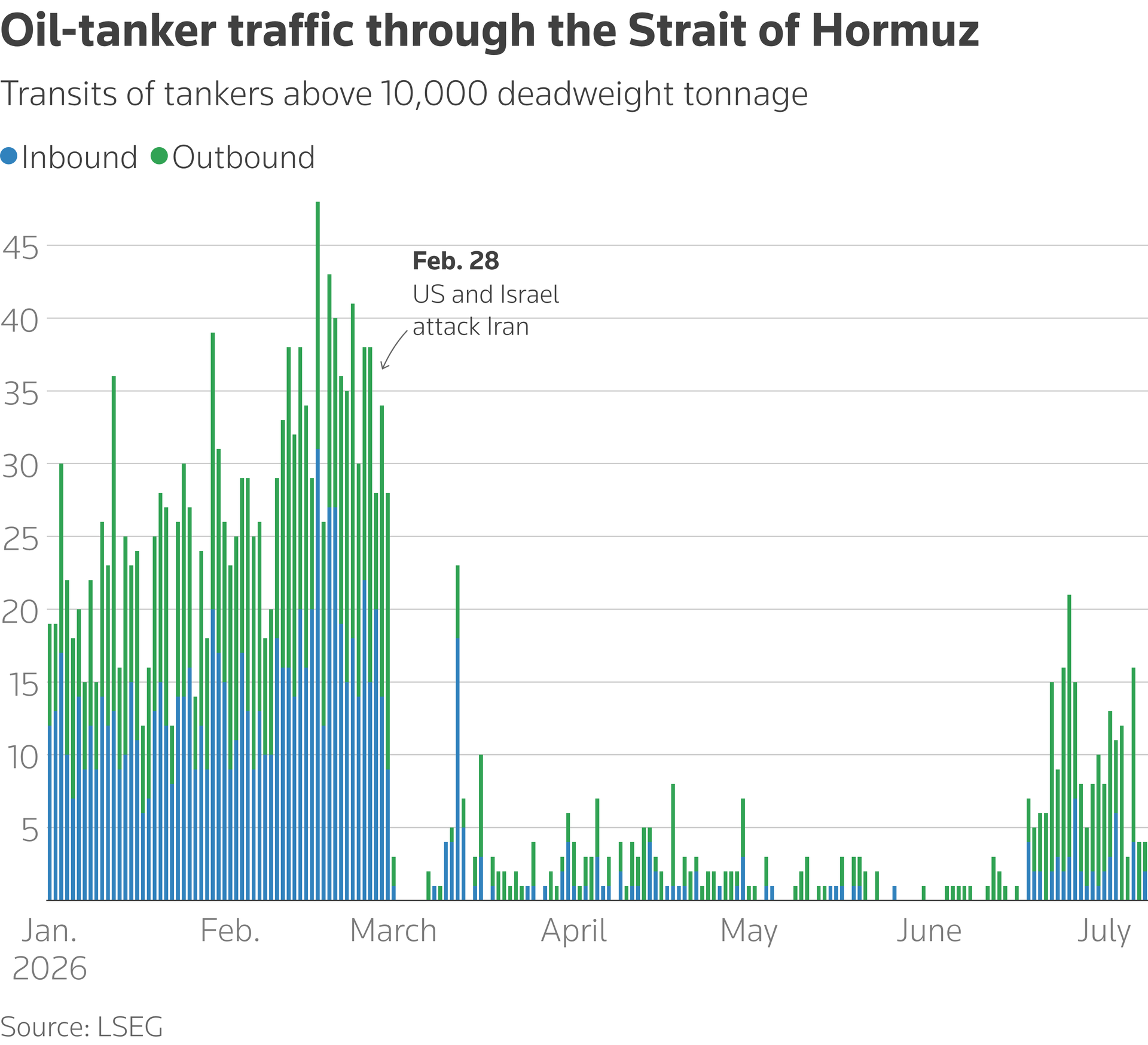
President Donald Trump, who was in Turkey for a NATO summit, dropped his own bomb when declaring the deal with Iran was “over”, while raining invective on Iran’s leadership. The tit-for-tat attacks continued overnight, as shipping traffic through the strait practically ground to a halt.
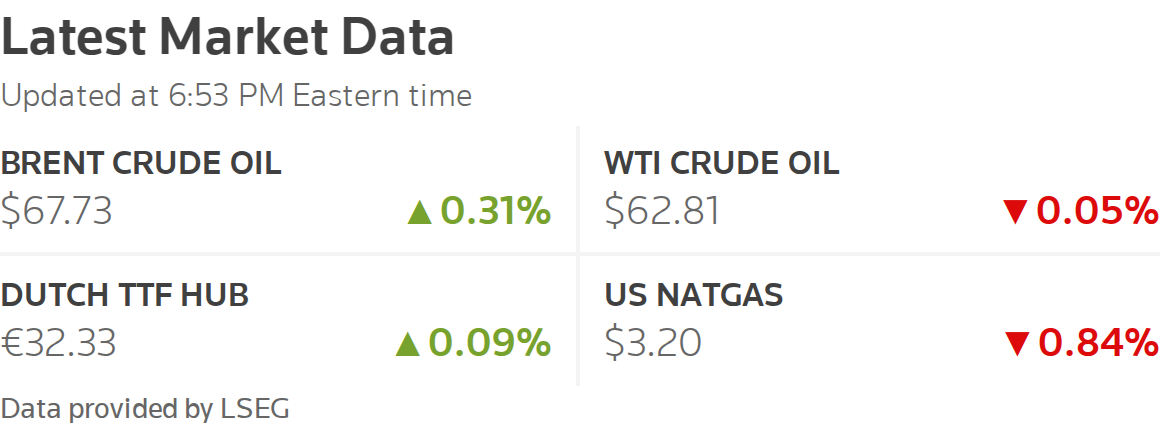
Oil prices soared by over 5% in response on Wednesday towards $79 a barrel, though prices were slightly down on Thursday.
Is the Iran deal dead? Is the war coming back? Probably not.
But one thing is clear - the uncertainty over the deal and the stop-start flow of tankers through Hormuz are a nightmare scenario for Gulf nations desperate to return to normal after a bruising multi-month conflict. More on this below.
If the Mideast flare-up wasn’t enough, another major event shook energy markets when Russia introduced a ban on diesel exports on Wednesday as part of its efforts to support the domestic fuel market. Systematic Ukrainian drone attacks on oil refineries have triggered gasoline shortages and price spikes.
Russia is a major diesel exporter. Combine this news with the ongoing disruption in the Middle East, and the global diesel market now looks dangerously bereft of buffers. I wrote about this last week.
Here are a few more headlines:






0 comentários:
Postar um comentário