Hello Power Up readers,
Away from the thrills of the World Cup, this past weekend was marked by other displays of pageantry, as the United States marked 250 years of independence and Iran staged a week of mass funeral processions for Ayatollah Ali Khamenei who was killed in a U.S.-Israeli airstrike on February 28.
Khamenei’s funeral in Tehran drew old, familiar chants of “death to America” and “death to Israel” along with calls for vengeance against President Donald Trump, a stark reminder that the interim deal to end the U.S.-Iran war last month has done little to ease the decades-long tensions in the Middle East.
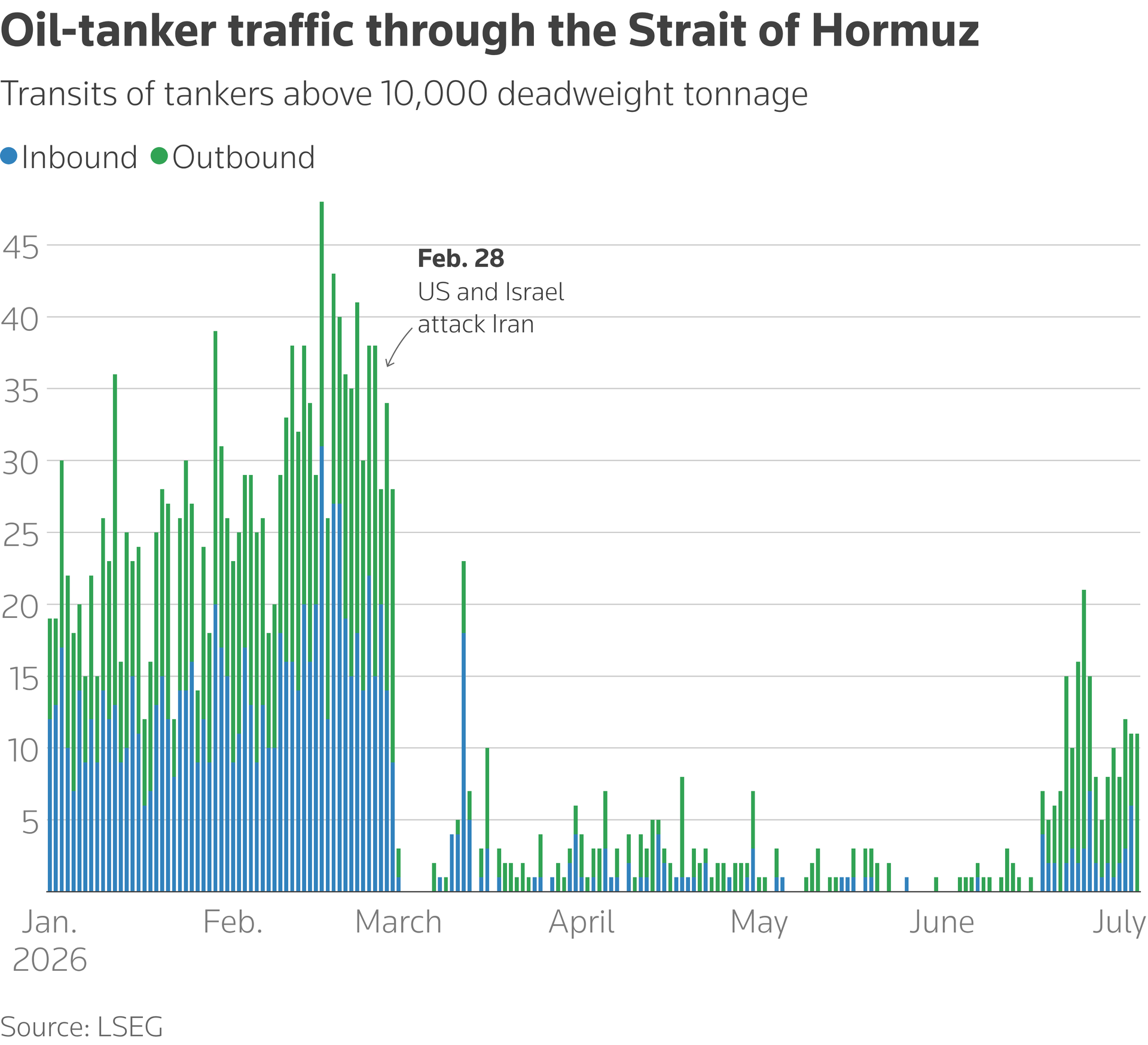
For now, ship traffic through the Strait of Hormuz – currently the energy market’s foremost health metric – continues to gradually recover after being effectively blocked during the conflict, though flows remain at less than half their pre-war levels.
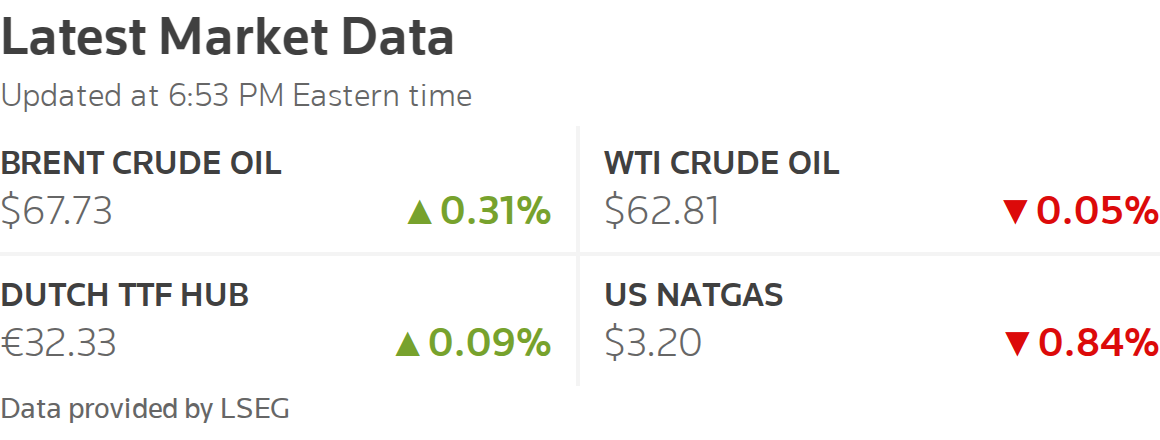
Also during the weekend, key members of OPEC+, the Organization of Petroleum Exporting Countries and their allies including Russia, agreed to further increase output targets from August, adding to global supply at a time when oil prices are falling due to the gradual reopening of Hormuz.
The oil-producing group agreed during an online meeting to increase quotas by 188,000 barrels per day from August, on top of similar increases for June and July, hiking their output quota from April through July by almost 800,000 bpd.
The decision raises two questions, argues ROI Asia Commodities Columnist Clyde Russell: Can Gulf producers actually ship the increased output, and if they can, who will buy it?
More on this below.
Here are some other headlines:






0 comentários:
Postar um comentário