Hello Power Up readers,
With the World Cup behind us (congratulations Spain!), we might expect to look forward to a quiet summer. But not this year. The energy market is flashing red everywhere you look.
In the Middle East, the escalatory cycle has deepened after U.S. forces hit Iran for a ninth consecutive day on Monday while Iran targeted U.S. military assets and equipment as well as civilian infrastructure across the region.
Oil and gas transits through the Strait of Hormuz have dropped to a trickle over the past week, and Iran continues to target vessels trying to cross the narrow waterway through the Omani route. The Iranian Revolutionary Guards said the strait would remain unsafe as long as what it called U.S. "aggression" in the region continued, warning that "this passage will not be safe for the transit of petrochemical products, nor even a single drop of oil and gas."
Four vessels made the transit through Hormuz on Sunday, down from eight the previous day, and nearly 50 daily transits before the conflict, LSEG data showed.
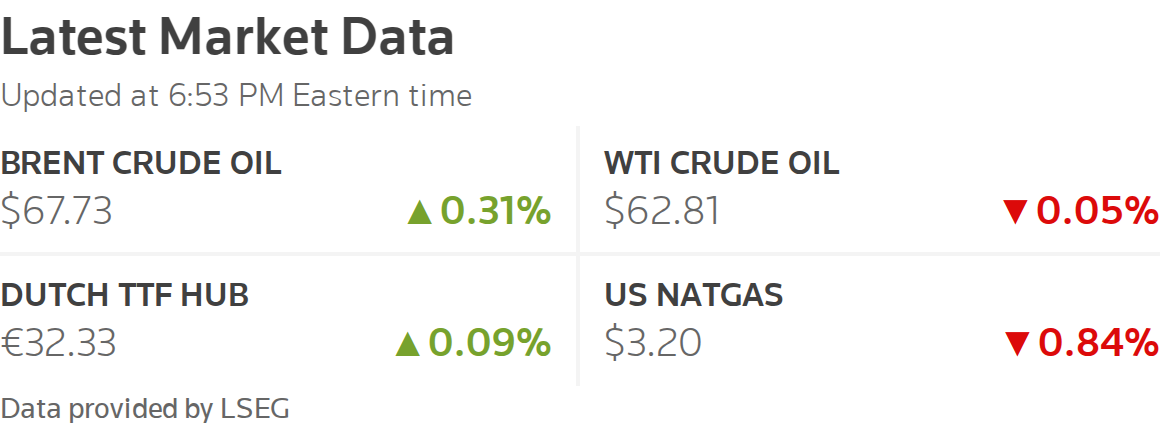
Brent crude oil prices rose above $90 a barrel on Monday, their highest level in over a month, before paring some of the gains after Iran's foreign ministry said negotiations with the U.S. could be pursued based on national interests.
Putting further pressure on the crude market, oil exports from the Caspian Pipeline Consortium (CPC) terminal off Russia's Black Sea coast were suspended on Monday following drone attacks on two tankers. The CPC terminal in the port of Novorossiysk, though in Russian territory, is the main export hub for Kazakhstan’s 2 million barrels per day of oil.
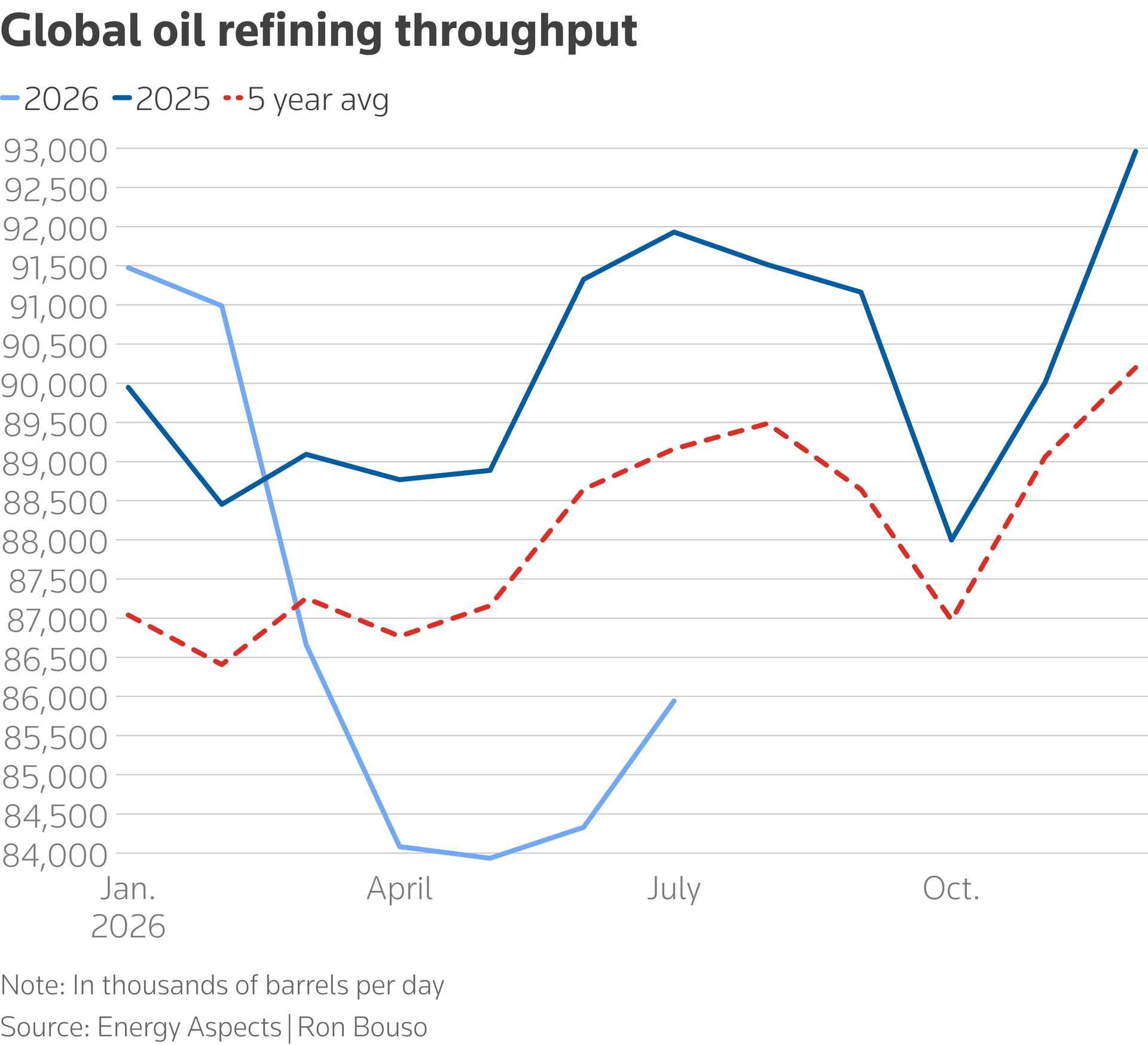
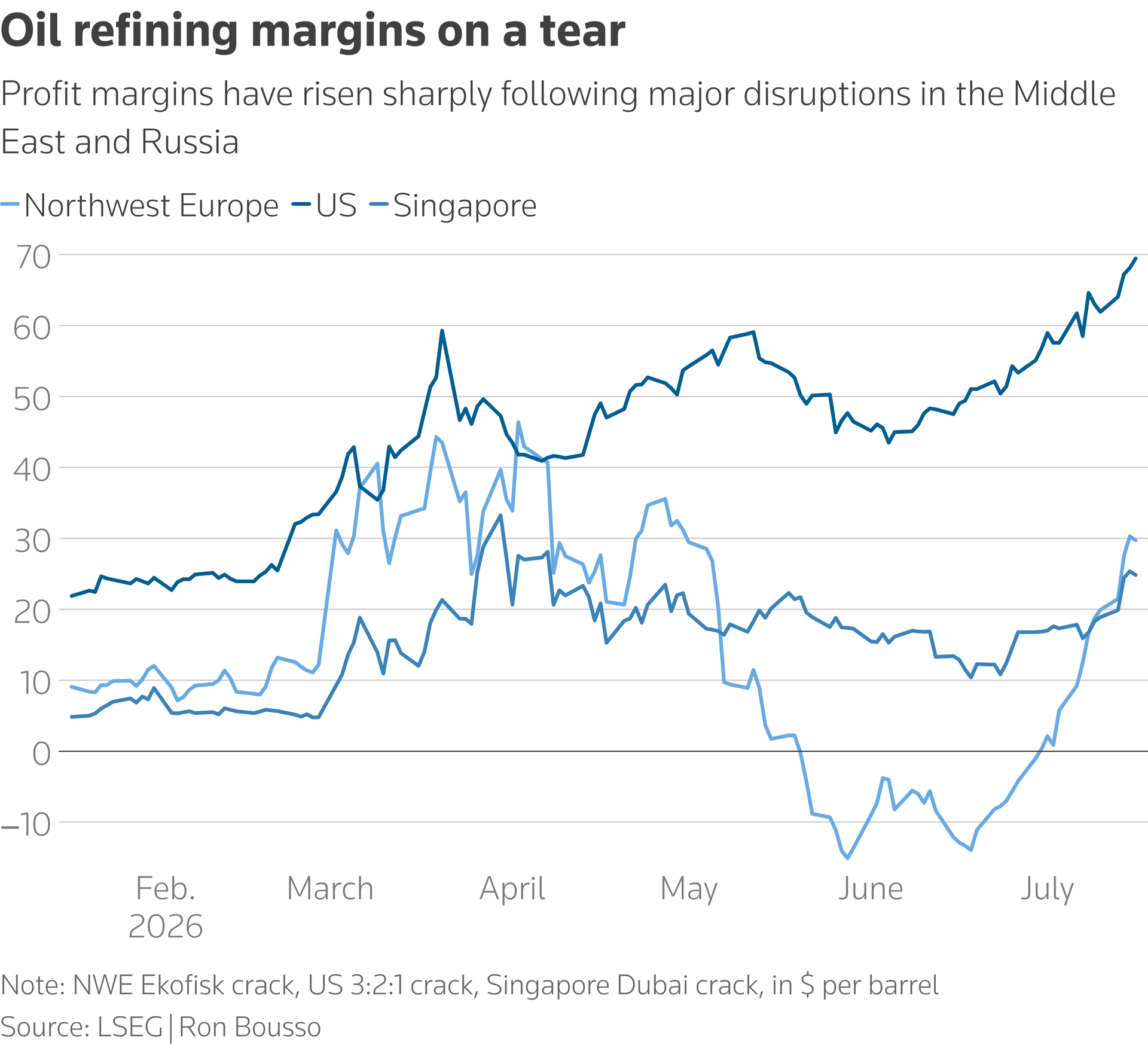
But forget crude oil. It’s the world’s refining complex that is coming under massive pressure as the conflicts in the Middle East and Russia ripple through the energy complex. More on this below.
Here are a few more headlines:






0 comentários:
Postar um comentário