Hello Power Up readers,
Energy markets remain fixated on diplomacy in the Middle East, where a nascent agreement between Iran and Oman over transit through the Strait of Hormuz could provide the foundation for a broader settlement to the Iran war, now well into its fifth month.
The proposed accord between Iran and Oman would fundamentally reshape the balance of power in the Gulf and, crucially, it would tilt it in Tehran's favour. Regional officials told Reuters the arrangement would give Iran oversight of vessels entering the Gulf through the Strait of Hormuz, which before the war handled about a fifth of global oil and liquefied natural gas trade. Such an outcome would mark one of the most significant concessions to Iran in decades.
Notably, while President Donald Trump has repeatedly said a deal to reopen the strait is close, the United States has largely remained in the background of the negotiations so far, marking another break from the previous diplomatic push, though that will likely change once – and if – an Iran-Oman deal is reached.
Before the conflict, the strait was open to international shipping without restrictions or transit fees. The United States and its Gulf allies have long opposed any form of Iranian control over the route. But after more than five months of severe disruption to energy exports, some producers may be willing to accept a compromise that restores at least part of their lost revenue. Crude exports through Hormuz in July were running at only about a fifth of pre-war levels.
Even so, the region remains highly unstable. Attacks on shipping continue in the Red Sea and around Hormuz, oil and gas exports remain heavily constrained, and Iran has renewed threats to target Gulf states if Washington launches fresh military strikes.
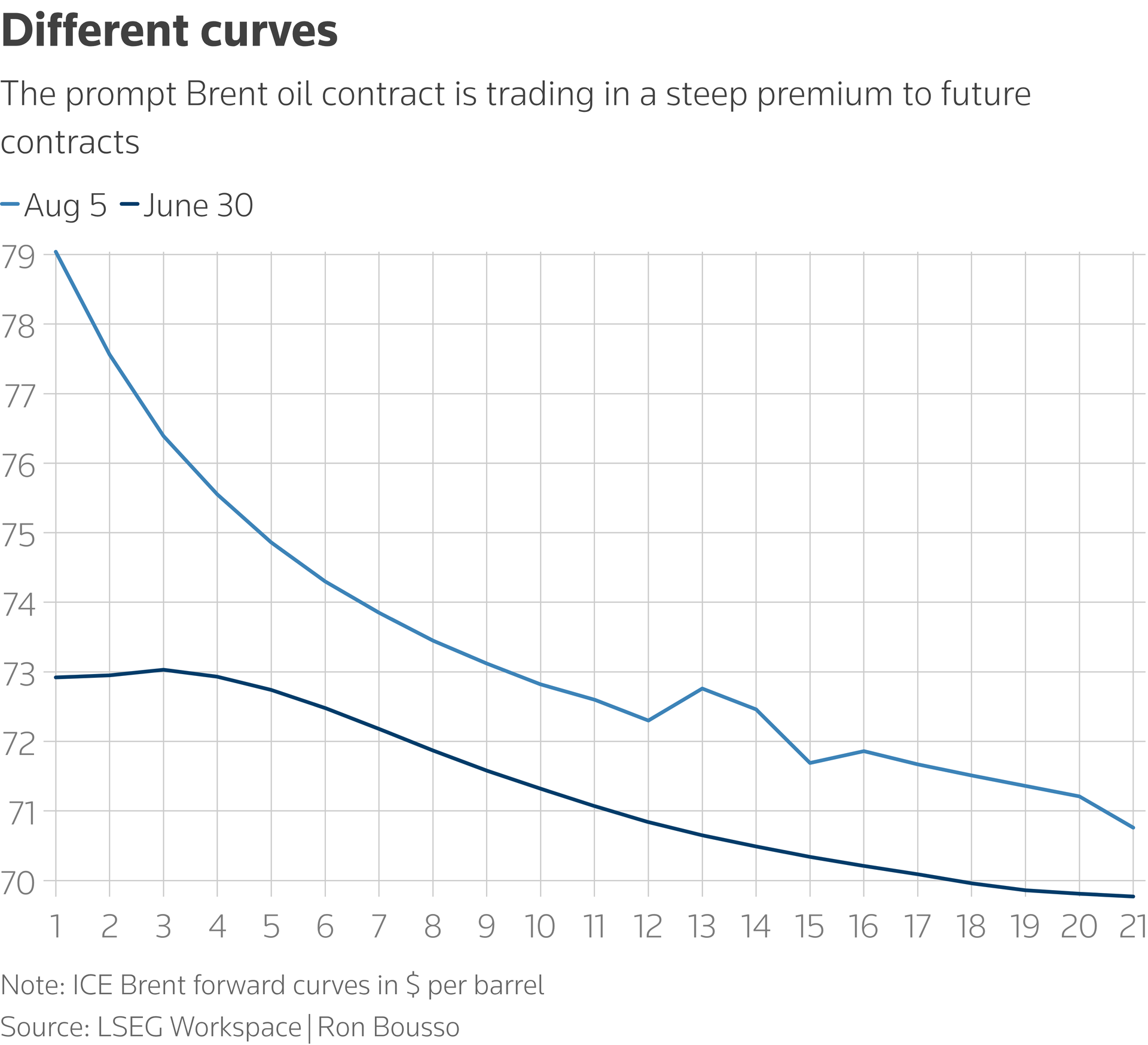
Against that backdrop, oil prices have drifted back toward $80 a barrel this week, roughly where they traded before the signing of the short-lived U.S.-Iran ceasefire in June. The market appears to be pricing in a diplomatic breakthrough. Yet the global energy system today looks considerably more fragile than it did then, raising an uncomfortable question: are traders once again underestimating the risks?
More on this below.
Here are a few more headlines:






0 comentários:
Postar um comentário