The Weekend
 |
Sep 5, 2026 |
|
|
|
| Welcome, Weekenders! In this newsletter: |
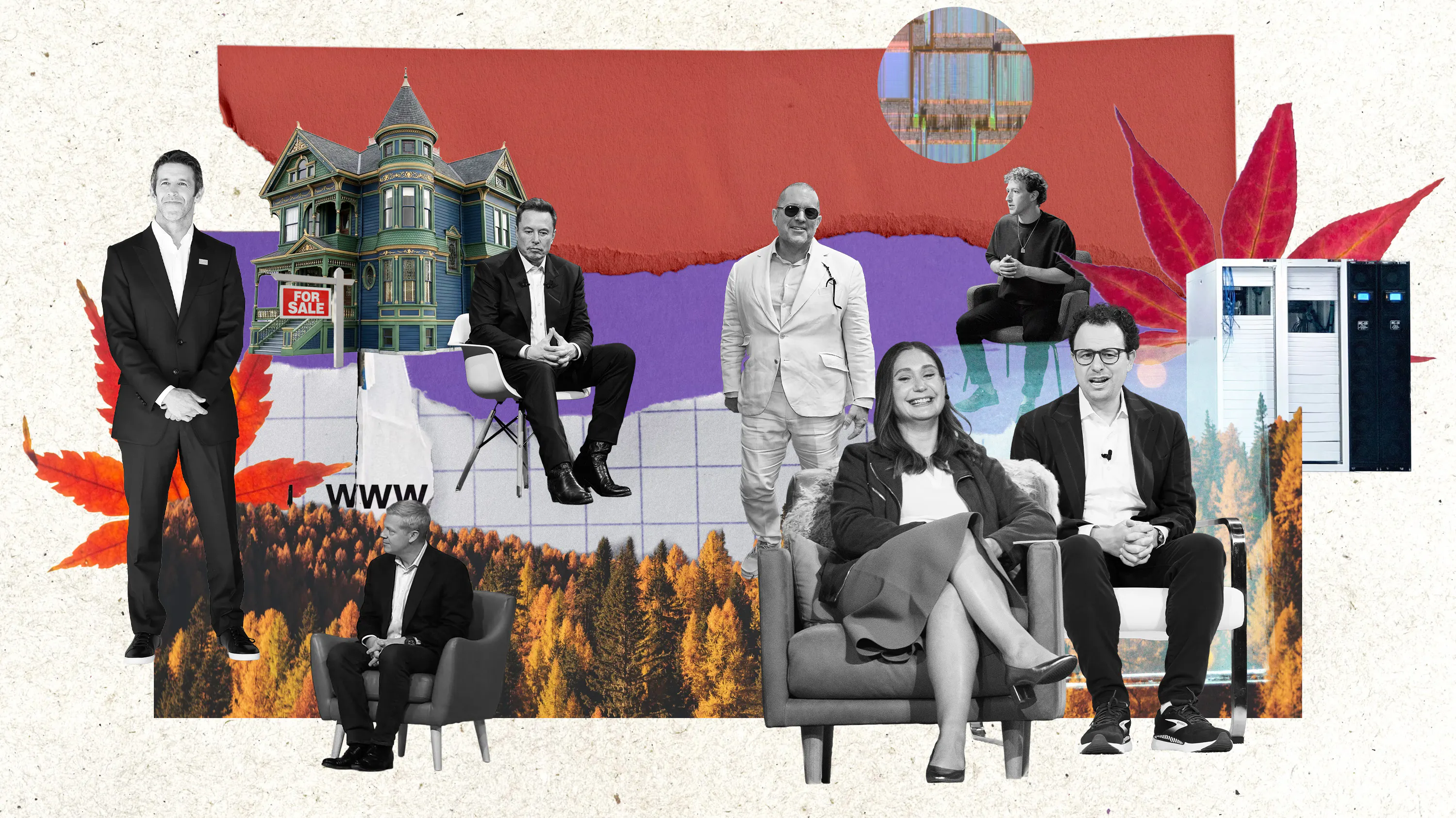
| • Our very first Fall Preview package! Nvidia’s new sales chief, Anthropic’s mega IPO—and 12 other things that will define Silicon Valley over the next three months |
| • Plus, Recommendations—our weekly pop culture picks: “Dolly Parton’s America,” “Money to Burn” and “Coyote vs. Acme” |
|
|
| After Code.org founder Hadi Partovi popped the question a year or so ago, he and his fiancée, Becca Oystila, weighed the options for their big day. Partovi envisioned something intimate. “I was just like, ‘Let’s go to the courthouse,’” he said. Oystila, whose Los Angeles–based startup, Booka, makes a platform for hairstylists and makeup artists to manage their businesses, pictured something unique. They went with her plan. |
| The result was tech’s wedding of the summer—or at any rate, its least conventional. And since no self-respecting founder would ever just fully disconnect on their wedding weekend, the occasion also provided Oystila a chance to give Booka’s tech a stress test of sorts while she considers a planned nationwide expansion this fall. |
| For the celebration, Partovi and Oystila arranged a multiday slate of festivities in her native Sweden in July, just after the Midsommar solstice holiday. Guests included his twin brother, Ali, a venture capitalist; Sequoia Capital’s Alfred Lin; Rover co-founder Aaron Easterly; and Emily White, investor and former Snapchat executive. His Khosrowshahi cousins came, too. There was Fuzzy, chief technology officer at Notion; Kaveh, an Allen & Co. managing director; and Dara, who is, of course, CEO of Uber. In all, the group numbered some 230 people. |
| One night included a black-tie ceremony and reception at the Grand Hotel in Stockholm. And one entire day was spent at Birka, an island that lies a short boat ride away from the city and contains the remains of a Viking village. Partovi and Oystila asked their guests to bring their own Viking Age costumes, study up on the era and adopt a period-appropriate persona for the day. (“You had to think about what character you were from back then—and you couldn’t talk about your day job,” Partovi said.) Refreshments included mead, roast lamb and fresh-caught perch. |
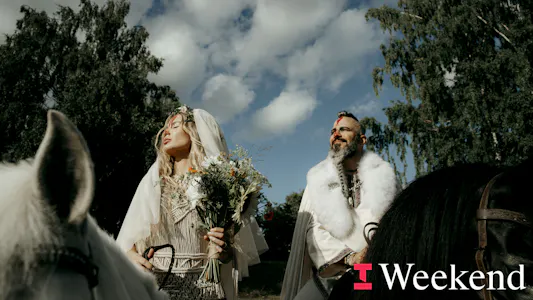
For entertainment, an expert local ax thrower led the group in an ax-throwing competition. A runereader offered fortune-telling sessions. Later, a hired band of actors in full Viking gear staged a pantomimed raid on the attendees. In the end, Partovi and Oystila wed atop a hill, with odes to Odin all around. As wedding favors, they handed out hand-carved drinking horns. (Some pictures from the revelry are below.)
To further help their guests get into the spirit of things, Oystila made a full contingent of makeup artists available at the hotel—their hair-braiding and face-painting services were bookable through Booka, which has newly added a feature that allows its platform to be used for events. (To study how the app worked for the artists, Oystila stationed herself nearby with her laptop. “They sold out,” she said. “It was a lot of pressure.”) |
| Once at the island, everyone faced a strict no-phones rule. “You know, a lot of the wedding guests are normally very attached to their phones and work a lot,” said Oystila. “And a lot of those people were the ones actually telling us, ‘Oh, my god, it was so nice to just take a break from my phone and not even be able to go check it and see what was happening.”—Abram Brown (abe@theinformation.com) |
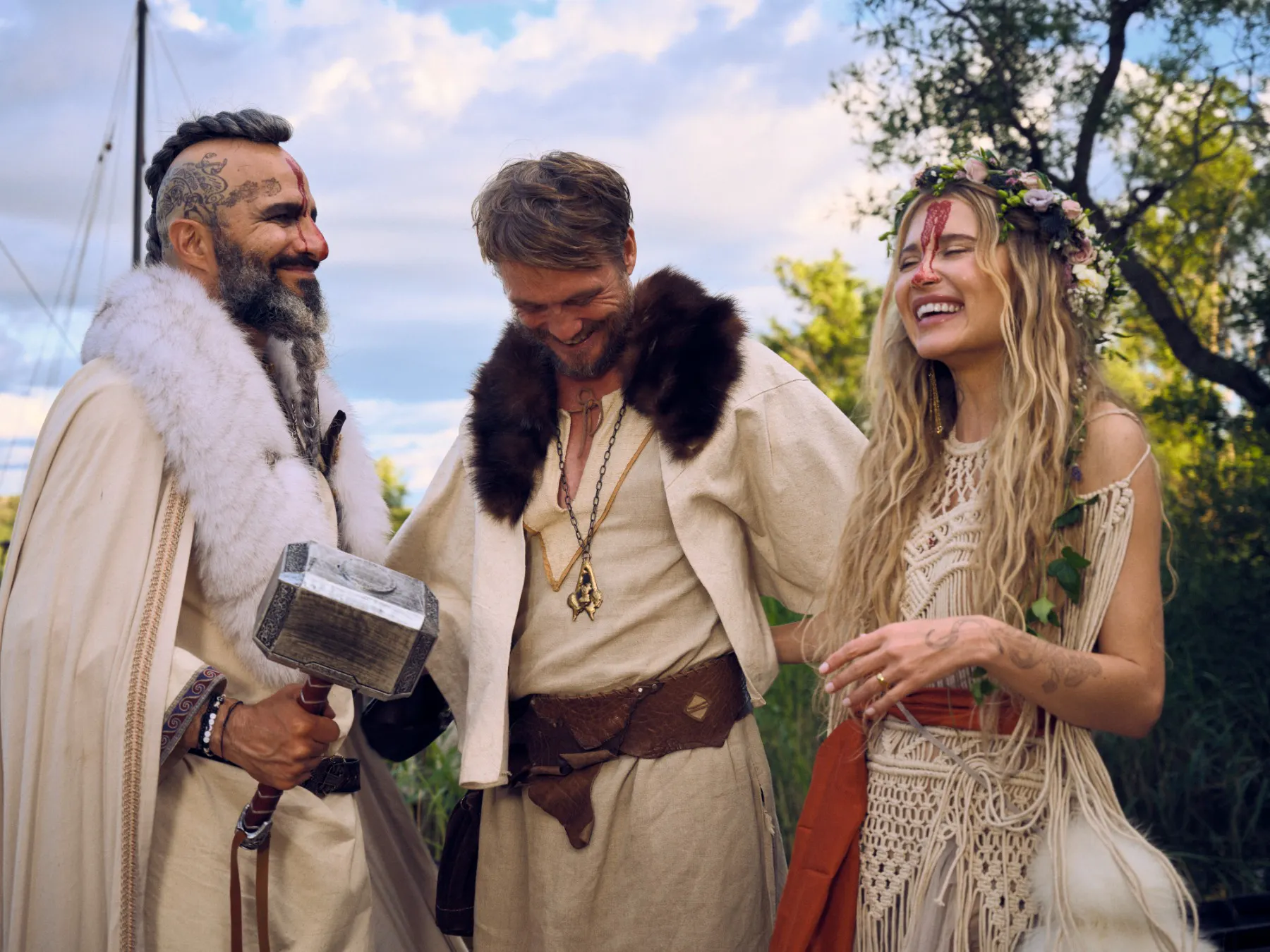 |
| Hadi Partovi and Becca Oystila in full Viking gear. (Tommy Agriodimas) |
 |
| Sequoia Capital's Alfred Lin (center) trades a smartphone for a skull-topped scepter. (Tommy Agriodimas) |
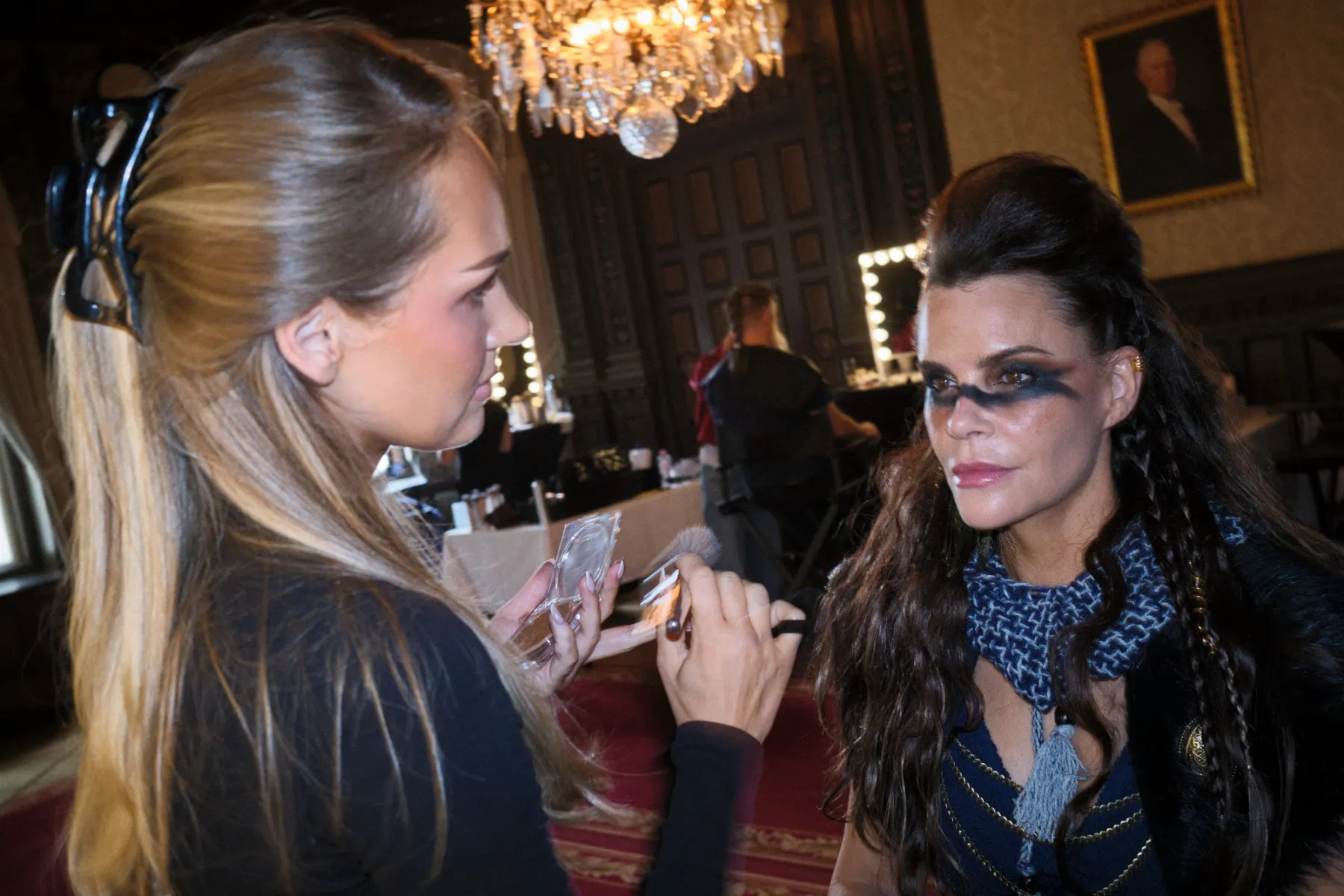 |
| Investor Emily White gets done up in Viking makeup before heading to Birka. (Tommy Agriodimas) |
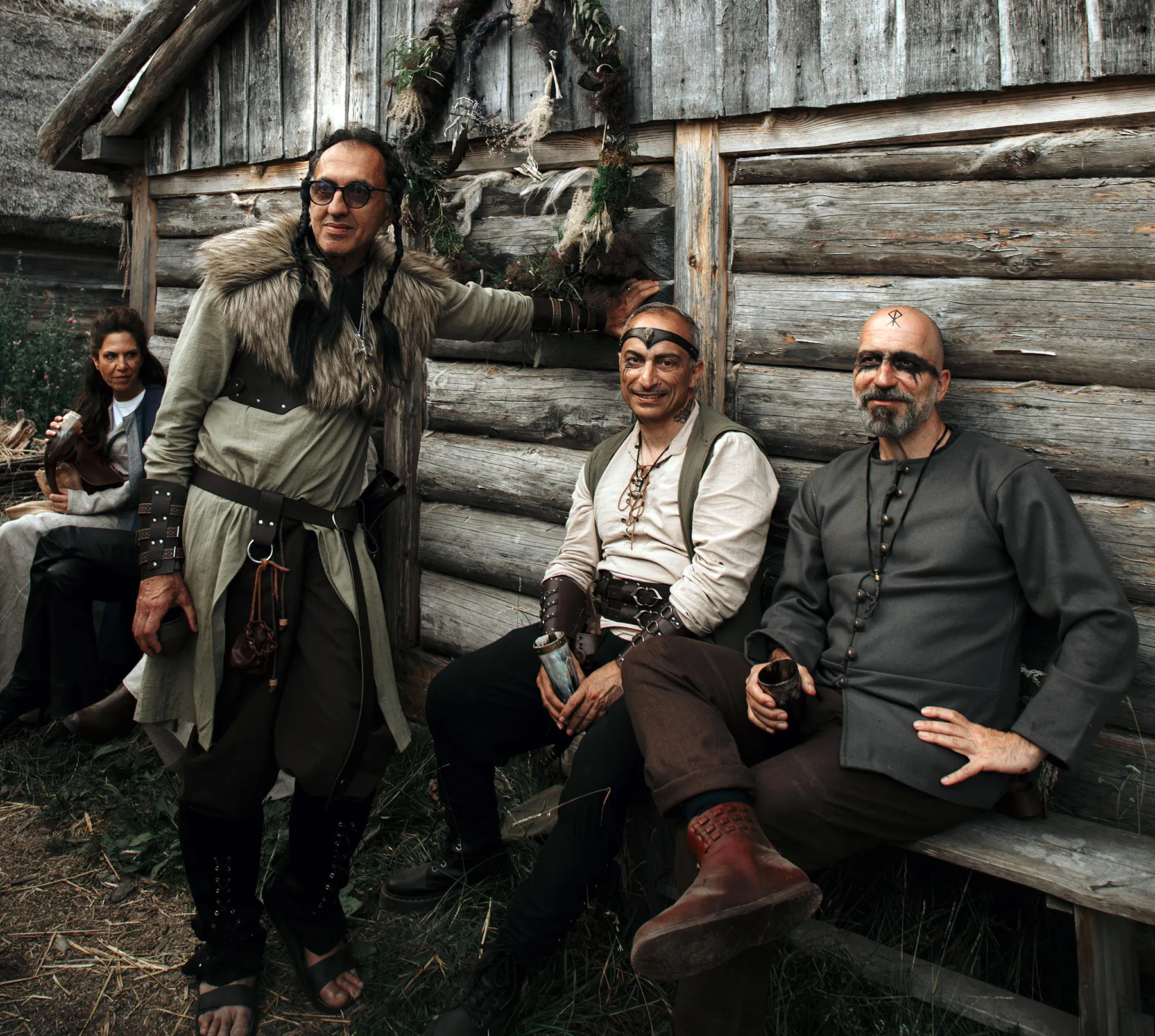 |
| From right: Uber CEO Dara Khosrowshahi with his brother Mehrad and cousins Ali Salas and Golnar Khosrowshahi. (Tommy Agriodimas) |
 |
| Partovi and Oystila at their ceremony in Stockholm's Grand Hotel. (Tommy Agriodimas) |
|
|
|
 |
|
| The need-to-know developments that will shape Silicon Valley in the next three months. |
|
|
 |
| Listening: “Dolly Parton’s America” |
| Last week, Dolly Parton’s unexpected death led to a singular moment in bitterly fractured America: an outpouring of unanimous admiration. On Twitter, Barack Obama praised her philanthropy and her campaign to popularize the Covid-19 vaccine. In Parton’s home state of Tennessee, Republican Gov. Bill Lee promised to bolster a proposal to rename Nashville’s airport in her honor. And even Jeff Bezos added to the pile of tributes, posting a picture of himself with Parton on Instagram—his first photo of something besides a rocket since his own mother’s death a year ago. |
| The eulogies underscored the same truth about Parton’s wide reach that underpins “Dolly Parton’s America,” an excellent, nine-episode podcast about the singer-songwriter. The 2019 series, which doubles as a deeply reported history of country music and 20th-century Americana, sprang from the mind of Jad Abumrad, creator of Radiolab, and it won him a Peabody Award, one of journalism’s top honors. (I’ve previously recommended two other Abumrad pods: “Fela Kuti: Fear No Man” and “The Obit Project.”) |
| For the series, Parton gave ample time to Abumrad, who came to realize that he, like many others, had misjudged her as an unrefined figure of rhinestone kitsch. Yes, Parton was buxom and glam-tastic, and she gladly said so herself. But as Abumrad explains, she was also a brilliant, funny lyricist; a shrewd businesswoman; and a gifted instrumentalist, who could play everything from the dulcimer to the pan flute. To paraphrase Parton herself, a dumb blond she very much was not. |
| Abumrad begins “Dolly Parton’s America” with a lament similar to one I expressed: that deeply divided America has few universally adored stars. It’s an uncomfortable reminder of how little has changed between 2019 and 2026. Still, as Abumrad would surely agree, Parton is a hopeful reminder that the country’s calcified polarization isn’t unbreakable.—Abram Brown |
| Reading: “Money to Burn” by William D. Cohan |
| Even in the Wall Street stratosphere, Leon Black ranks as a singular figure. Apollo, the investment firm he co-founded, controls $1.1 trillion in assets under management, and its profits have pushed Black’s personal fortune to an estimated $14.8 billion. That fabulous wealth has afforded him many treasures: a version of Edvard Munch’s “The Scream” hangs above his Upper East Side fireplace. (He paid $130 million for it.) And yet Black languishes in quasipublic exile, the result of his prominent links with Jeffrey Epstein. (For various services that Black insists never involved underage women, he paid Epstein $153 million.) |
| Black, 75, typically shuns interviews, but he had lengthy conversations with William D. Cohan, the Vanity Fair scribe turned Puck News columnist, as Cohan worked on “Money to Burn,” which charts the multiple rises and falls of Black and his family. (Black’s own father was once a well-known CEO; he committed suicide in 1975 by jumping from his 44th-floor office.) The 668-page tome is definitive, lively and gossipy: Seldom has a chronicle involving annuities and AAA-rated debt made for finer entertainment. |
| As always, Cohan is an amiable tour guide for a walk down Wall Street, offering an education on the various fads and trends that have shaped the place over the last several decades and continue to do so. Apollo has capitalized well on many of them, including the recent boom in private credit. |
| Candidly, though, what I enjoyed most was Cohan’s indelible portrait of Black as a world-trotting mogul. In one instance, Black reminisced about how he and Donald Trump bribed a machine gun–toting guard to see Tina Turner perform at the Kremlin. “I pulled out 100 rubles, and we got in,” Black recalled. “A fabulous concert.” |
| Quite a few people may just look up Epstein’s name in the book’s index and flip directly to those pages, expecting salacious detail. They won’t be disappointed—and they will have much to pore over: By my count, Epstein’s name appears 590 times in “Money to Burn.” After they met in the ’90s, Black employed Epstein for “trust and taxation and estate planning work,” he told Cohan. Their relationship grew, and Black enjoyed how Epstein introduced him to other famous rich people outside Wall Street’s usual circle, like Bill Gates and Elon Musk. |
| Black acknowledges that he decided to give Epstein the, uh, benefit of the doubt over his 2008 conviction for soliciting an underage sex worker. “I mean, he was with a 17-year-old prostitute, got prosecuted for it and got put away for a year,” Black said. “I took it seriously, but I didn’t take it that seriously.” (Later, the revelation that he had continued to embrace Epstein would play a part in forcing him to step down from running Apollo in 2021.) Separately, Black defends his decision to stay close to Epstein through a comparison to his longtime friendship with Michael Milken, the former junk bond king previously jailed for financial fraud. I can’t imagine Milken, who has spent decades rehabbing his image, will appreciate the analogy: Maybe that’s one friendship Black is willing to let go.—A.B. |
| Watching: “Coyote vs. Acme” |
| A corporate chieftain struts into Congress brimming with bombast and bravado, keen to dispel concerns that his company has knowingly sold harmful products to vulnerable, naive customers. I could be alluding to any number of Senate showdowns involving tech CEOs, but in this case, I’m describing a climactic scene in “Coyote vs. Acme,” a zany parody of legal dramas and corporate America starring a slew of Looney Tunes characters and comedian Will Forte as Kevin Avery, a class-action attorney. |
| As in “Who Framed Roger Rabbit?” people and toons live side by side in “Coyote vs. Acme,” and Forte’s Avery has taken on Wile E. Coyote for a client. Wile is suing Acme Corp. for the faulty contraptions—the rocket-powered roller skates, the giant-slingshot kit, and so forth—that failed him during his quest to capture the Roadrunner. Defending Acme is the company’s chief legal officer, Buddy Crane (John Cena). His boss is that CEO I mentioned: Foghorn Leghorn, who, I say, sure has come faa-ah from his farmstead days. Foghorn now ruthlessly rules the roost atop Acme, which has expanded from selling items for toons to developing ones for humans, too. Bugs, Daffy, Porky Pig and many other famous Looney Tunes appear in cameos and supporting roles. (They’re mostly all voiced by Eric Bauza, a sanctioned replacement to Mel Blanc, the man who originally developed the characters’ voices.) |
| Sight gags abound. I particularly enjoyed how a demonstration for a can of Predator Spray came at the expense of Pepé Le Pew, the aggressively amorous skunk who, as you might recall, got canceled a while back as a hand-drawn exemplar of sexual predation. That’s all to say that “Coyote vs. Acme” is more for adults than for kids. |
| As you may also remember, “Coyote vs. Acme” had to overcome its own proverbial piano falling from the sky to reach theaters. Based on a 1992 New Yorker humor column, the film was originally meant for a 2023 release from Warner Bros., which has maintained ownership of the Looney Tunes wackos for nearly a century. Though the film was entirely finished, Warner unexpectedly shelved it—a victim of one of CEO David Zaslav’s many rethinkings of the company. He wanted it as a tax write-off, an ignoble fate for a movie that represented a rare modern outing for characters who were once among the studio’s most lucrative assets. Later, an internet-led fan outcry prompted an indie outfit, Ketchup Entertainment, to pick up the distribution rights. When it opened last weekend, it hit No. 2 at the box office, earning $15.4 million, a strong debut. |
| Now I’m curious whether Zaslav has any of Wile’s try-try-try-again persistence in him: Let’s see if he greenlights a sequel.—A.B. |
|
|
|
|
|
|




 Gift Subscription


0 comentários:
Postar um comentário