Hello Power Up readers,
Elections are always delicate moments. With Israel’s parliamentary vote eight days away and the US midterms following a week later, oil markets are nervously watching the Middle East. Reported Iranian attacks on ships around the Strait of Hormuz reached a record 12 last week, according to the UK Maritime Trade Operations (UKMTO) agency.
What was most telling was not the number itself but the fact that UKMTO admitted that it is struggling to keep count of strikes, “with the majority of vessels attacked refusing to report.”
This surge in attacks appears to be having a significant impact on flows. Oil exports through the narrow waterway have fallen from a peak of 17 million barrels per day in early October to around 11 million bpd in recent days, Kpler data showed. Yet producers and shippers are still sailing through Hormuz, showing how quickly the industry has adapted to a new normal characterized by severely heightened risk.
That resilience comes at a cost however.
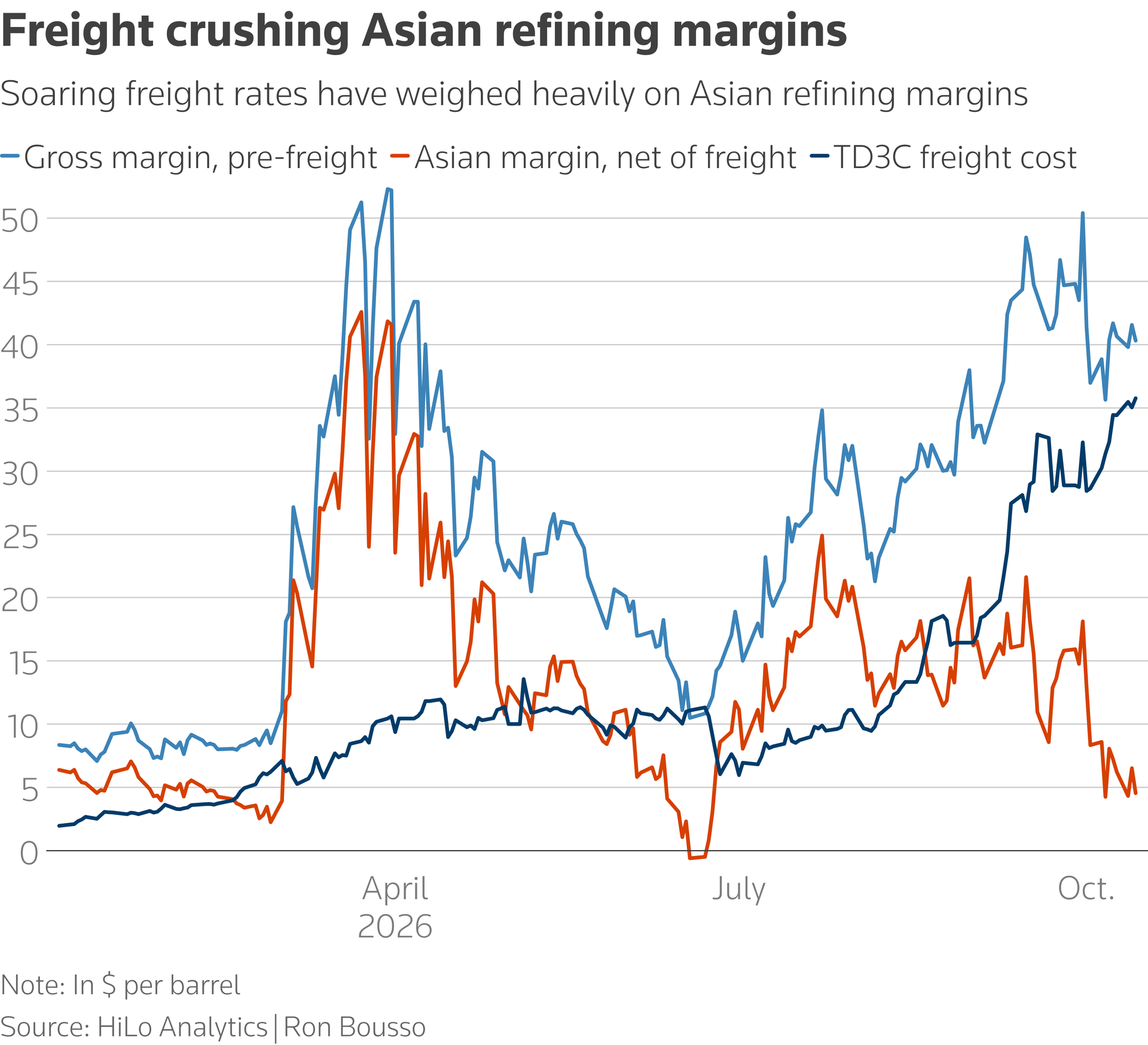
Just ask Asian refiners. They purchase the majority of the Middle East’s oil, and soaring shipping costs are crushing their profit margins. For more on that, read my latest column below.
Oil prices, meanwhile, hit a 5-month high of over $109 a barrel on Friday, reflecting growing angst among investors that the Iran war could reignite, with President Donald Trump saying the US might renew strikes on Iran’s nuclear facilities. Benchmark Brent oil prices slipped on Monday, however.
As always, feel free to contact me at ron.bousso@thomsonreuters.com or connect with me on LinkedIn with any questions or thoughts.






0 comentários:
Postar um comentário