We are in the age of heat storms.
In less than a lifetime, about six and a half decades, heat waves have evolved from sporadic, isolated episodes to massive, cascading weather events that can blanket vast swaths of the planet for months or even years at a time.
The largest heat wave of the 1960s reached about 6% of the planet as it drifted for 46 days over the Atlantic Ocean, parts of Latin America and West Africa.
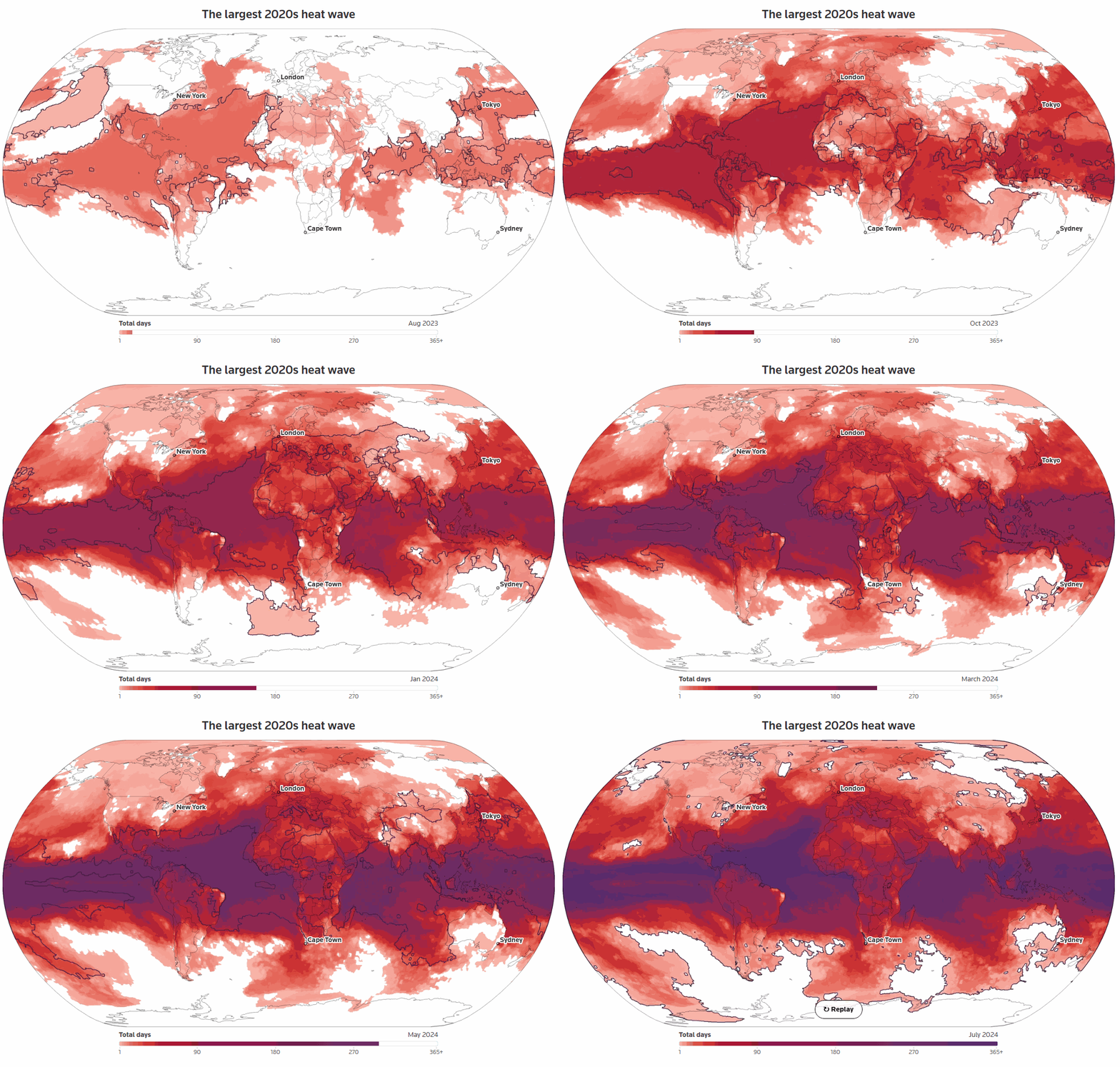
The largest one this decade swept across almost 85% of the globe during its 367-day lifetime in 2023 and 2024, stretching into the polar latitudes and touching virtually every human being on Earth.
To continue calling such sprawling phenomena “heat waves” would be like calling a monsoon a rain shower. To understand the new reality of these immense expanses of heat, we analyzed temperatures for every hour of every day since 1960 for more than one million grid squares covering the entire globe. Out of those results, we developed a new concept: the “heat storm.”
Our data-driven examination of global temperatures reveals the emergence of these heat storms and how they are upending life around the world from Texas to Ivory Coast to Poland.






0 comentários:
Postar um comentário