


Would you like to show something of yours on FlakPhoto? I’m always looking and love seeing new work. Please email me anytime. Cheers!
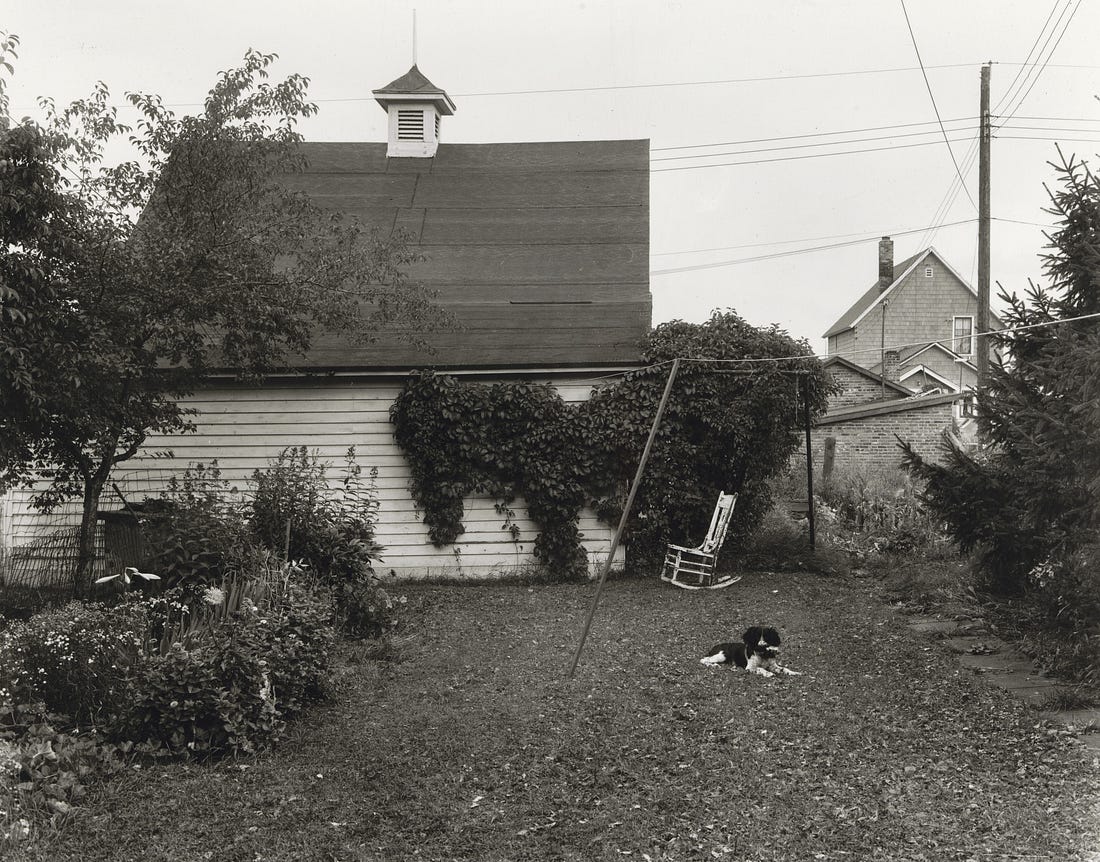
I was hanging out with my friend Richard last week, and naturally, we got to talking about pictures. It’s an age-old conversation: what makes a photograph good? Obviously, there is no correct answer, but it’s fun to think about. Good photography is like pornography: you know it when you see it. This picture by John Szarkowski is one of my all-time favorites. Why? It’s hard to say. I’m a sucker for a painterly composition, and this one delivers in spades. Plus, old-time American landscape images turn me on. This place looks idyllic in so many respects. That garden, the vernacular architecture—it’s beautiful! I can see myself sipping coffee and reading in that rocker for hours. I love this image. In my opinion, it’s a good photograph. But you might disagree. I know AI is contentious, but I like to quiz chatbots with open questions like this from time to time. I was thinking about my conversation with Richard again today, so I asked ChatGPT what it thought made a photograph good. I remain impressed by how these tools synthesize information, and ChatGPT does a thorough job of covering the bases. Nothing here is groundbreaking, but it helped me think, which is a good thing. Since many of you are photographers, I suspect you have your own opinions. I would love to hear your thoughts: What makes a photograph good? The following is AI-generated text, lightly edited for style and flow. A good photograph isn't necessarily beautiful, technically perfect, or immediately understandable. It rewards attention. Something happens between the image and the viewer that makes you keep looking. 1. It makes you notice something. That act of attention may be photography’s most fundamental power. 2. It has a point of view. Even apparently neutral photographers such as Stephen Shore or Walker Evans have intensely particular ways of seeing. 3. The frame feels consequential. A telephone wire touching the edge. These aren’t necessarily compositional mistakes. They create relationships. 4. It contains some tension. Beauty alongside ugliness. That little grain of friction often keeps a photograph alive. 5. It leaves something unexplained. You wonder what happened five seconds before or afterward, who someone is, why the photographer noticed this place, or why an apparently insignificant object suddenly feels important. And then there’s timeThis may be the strangest ingredient. Every photograph quietly says:
A perfectly ordinary photograph can therefore become extraordinary simply by surviving. A picture of a supermarket in 1975 may have seemed banal at first. Fifty years later, the cars, packaging, clothing, typography, architecture and social behavior become fascinating. Photography turns the present into an artifact almost instantaneously. That’s part of why William Eggleston and Shore could photograph ordinary American life so powerfully. They recognized that the everyday world is already disappearing as we look at it. Technical quality matters, but less than we sometimes thinkFocus, exposure, color, lighting, and composition are tools. They aren’t the purpose. A technically immaculate photograph can be completely forgettable. A blurry, strangely framed photograph can be extraordinary. The better question isn’t: “Is this photograph technically good?” It’s: “Did the photographer’s choices make the photograph more interesting?” If the blur contributes something, it works. If perfect sharpness contributes something, that works too. My favorite test: does it survive the second look?Some photographs are spectacular for about three seconds. Sunset. Incredible landscape. Perfectly timed reflection. You think, "Wow, I understand the image,” and move on. Other photographs barely announce themselves. You look. Then look again. Something you hadn’t noticed emerges. The relationship between two objects becomes peculiar. Someone’s expression changes the picture. An empty area starts feeling important. The photograph becomes slightly stranger, not easier to understand. Those photographs often grow stronger over time. Which leads to a definition of a good photograph that I particularly like: A good photograph changes the significance of whatever it shows. It doesn’t have to show you something extraordinary. It can make something ordinary become worth looking at.
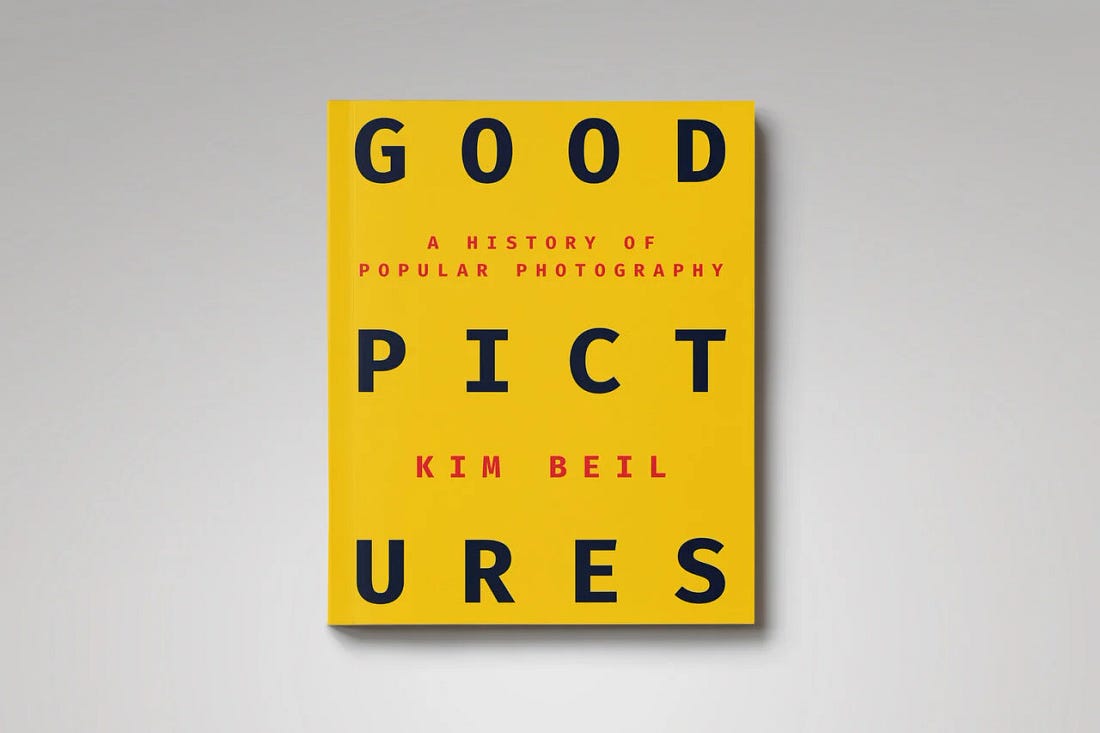
One more thing… Kim Beil literally wrote the book on this subject. Good Pictures: A History of Popular Photography is a visual field guide that examines how shifting cultural trends have defined what makes a “good” photograph over time, from the daguerreotype era to the digital age. It’s a fun book I’d recommend if you haven’t read it yet. Okay, friends, that’s all for today. I’m ready for the weekend. Take care! Do you want to contribute photography or writing to FlakPhoto? Please feel free to email anytime. I’m always looking and love seeing new work. Cheers!
|





0 comentários:
Postar um comentário