Nations across the world have long demanded proof of a traveller's financial standing. In the latter years of the 20th century, impecunious backpackers devised a cunning strategy to make themselves look well funded when crossing international frontiers. It worked like this: a traveller would buy $200-worth of traveller's cheques (equivalent to $500 today). These legacy financial instruments, often issued by Thomas Cook or American Express, looked as valuable as actual cash. She or, more likely, he then reported them as stolen. Traveller's cheques came with an unusual virtue: you could claim you had lost the lot and promptly obtain replacements to the same value, free of charge. The issuing company would then circulate the numbers of the "missing" travellers cheques to prevent any attempt to cash them. The artful adventurer, meanwhile, now possessed $400 in traveller's cheques, although only half of them could ever be used – the originals were on the watchlist. The point of the exercise was to double one's apparent financial resources, which could make all the difference when trying to cross a border into Colombia or Cambodia. Such subterfuge came to mind when I discovered this week that France plans a crackdown on British tourists who fail to meet its criteria for entry. I was trialling the new entry-exit system (EES) registration kiosks at London St Pancras International, in readiness for the start of the system on 12 October. Thanks to Brexit, UK travellers have proudly achieved the status of "third-country nationals" alongside Venezuelans and Tongans. We are subject to France's tests for admission: proof of booked accommodation, a ticket home and enough cash for each day of the stay. Currently the last of these is calculated as three-and-a-half hours' work at the daily national minimum wage. That figure is currently £36, which most of us could manage without resorting to deceit.
One more demand: robust medical insurance that will cover health-care costs. This goes beyond the coverage of the Global Health Insurance Card (Ghic), which is intended to provide care under the same terms as the locals in nations across Europe. The French need proof that, should such medical care ultimately prove unsuccessful, your "expenses in the event of death" would be covered. Given unscrupulous traveller behaviour in the past, some British tourists will simply fib – ticking the "Yes" box on the screen even if they do not meet all the red-tape requirements. But the French authorities warn: "Your answers are binding, you may be asked to provide proof."
Eurostar exec explains how entry-exit system will work (podcast) |
|
|
Dodgy character? To enjoy Paris or anywhere else in France, you need at least £36 a day |
|
|
| As Greece feels the impact of overtourism, it's still possible to find impossibly idyllic, lesser-visited spots. Read more. | |
|
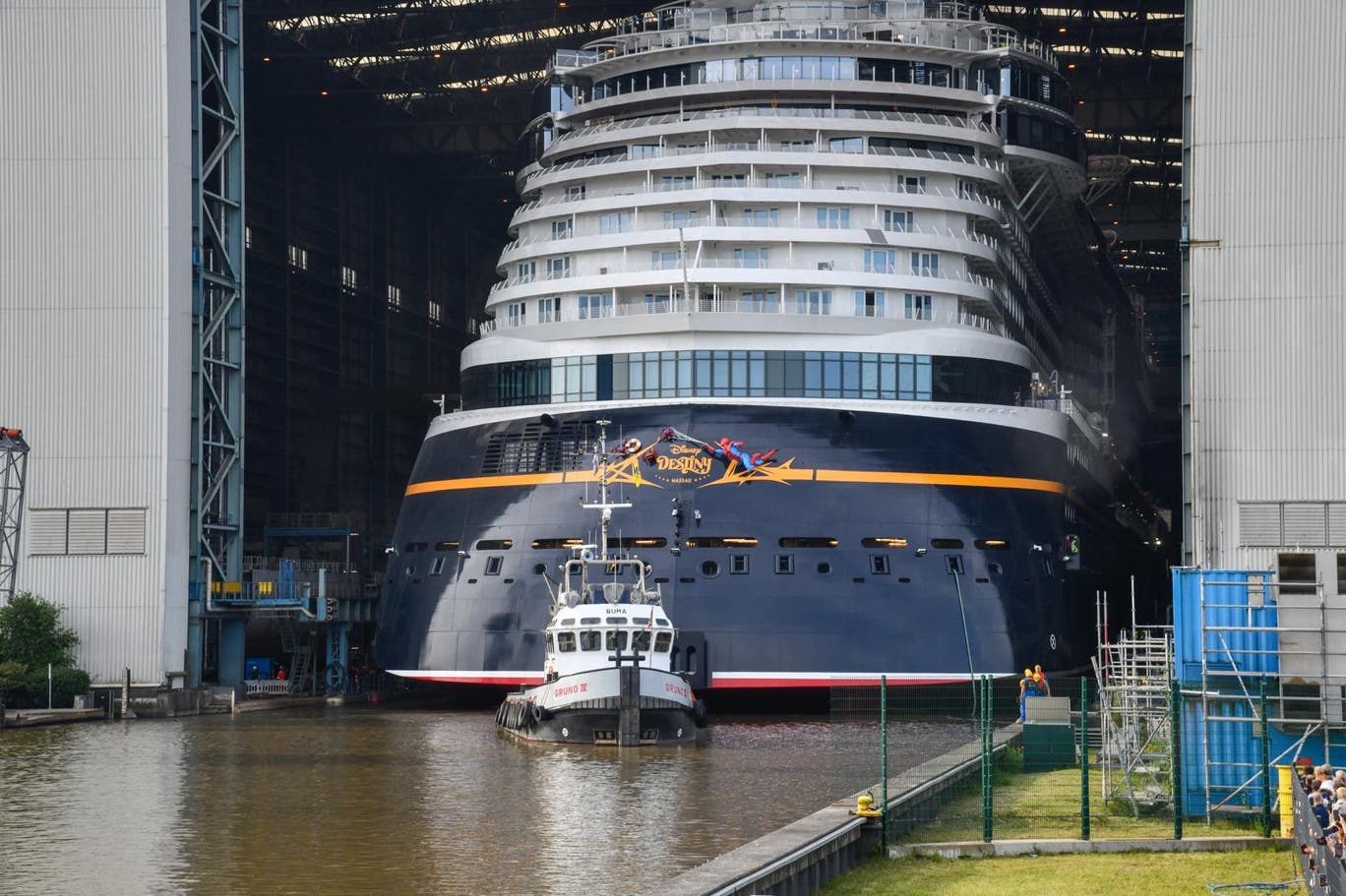
| As Disney Destiny prepares for its maiden voyage, meet two Imagineers behind its magic. Read more. |
|
|
| See, be seen, go wild or wind down at hotels on this chic and sophisticated Greek party island. Read more. |
| |
Don't forget to complete your registration |
You haven't completed your registration with The Independent. It's free, quick, and helps support our journalism while tailoring your experience.
Register now to enjoy benefits including access to limited Premium articles, The Independent app, more than 20 newsletters and commenting on independent.co.uk.
Complete your registration today to unlock access.
|
|
|
Essential listening: Independent travel podcasts |
|
|
Physical passports are obsolete. Yours, I speculate, includes a photo of you looking somewhere on a spectrum from glum to guilty. Employing an officer to check your actual face against the picture is absurdly analogue. Like it or not: in a world where facial recognition is so powerful, your face will become your passport. In America, it already is. To enrol for a US Esta (which almost doubles in price on Tuesday – see below) you must provide a photo. On arrival, the Customs and Border Protection officer may not even bother to look at your passport. They've been expecting you. As mentioned, in just 16 days Europe's entry-exit system starts. Any British traveller hoping to visit the EU must be prepared to provide fingerprints, which are registered on a central database. Their place, their rules. As airline passengers were reminded yet again last weekend, online systems can be hacked. At London Heathrow, Brussels, Berlin and Dublin airports, the check-in process defaulted to analogue. Queues built up, flights were cancelled. A database loaded with everyone's identity is a prime target for cyber attacks. Many people have serious concerns about privacy as well as data security. But the evidence is that travellers will gladly trade confidentiality for convenience. "Do you value convenience and want to get to the gate as quickly as possible?" That invitation is posed by Amsterdam Schiphol airport. Passengers in a hurry queue up to pay €182 (£162) a year in order to breeze through formalities at one of Europe's biggest hubs. Across at Dubai and Singapore, arriving travellers gladly provide their personal data and biometrics to accelerate their progress across the international frontier. And during the Covid pandemic, anyone hoping to explore the world needed a host of smartphone apps to demonstrate their vaccination status, the result of their latest PCR test and their immediate travel plans. Digital IDs are already here, folks – and many travellers are evidently happy to surrender some privacy for convenience. |
|
|
A second runway at Gatwick or a third at Heathrow? |
|
|
This week I'm asking which London airport's expansion plans you want to take off? Should Gatwick go ahead with a second runway? Or are Heathrow's plans for a third runway best for travellers? Vote by selecting the buttons above. In the last newsletter, I asked about the EU's entry-exit system. Most of you were bracing yourselves for the new system set to streamline border crossings, with just 25% saying bring it on! |
|
|
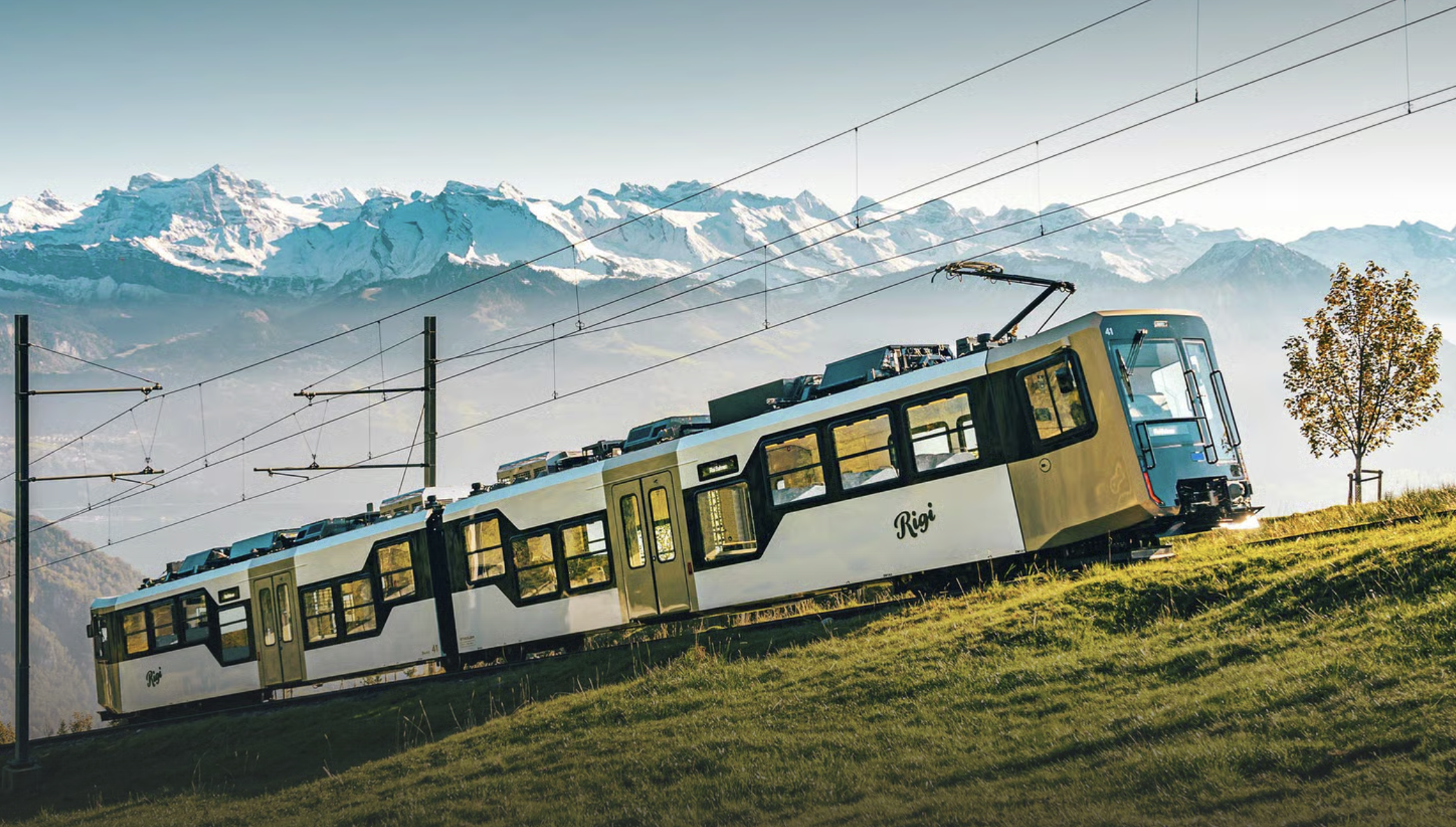
With ever more hurdles standing between the airline passenger and their destination, the railways are increasingly tempting. An engrossing and inspiring guide, The Best Swiss Train Rides, has just been published. The book combines history, scenery and vintage travel posters when describing 35 rail journeys – including Europe's first mountain railway, the Rigi (pictured below). It also specifies which side of the train to sit on and whether travel passes are accepted. Tragically, the author, Diccon Bewes, passed away earlier this year at the age of 57; he has bequeathed travellers with a fine Alpine testament to the train. |
Last chance to dodge Esta fee rise |
You have until Monday to apply and pay for a US Esta – the permit used by most UK visitors to America – at the current fee of $21 (£16). From Tuesday 30 September the cost will almost double to $40 (£30). An Esta is valid for up to two years or until your passport expires. So if you have enough passport validity, applying now will cover you through the summer of 2027. Make sure you apply through the proper website, esta.cbp.dhs.gov, rather than one of the unofficial sites designed to trick you into paying more. 6 best New York Christmas holidays |
|
|
December trip to Lithuania? |
|
|
Have you been to Kaunas, and would you recommend it for a pre-Christmas trip? |
|
|
Yes and yes. The centre of Kaunus – Lithuania's second city – is on the Unesco World Heritage List. The honour was not awarded due to its handsome medieval buildings, but for an outstanding modernist ensemble termed the "Architecture of Optimism". Between the wars, Kaunus was capital of Lithuania. The Unesco inscription calls the core of the city "a local version of early 20th-century Eastern and Central European modernism, bearing an exceptional testimony to the process of transformation of an industrial and fortress city into a modern capital of a newly-formed state".
Kaunus also has a decent Christmas market and dozens of excellent places to eat, drink and stay. You could organise a quick there-and-back trip; from London Stansted, Ryanair has flights to and from Kaunus over the weekend of 11-13 December for under £50 return. Yet it would be a shame not to make it part of a wider Advent adventure. You could book an "open-jaw" itinerary, out to Kaunus and back from Vilnius, the current capital. The two top Lithuanian cities are only 90 minutes apart by express bus, for a fare of €10 (£8.70).
Vilnius has its own Unesco listing, due to its vast medieval heart and an architectural repertoire from ancient churches to a succession of Soviet eyesores (you can visit the latter on a fascinating guided walk). Add a side trip to Trakai – former home of Lithuania's grand dukes, with a 14th-century fortress perched on an island – and you have the ingredients to enrich the approaching winter. |
|
|
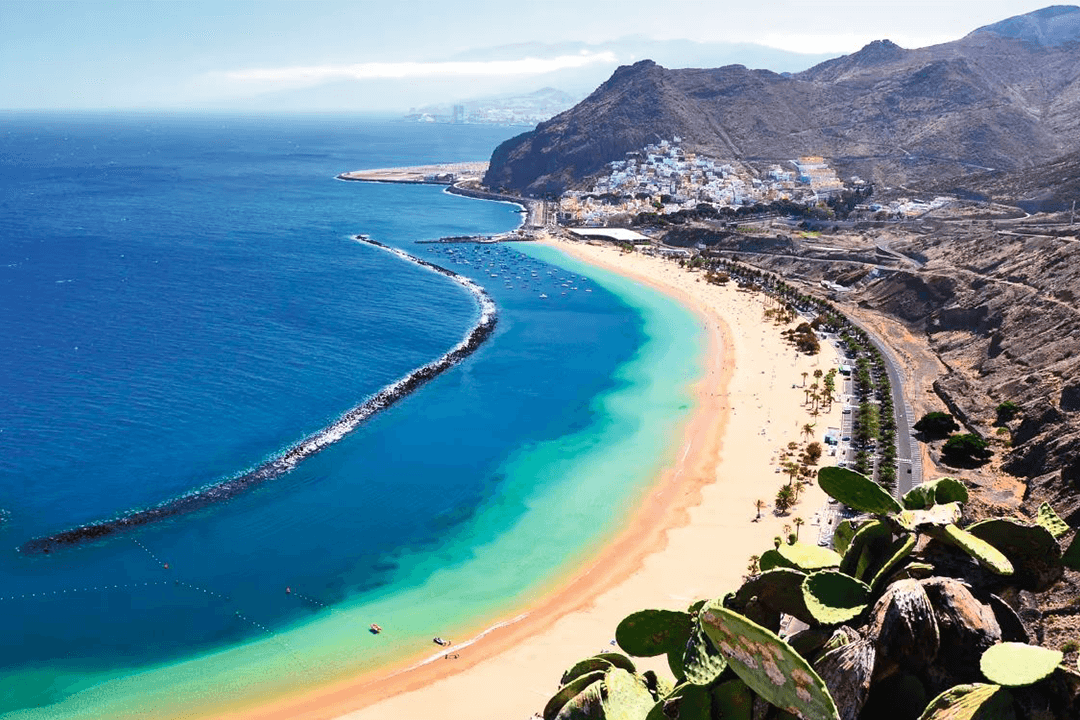
| Fly to Tenerife or Lanzarote this autumn with Tui from just £80 return! Enjoy the sunshine, explore volcanic landscapes and relax on postcard-perfect beaches. Prices are based on October–December departures from various UK airports. Learn more. |
| |
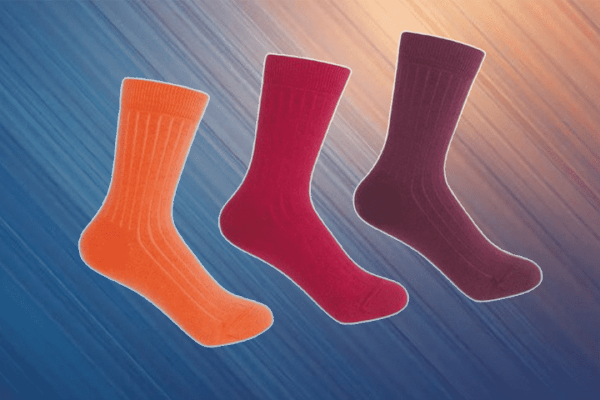
| Keep your feet comfy on your travels. Use code: "HB20" to save on luxury socks at Peper Harow. |
|
|
| Be the first to see big travel stories by following me on X/Twitter @SimonCalder. My direct messages are open – and I try to reply to as many as possible. |
|
|
| Follow me on Instagram @Simon_Calder. Join me here live every weekend at 5.30pm British time as I answer your travel questions. |
|
|
Join the conversation and follow us |
| |
Download the free Independent app |
|
|
Please do not reply directly to this email You are currently registered to receive The Independent's Travel newsletter. To unsubscribe from The Independent's Travel newsletter, or to manage your email preferences please click here. This e-mail was sent by Independent Digital News and Media Ltd, 14-18 Finsbury Square, London EC2A 1AH. Registered in England and Wales with company number 07320345
Read our privacy policy and cookie policy
|
|
|
|

















0 comentários:
Postar um comentário