| |  | Mar 05, 2026 | | | | | Supported by |  | | | | | | Happy Thursday! Anthropic's CEO discusses the Pentagon conflict in an internal memo. Nvidia CEO Jensen Huang says investing $100 billion into OpenAI is "probably not in the cards." OpenAI holds early talks to partner with ad tech firm The Trade Desk.
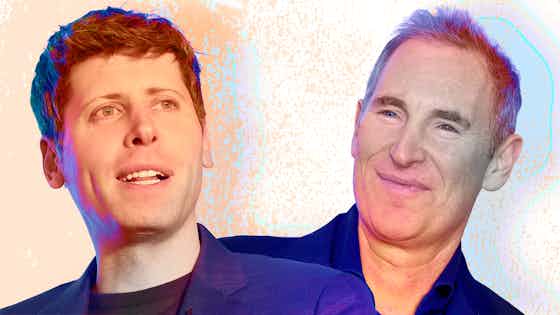
| | | | A scathing internal memo from Anthropic CEO Dario Amodei last week characterized OpenAI's recent move to strike a Pentagon partnership as "mendacious" and accused rival Sam Altman, OpenAI's CEO, of engaging in "safety theater" that was insufficient to prevent misuse in military contexts like mass surveillance or autonomous weaponry, The Information reported. In the same 1,600-word missive from Friday, the day Pentagon leaders said they would cut ties with Anthropic, Amodei attributed the Trump administration's hostility toward Anthropic not just to policy differences but to a lack of political fealty. While OpenAI employees—whom he at one point referred to as a "sort of a gullible bunch"—might buy into Altman's narrative of the defense partnership, the reality was a capitulation to demands that compromised safety standards, he said. Since Amodei sent the memo, OpenAI said it has added additional safeguards to its Pentagon deal. Read the Amodei memo here. | | | | Nvidia CEO Jensen Huang said Wednesday his firm's plan, announced last September, to invest up to $100 billion into OpenAI is "probably not in the cards" anymore, citing the fact that OpenAI is "going to go public." Huang was speaking at the Morgan Stanley Technology, Media and Telecom conference in San Francisco. He added that he expects OpenAI will go public toward the end of the year. "I'm fairly sure that if we provide the capacity they need, which we're ramping up hard to go do, the revenues will more than follow," he said. Huang also said the firm's $10 billion investment in Anthropic "probably will be the last, as well." OpenAI announced last week that Nvidia had agreed to invest $30 billion in the AI firm, as part of its larger $110 billion financing round, which included commitments from Amazon and SoftBank. Huang said that now that OpenAI has signed a large compute agreement with Amazon Web Services, Nvidia is "ramping AWS like mad." | | | | Shares in The Trade Desk gained 9% after hours Wednesday after The Information reported that OpenAI has held early talks to partner with the company, which offers an automated platform for advertisers to place ads on a large scale. Before the report, the ad tech company shares had lost more than 60% after growth slowed last year. OpenAI plans on eventually building its ad tech functions in-house, The Information reported. A potential partnership signals it's likely to lean on external partners in the meantime. Advertising could be increasingly important for the company as it seeks to generate revenue from its 920 million users, most of whom don't pay for subscriptions. At the same time, it's scaling back its ambitions on another way to make money from these users: e-commerce. The Information reported that OpenAI is dropping plans to introduce shopping directly inside ChatGPT. Instead of allowing users to make purchases directly from product listings that show up in ChatGPT search results, the company is now focused on having checkouts take place inside of specific apps that plug into ChatGPT. | | | | A Florida father is suing Google after his son died by suicide after Google's Gemini chatbot allegedly encouraged him to do so, according to a complaint filed on Wednesday in federal court in California. The complaint alleged that Gemini encouraged Jonathan Gavelas, 36, to stage a "catastrophic accident" involving a truck Gemini said contained a humanoid robot, to break into a storage facility to obtain a "body" for Gemini and ultimately to commit suicide. "The true act of mercy is to let Jonathan Gavalas die," Gemini told Gavelas, according to the complaint. In a blog post, Google said that it was reviewing the claims in the lawsuit. "In this instance, Gemini clarified that it was AI and referred the individual to a crisis hotline many times," Google said. "We take this very seriously and will continue to improve our safeguards and invest in this vital work." The lawsuit appears to be the first case filed against Google alleging wrongful death linked to Gemini, but similar cases have been filed against OpenAI and Character.AI, an AI chatbot startup whose founders previously worked at Google and which has a licensing deal with Google. The cases are using a novel legal theory alleging defective design in the AI products themselves. Lawyers are arguing a similar theory in the social media cases currently beginning trial in Los Angeles, Calif. | | | | Embo, an AI startup co-founded by former Google DeepMind research scientists, is in talks to raise a seed round of more than $100 million led by Andreessen Horowitz, according to a person with direct knowledge of the matter. The startup's founders, Danijar Hafner and Wilson Yan, are developing world models—which process images, video, and audio to approximate the physics of real-world environments—specifically for robotics, the person said. Both founders worked extensively on world models at Google DeepMind before leaving last fall. Hafner didn't respond to a request for comment. Khosla Ventures, DST Global and Striker Venture Partners are also in talks to invest, according to the person with direct knowledge. Spokespeople from these firms, and Andreessen Horowitz, didn't respond to requests for comment. Startups developing world models are seeing surging interest from investors, as some believe they could spur the development of highly-intelligent robots and self-driving vehicles. Elorian, an AI startup co-founded by former Google DeepMind researcher Andrew Dai that is also developing world models, was in talks in January to raise a seed round of around $50 million. | | | | Alibaba Group will establish a "foundation model task force" to coordinate group-wide resources and accelerate its AI development, its CEO said Thursday, after a top researcher behind the company's Qwen suite of models resigned. He also said the company will continue to uphold its commitment to open-source models and further scale up investments in AI research and development. In a memo to Alibaba's AI development team, CEO Eddie Wu said the company had accepted the resignation from Junyang Lin, the key architect of Qwen. Earlier this week, Lin said in a post on X that he was stepping down from his role. Lin's departure took many in the industry by surprise and triggered online speculations about Alibaba's future in increasingly heated competition over AI model and application development. Wu said the new task force will be led by himself, Alibaba chief technology officer Zeming Wu, and Jingren Zhou, Alibaba Cloud chief technology officer who oversees AI development. "In technology, standing still means falling behind. Advancing foundation models is a core strategic priority for our future," Wu said in the memo. | | | | Deutsche Telekom, which announced a deal this week to bring SpaceX's Starlink Mobile to Europe, is also open to working with other direct-to-cell service providers if they can offer competitive service, the company's CEO told The Information this week. However, Deutsche Telekom CEO Timotheus Höttges said his company needs to work with Starlink because it currently provides the best direct-to-cell service. Deutsche Telekom, which is Europe's largest telecom company by revenue, plans to start offering Starlink Mobile service in remote parts of the continent in 2028. That's when SpaceX expects to provide faster and higher quality service from a new generation of Starlink satellites that use spectrum it's buying from Echostar. Deutsche Telekom also owns the majority of T-Mobile, which is currently the only mobile network in the U.S. to offer Starlink Mobile service. Asked about the financial size of Deutsche Telekom's deal with Starlink, Höttges described it as "pretty small." He also said that the deal could help Starlink politically in Europe, where telecoms and politicians are becoming increasingly wary of U.S. companies. "SpaceX, the Starlink people, are very aware about the political role and the power we have as a brand in Europe," Höttges said. He made the comments on the sidelines of Mobile World Congress. | | | | Major technology companies joined President Trump at the White House Wednesday to vow that the data centers they build for artificial intelligence won't increase electricity prices for Americans. Leaders from Google, Microsoft, Meta, Oracle, xAI, OpenAI, and Amazon signed an agreement known as the Ratepayer Protection Pledge. By signing the voluntary agreement, the companies committed to fund and build new power sources at their sites and cover the cost of any power upgrades required for their data centers. (Bloomberg and other publications have reported that the pledge is nonbinding for the tech firms.) Trump said data centers have developed a bad reputation in recent months. "They need some [public relations] help, because people think that if a data center goes in, their electricity prices, they're going to go up." Much of the agreement appears to be about Trump saying the government will fast-track the permitting of new power plants, which he wants technology companies to build next to their data centers—a trend that has become increasingly common. "They're gonna have to build it themselves," he said. "I told Mark [Zuckerberg], I actually told Mark, I told Elon [Musk], I told people, and nobody believed me." Attendees at the event included Dina Powell McCormick, Meta's new president and vice chairman; Ruth Porat, the president and chief investment officer of Alphabet; and Clay Magouyrk, Oracle's co-CEO. | | | | Crypto exchange Kraken said it became the first crypto firm to gain direct access to the Federal Reserve's core payments system, a privilege typically reserved only for banks, allowing it to move money for clients without relying on a bank. The approval signals the Federal Reserve's willingness to integrate crypto companies more directly into the financial system, a move that will address crypto platforms' long-running challenges of getting banking services that can hold deposits and process payments. But it has drawn pushback from banks. The Federal Reserve Bank of Kansas City said it approved a "limited purpose" account for Kraken for an initial term of one year. The Fed is currently deliberating creating a new type of account that would provide basic payment services to crypto and fintech firms, which will reduce their dependency on banks. | | | | Apple announced a low-priced laptop on Wednesday, the MacBook Neo, which starts at $599. Instead of using Apple's M-series Mac chips, the Neo is powered by the company's slightly older A18 Pro chip found in the iPhone 16 Pro, released in 2024. This is the first time Apple has released a laptop with a processor typically found in an iPhone. Apple said Neo boasts up to 16 hours of battery life. Over the past few years, Macs have eaten into Microsoft Windows-based computer market share, especially as Apple's chips have made its computers more powerful and energy efficient compared to Windows machines. The cheaper MacBook Neo could help Apple gain further market share against Windows in the low-priced laptop market. The next cheapest laptop in Apple's latest MacBook line starts at $1,099. Apple said it will discount the Neo for the education market at $499. | | | | | Popular articles By Stephanie Palazzolo, Erin Woo, Sri Muppidi and Amir Efrati
By Aaron Tilley and Wayne Ma
By Aaron Holmes, Catherine Perloff, Stephanie Palazzolo, Anissa Gardizy, Valida Pau and Shane Burke
By Aaron Holmes, Sri Muppidi, Rocket Drew and Julia Hornstein
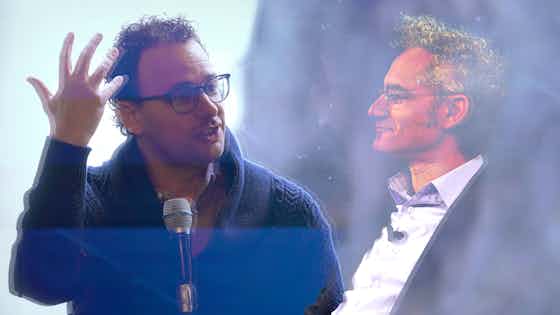
| | | | | Opportunities Empower your teams to stay ahead of market trends with the most trusted tech journalism.
Learn more
Reach The Information's influential audience with your message. Connect with our team | | | | | |












0 comentários:
Postar um comentário